
 3 months ago
56
3 months ago
56
- NFT pioneer Kevin McCoy says speculative mania collapsed, not the underlying technology
- McCoy believes NFTs successfully proved digital ownership and transferability online
- He argues digital art and creator-owned internet culture are still in very early stages
According to Kevin McCoy, one of the original creators behind the first NFT experiment “Quantum” back in 2014, people keep asking the wrong question about NFTs. The real question is not whether NFTs failed. It’s whether digital ownership itself failed. And in his view, that answer is pretty clearly no.
Speaking recently with SLEEK Magazine, McCoy argued that the speculative bubble surrounding NFTs absolutely exploded and collapsed, but the core breakthrough behind the technology already quietly succeeded years ago.
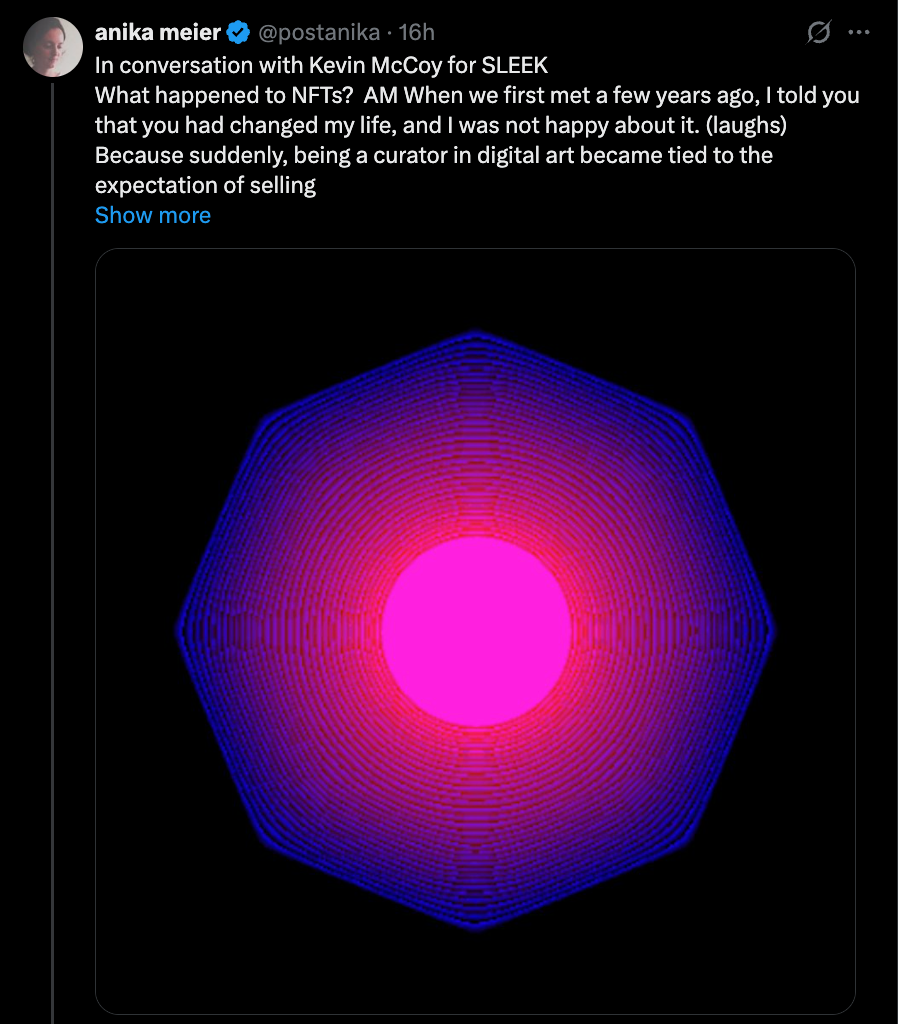
Honestly, it may be one of the most rational things anyone has said about NFTs in a long time.
NFTs Solved A Problem The Internet Never Really Fixed
Long before billion-dollar JPEG headlines and celebrity profile picture collections existed, McCoy says he was focused on a much simpler problem: how digital artists could actually own and distribute native internet creations without surrendering everything to centralized platforms.
Interestingly, he originally referred to NFTs as “monetized graphics,” which somehow sounds both deeply nerdy and strangely accurate at the same time.
The core innovation was not speculative trading itself. It was proving that digital objects could carry uniqueness, ownership, provenance, and transferability directly online without relying entirely on centralized intermediaries.
That concept may sound obvious now, but for decades the internet largely treated digital content as infinitely copyable media disconnected from ownership structures entirely. NFTs changed that permanently whether people like the term or not.
Ethereum And Crypto Wealth Created The Perfect Storm
McCoy also pointed out that the massive NFT explosion between 2020 and 2022 only became possible because several pieces of infrastructure matured simultaneously.
Ethereum evolved enough to support standardized token systems. Wallet technology became usable for mainstream participants. NFT marketplaces simplified onboarding. Storage systems improved. Then DeFi wealth exploded across crypto markets, flooding the ecosystem with capital looking for cultural and speculative outlets.
And once that happened, the internet did what the internet always does. It turned a niche technological breakthrough into a global frenzy almost instantly.
Then naturally, after prices collapsed, the internet declared NFTs dead approximately fourteen thousand times.

Digital Culture Is Already Dominating Real Life
One of McCoy’s more interesting arguments is that culture itself has already become overwhelmingly digital even if traditional institutions still struggle to fully acknowledge it.
Art discovery, media consumption, social identity, entertainment, music, fashion, and community increasingly exist online first. Yet the traditional art world still largely behaves as though physical ownership remains the only serious form of collecting or cultural legitimacy.
That contradiction may eventually become one of the most important parts of the entire NFT story.
The infrastructure surrounding modern culture is already digital almost everywhere. NFTs simply introduced ownership layers directly into that environment.
And once digital ownership becomes normalized, the technology underneath it may matter far less than the behavioral shift itself.
The Strongest NFT Use Cases Are Quietly Evolving
Part of what makes McCoy’s perspective interesting is that it moves beyond the simplistic “NFTs were monkey pictures” narrative dominating mainstream conversations after the market cooled down.
The strongest NFT projects increasingly resemble infrastructure layers for identity, gaming assets, memberships, digital access systems, creator economies, AI tools, and tokenized communities rather than purely speculative collectibles.
Projects like Pudgy Penguins, Normies, and others are increasingly experimenting with intellectual property, media ecosystems, programmable ownership, and AI-integrated access systems instead of relying entirely on speculative flipping culture.
That evolution feels much closer to where blockchain ownership technology was probably always heading eventually.
Digital Ownership May Have Been Inevitable All Along
The broader point McCoy keeps returning to is fairly simple: the internet never had a native ownership layer before blockchain technology arrived.
For years, people rented access to platforms rather than truly owning digital identity, assets, or online communities directly. NFTs introduced a framework where ownership itself could become portable, programmable, and verifiable online without depending entirely on centralized corporations.
Whether specific NFT collections survived was almost secondary to proving that concept worked technically at all.
And despite the scams, speculative bubbles, crashes, and endless online mockery, the broader internet increasingly seems to be drifting toward McCoy’s original thesis anyway. Digital culture already dominates modern life. Digital ownership may simply have been the next logical step the whole time.
Disclaimer: BlockNews provides independent reporting on crypto, blockchain, and digital finance. All content is for informational purposes only and does not constitute financial advice. Readers should do their own research before making investment decisions. Some articles may use AI tools to assist in drafting, but every piece is reviewed and edited by our editorial team of experienced crypto writers and analysts before publication.








 English (US) ·