
 8 hours ago
12
8 hours ago
12
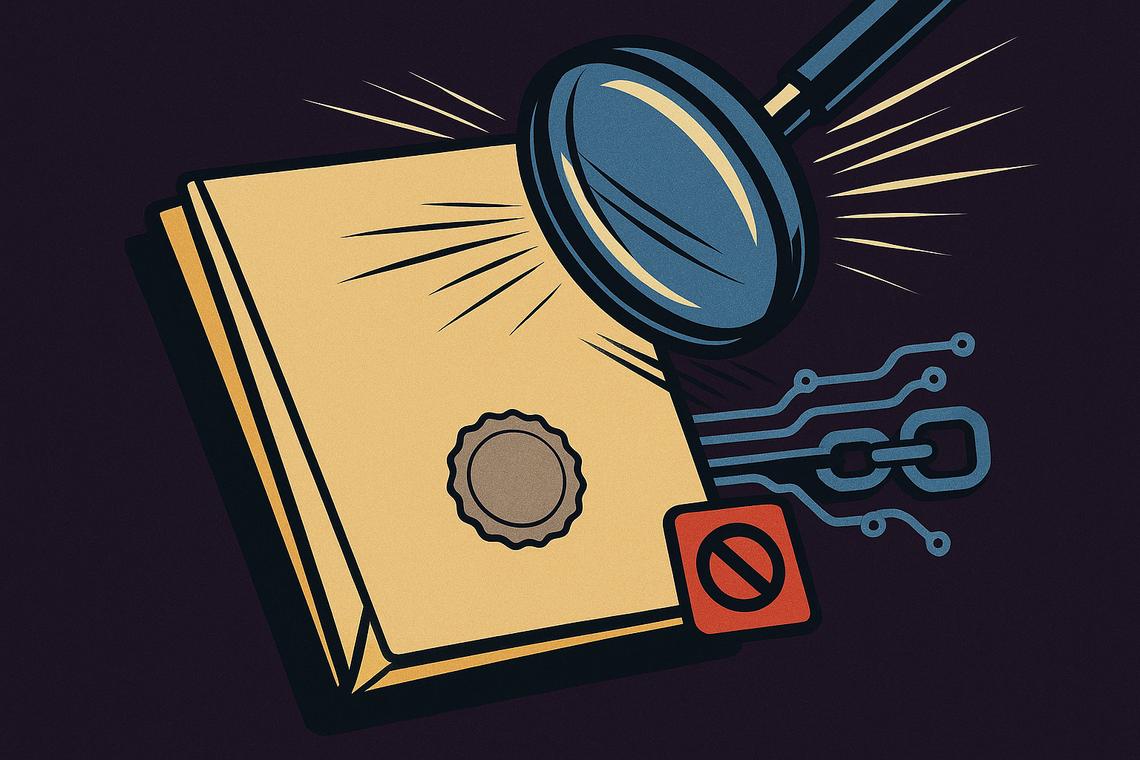
When The New York Times filed its lawsuit against OpenAI and Microsoft in December 2023, it wasn’t simply one media company taking on a tech giant. It was the opening move in what may become the defining legal battle over how artificial intelligence is allowed to feed on human creativity — and who gets paid for it.
Key takeaways
- The New York Times filed its copyright lawsuit against OpenAI and Microsoft on December 27, 2023, in the US District Court for the Southern District of New York.
- The lawsuit alleges that millions of NYT articles were used without authorization to train large language models powering ChatGPT.
- Initial damages sought total $2.25 billion, with some observers suggesting the figure could climb into the hundreds of billions.
- In 2025, courts issued preservation orders requiring OpenAI to retain ChatGPT output logs as the case evolved.
- The Times is simultaneously pursuing licensing deals with companies like Amazon while litigating against others — a strategy that signals its real goal is revenue, not the dismantling of AI.
The New York Times Launches a Landmark Copyright Lawsuit Against OpenAI
The complaint, filed on December 27, 2023, landed in the US District Court for the Southern District of New York and named two of the most powerful companies in tech: OpenAI and Microsoft. At its core, the NYT lawsuit against OpenAI alleges that both companies scraped and used millions of Times articles — without permission and without payment — to train the large language models that power ChatGPT and related products.
This wasn’t a small grievance about a few republished paragraphs. The Times argued that its decades of original reporting, analysis, and investigative journalism had been systematically absorbed into AI systems that can now reproduce that work, summarize it, and deliver it directly to users — cutting the original publisher out of the equation entirely.
A filing that put the entire AI industry on notice
The legal theory behind the lawsuit is straightforward, even if the implications are enormous: copyrighted content cannot be used to train commercial AI systems without authorization or compensation. If that argument holds in court, it would force a fundamental rethink of how AI companies source their training data.
CEO Meredith Kopit Levien has been explicit about the stakes. In interviews, she framed the lawsuit not as a grudge match against technology but as an enforcement action for intellectual property rights — and as a defense of what she calls high-quality journalism. Her argument is that AI systems capable of summarizing and rephrasing professional reporting, without ever linking back to the source, threaten the economic foundation that makes that reporting possible in the first place.
Potential Damages and Judicial Orders Highlight the Case’s Gravity
The financial exposure here is substantial. The Times initially set its damages floor at $2.25 billion — already a headline-grabbing figure. But some legal observers have suggested that number could escalate dramatically into the hundreds of billions if courts factor in lost revenue, market displacement, and the broader commercial value OpenAI derived from using the newspaper’s content.
Numbers at that scale are rare even in major intellectual property disputes. They reflect just how much value the Times believes was extracted without consent.
Courts step in with preservation orders
The case has grown more complex as it has progressed. In 2025, courts issued preservation orders requiring OpenAI to maintain logs of ChatGPT outputs — a significant procedural development that suggests judges are treating the evidentiary record seriously. Those logs could become central to proving what the AI actually produced using Times material.
That kind of judicial intervention signals that this isn’t a case destined for quiet settlement. The procedural machinery is grinding forward.
Broader Legal Actions and a Two-Track Strategy
The Times has not limited its legal campaign to OpenAI and Microsoft. A separate lawsuit against Perplexity AI — the AI-powered search engine that has drawn criticism for surfacing summarized news content without attribution — extends the same copyright argument to another major player in the AI space.
What makes the Times’ approach particularly interesting is what it’s doing alongside the litigation. Around March 2026, the newspaper announced a licensing deal with Amazon — a direct commercial arrangement of the kind it is simultaneously demanding from OpenAI through the courts. That dual strategy, suing some companies while licensing to others, is not a contradiction. It’s a negotiating position. The Times is effectively telling the AI industry: pay us, or face us in court.
Why the licensing angle matters as much as the lawsuit itself
The Amazon deal is arguably as important as the legal filings. It proves that a workable commercial model exists — that AI companies can pay for access to premium journalistic content rather than simply taking it. If the Times wins or forces a settlement, that model could become the industry standard. Publishers that have been watching from the sidelines would suddenly have a template to follow and leverage to negotiate.
This is why Kopit Levien has been clear that the goal is licensing revenue, not the end of AI development. The Times is not trying to stop large language models from existing. It wants a seat at the table — and a share of the value its journalism helped create.
The New York Times’ Vision: Protecting Intellectual Property and Journalism
Strip away the legal filings and the damage figures, and what the Times is really arguing comes down to a single question: can AI companies legally use copyrighted content to build commercial products without paying the people who created that content?
That question does not yet have a definitive legal answer. The NYT lawsuit against OpenAI is being closely watched precisely because it may provide one. A ruling in the Times’ favor would reshape how every AI company in the world thinks about training data. It would validate the idea that journalism, literature, and other creative work carry real economic value that cannot simply be absorbed into a model and monetized without consent.
A ruling against the Times would have the opposite effect — effectively greenlighting the current practice and leaving publishers without recourse. Either outcome would set a precedent that extends far beyond one newspaper and one AI company.
What makes this moment particularly consequential is the timing. AI capabilities are advancing rapidly, and the legal framework governing their use is still being written. The Times chose to act while the rules are still unsettled — before any court had said definitively that training AI on copyrighted content without payment is acceptable. The window to establish those rules, and to do so in a way that protects journalism’s economic viability, may not stay open indefinitely.
FAQ
What is the basis of The New York Times’ lawsuit against OpenAI?
The lawsuit claims that OpenAI and Microsoft used millions of New York Times articles without authorization to train AI models like ChatGPT, constituting copyright infringement and causing significant financial harm to the publisher.
How much damages is The New York Times seeking in the lawsuit?
The lawsuit initially seeks $2.25 billion in damages. Some legal observers have speculated the total could rise into the hundreds of billions when accounting for lost revenue and broader market impact.
Is The New York Times only suing OpenAI over AI copyright issues?
No. The Times also filed a separate lawsuit against Perplexity AI and is simultaneously pursuing licensing agreements with other tech companies, including a deal with Amazon announced around March 2026.
What does The New York Times hope to achieve besides litigation?
The Times’ stated goal is to establish fair licensing revenue models that compensate publishers for the use of their content in AI training. CEO Meredith Kopit Levien has been clear that the aim is not to stop AI development but to ensure that high-quality journalism is paid for rather than freely appropriated.
Article produced with the assistance of artificial intelligence and reviewed by the editorial team.








 English (US) ·