
 1 hour ago
13
1 hour ago
13
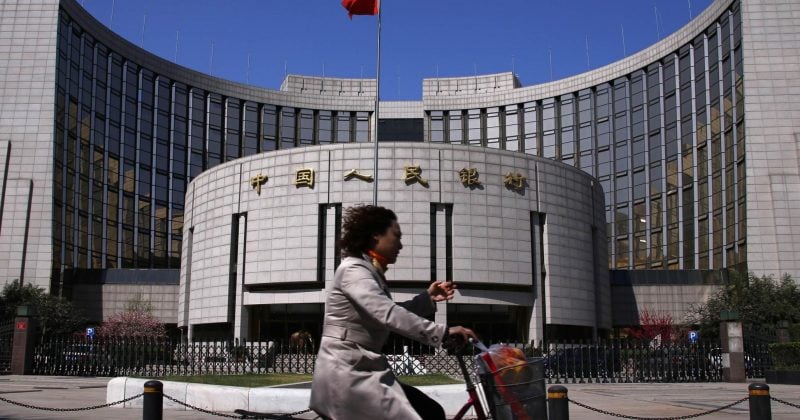
China’s central bank just reorganized its quarterly monetary policy report for the first time in more than two decades. The People’s Bank of China reordered sections in its February 2026 report to prioritize money market conditions, placing overnight repo rate dynamics front and center. For analysts who parse these documents like Talmudic scholars, the message is hard to miss: the PBOC may be laying the groundwork to adopt the overnight rate as its central policy anchor.
From MLF to overnight: what’s actually changing
Until 2024, the PBOC’s primary policy lever was the medium-term lending facility, or MLF. In 2024, the bank pivoted, shifting its operational focus to the seven-day reverse repo rate, a shorter-duration tool that gives policymakers more granular control over interbank liquidity. Now the signals suggest another step down the maturity ladder, toward the overnight rate.
Governor Pan Gongsheng reinforced this trajectory in late 2025 statements, emphasizing the importance of guiding short-term rates to track closely around policy targets while maintaining ample liquidity.
No immediate rate changes accompanied the February report. The loan prime rate, China’s benchmark lending rate, held steady at a record low of 3.0%.
Why crypto markets should pay attention
The e-CNY introduced interest-bearing features effective January 1, 2026, with wallet balances now integrated into reserve requirements. By paying interest on digital yuan holdings, the PBOC creates a stronger incentive for users to keep funds in the state-issued digital currency rather than seeking yield elsewhere.
What investors should watch
The most important near-term signal will be whether the PBOC follows this structural report change with concrete operational adjustments. Look for changes in the frequency or size of overnight reverse repo operations. If those start increasing relative to seven-day operations, the transition is underway, not just telegraphed.
The LPR at 3.0% is already at record lows, leaving limited room for cuts. If the PBOC locks in an overnight anchor while rates are this low, any future normalization could be sharper than markets expect.
Disclosure: This article was edited by Editorial Team. For more information on how we create and review content, see our Editorial Policy.








 English (US) ·