
 2 months ago
62
2 months ago
62
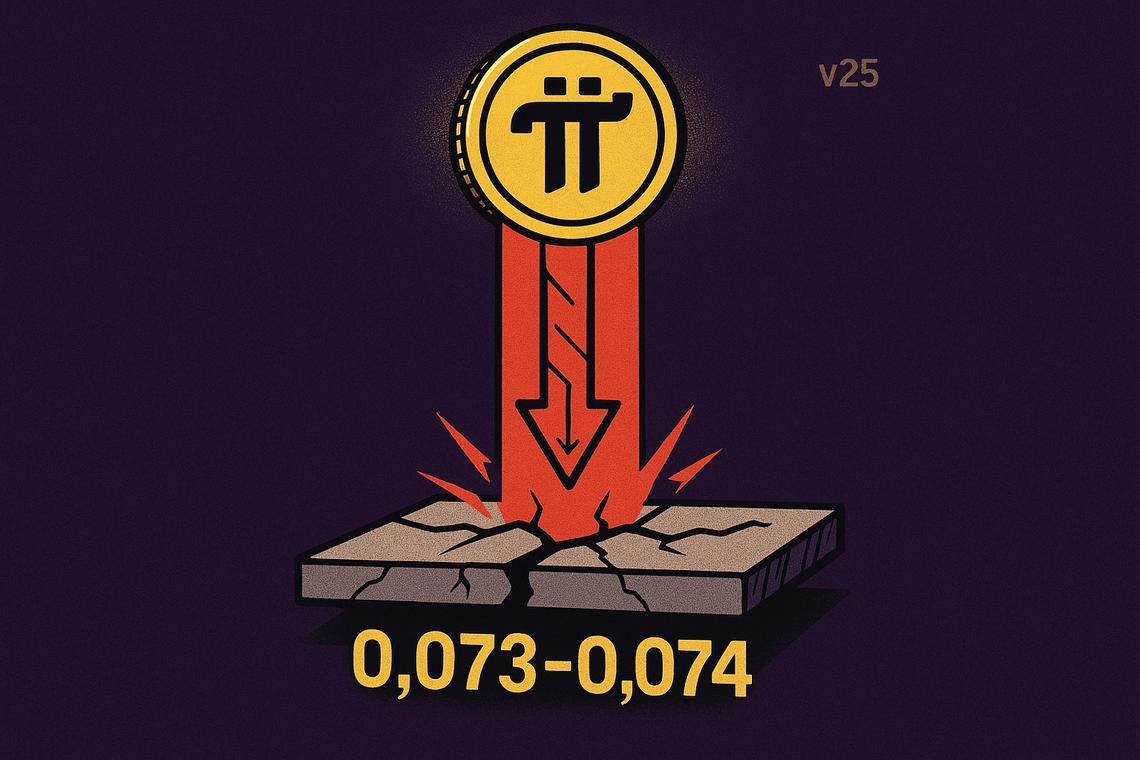
The Pi Network token price is flashing some of the most bearish signals it has shown in recent memory. PI dropped nearly 12% amid a wave of aggressive selling that left buyers with little ground to stand on — and the numbers behind that move suggest this wasn’t just a routine shakeout.
Key takeaways
- PI fell nearly 12%, with trading volume surging 129% to approximately $17.7 million, confirming seller dominance.
- The Money Flow Index sits near 23, signaling that capital is actively leaving the market.
- Derivatives funding rates turned negative at -0.0565%, showing traders are positioning for further downside.
- PI has been trading inside a descending channel for several months, with no confirmed trend reversal yet.
- The Protocol v25 upgrade, scheduled for July 22, represents a potential technical catalyst that traders are watching closely, according to Invezz.
Pi Network’s PI Token Takes a Sharp Hit
When a token loses nearly 12% and volume more than doubles at the same time, that combination carries a specific message: sellers aren’t just trimming positions, they’re in control. Trading volume jumped 129% to roughly $17.7 million during the same period the price was collapsing — a textbook sign that the selling pressure had real conviction behind it.
This isn’t an isolated bad session. PI has been grinding lower inside a descending channel for several months, bouncing between falling support and resistance levels without managing to break the pattern. Every attempted recovery has run into selling. That kind of persistent structure rarely resolves quickly.
What the Volume Surge Actually Means
Volume increases during a price decline are one of the more reliable bearish confirmations available to technical analysts. The fact that activity more than doubled while prices were dropping rules out the idea that sellers were simply absent — they were active, motivated, and clearly dominating every bid that appeared. Market participation, in short, is currently a one-sided story.
Technical Indicators Signal Bearish Momentum Across the Board
The price chart alone tells a concerning story, but what makes the current PI setup particularly uncomfortable for bulls is the degree to which every major indicator is pointing in the same direction.
The Accumulation and Distribution indicator is showing heavy distribution — meaning money is leaving positions rather than accumulating them. That reading reflects seller control at a structural level, not just day-to-day volatility. The Money Flow Index, sitting near 23, adds another layer to that picture: capital is actively exiting the market, and the reading is deep enough to signal that this isn’t a temporary hesitation.
Negative Funding Rates Confirm Trader Positioning
Perhaps the most pointed signal comes from derivatives. Funding rates have fallen to approximately -0.0565%, a negative reading that directly reflects higher demand for short positions in the perpetual futures market. When funding goes negative, it means traders are paying a premium to bet on further declines — a clear expression of bearish conviction that goes beyond spot selling.
Taken together, the descending channel structure, the distribution readings, the low Money Flow Index, and the negative funding rate form a coherent bearish narrative. None of these indicators are contradicting each other, which is precisely what makes the setup more significant than a simple price dip.
Where PI Stands on the Broader Chart
According to data cited by Invezz, PI was trading around $0.0779 after moving between an intraday low of $0.07256 and a high of $0.07884. The token remains below its 20, 50, 100, and 200-day exponential moving averages, all of which are aligned in a bearish order. The 20-day EMA near $0.0986 represents the first major resistance, followed by the 50-day EMA around $0.118. That means any recovery attempt faces a stacked series of technical ceilings before anything resembling a bullish trend could be confirmed.
The daily Relative Strength Index had dropped to around 16 — deeply oversold territory — though Invezz notes that such readings can precede relief rallies without necessarily confirming a lasting uptrend.
Risks and Outlook for Pi Network’s Price Stability
The accumulation of bearish signals raises a straightforward question: how close is PI to setting a new record low? Bearish momentum combined with ongoing capital outflows puts that risk firmly on the table. Buyers need to defend current support levels with real conviction to prevent another leg down — and right now, there’s little evidence that such buying demand has materialized.
The Protocol v25 Upgrade as a Potential Catalyst
One development that has given some traders a reason to stay attentive is Pi Network’s scheduled Protocol v25 upgrade, set to go live on July 22 according to an announcement made on July 15. The Pi Core Team described the release as bringing BN254 cryptography and Poseidon hashing, enabling developers to build zero-knowledge applications that can process sensitive data without exposing it on public records. The upgrade is also designed to improve the efficiency of privacy-preserving smart contracts across the ecosystem.
“As Pi continues to evolve, Protocol v25 is expected to improve network stability and reliability while supporting new capabilities for more efficient, privacy-preserving smart contracts,” the Pi Core Team said.
Whether a technical upgrade translates into actual price demand is a different question. As Invezz pointed out, the outcome will ultimately depend on developer activity, ecosystem growth, and network performance after deployment. A scheduled event can shift trader attention, but it cannot by itself reverse the kind of structural selling pressure currently embedded in PI’s chart.
What a Recovery Would Actually Require
For the Pi Network token price to stabilize meaningfully, buyers would need to step in at current support with enough force to absorb the existing selling flow and shift the Accumulation and Distribution reading back toward accumulation. The support zone between $0.073 and $0.074 — where buyers repeatedly defended the token after the sharp breakdown earlier this week according to Invezz — is the line that matters most in the immediate term.
Holding that zone keeps a recovery scenario alive. Losing it would likely accelerate the move toward fresh record lows, especially in a broader market environment where demand for smaller cryptocurrencies has remained limited while Bitcoin consolidates.
The Protocol v25 launch offers a defined event for the market to react to. But if it fails to attract meaningful developer participation or doesn’t improve network metrics in visible ways, it could quickly become just another catalyst that came and went without changing PI’s underlying trajectory.
FAQ
What recent price changes has the PI token experienced?
The PI token fell nearly 12% amid strong selling pressure in recent trading sessions, placing it among the weakest-performing cryptocurrencies during the latest market-wide sell-off.
What does the increase in trading volume indicate about Pi Network’s market activity?
Trading volume increased by 129% to about $17.7 million, confirming seller dominance. Rising volume during a price decline is a standard technical signal that selling pressure carries genuine conviction rather than being a low-liquidity drift lower.
What do the technical indicators say about Pi Network’s market trend?
Indicators show PI moving inside a descending channel with strong seller control and capital outflows. The Accumulation and Distribution indicator reflects heavy distribution, the Money Flow Index sits near 23, and all major exponential moving averages remain above the current price in a bearish alignment.
What risks does Pi Network face if sellers continue to dominate?
Bearish momentum and capital outflows increase the risk of another record low unless buyers defend key support levels, particularly the $0.073–$0.074 zone identified by analysts as the critical near-term floor.
Article produced with the assistance of artificial intelligence and reviewed by the editorial team.






 English (US) ·