
 1 hour ago
9
1 hour ago
9
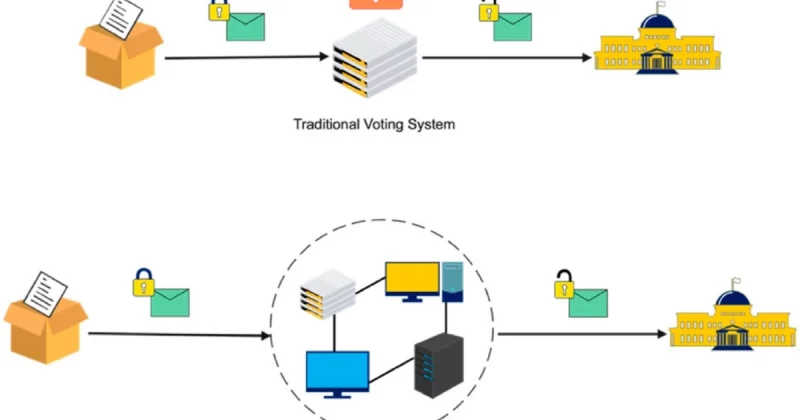
Polymarket is not adding identity verification to its main platform. That was the message from Josh Stevens, the company’s vice president of engineering, after a report suggested the prediction market was considering broader Know Your Customer requirements.
Stevens posted on X that the KYC requirement applies exclusively to a new beta product being tested by a select group of users. Once that product exits its testing phase, the identity checks go away entirely.
What actually happened
The confusion started after a report from The Information suggested Polymarket had been weighing compliance-driven user verification. Stevens stepped in to set the record straight.
“No KYC is being added to any part of existing polymarket.com with this launch.”
The distinction matters. Polymarket is launching a separate, new product that requires early testers to verify their identity during its beta period. That’s it. The core prediction market, the one pulling in billions in monthly volume, remains untouched.
Polymarket’s scale makes this a big deal
This clarification carries weight because of just how large Polymarket has become. Monthly trading volumes on the platform exceeded $10 billion in early 2026. Single-day volume records have surpassed $400 million. For Q1 2026 alone, total trading volume reached $26.2 billion.
Polymarket operates as the world’s largest prediction market, allowing users to trade on the outcomes of real-world events. It uses the UMA Optimistic Oracle for decentralized market resolution, where UMA token holders vote on outcomes. Kalshi, the CFTC-regulated competitor, embraced identity verification as part of its compliance-first approach. Polymarket took the opposite path, leaning into crypto-native permissionless access.
Recent challenges and resilience
Around May 21-22, 2026, a separate incident involving a legacy private key affected approximately $573,000 in funds. About $164,000 was recovered. Importantly, user funds on the main platform were not impacted.
The team has also been upgrading its infrastructure to handle the surge in user demand. Scaling from a niche crypto product to a platform processing $26.2 billion in a single quarter requires serious backend work.
What this means for traders and investors
The immediate takeaway is straightforward: if you’re trading on Polymarket today, nothing changes. Your existing experience remains the same. No identity checks, no document uploads, no compliance hoops.
For UMA token holders specifically, Polymarket’s continued growth at this scale means sustained demand for the oracle infrastructure that powers market resolution. Platform volume exceeding $10 billion monthly translates directly into resolution activity that flows through UMA’s system.
Traders should keep an eye on two things going forward: what the new beta product actually does once it’s publicly available, and whether regulatory bodies in key jurisdictions respond to Polymarket’s explicit commitment to avoiding KYC on its core platform. At $26.2 billion in quarterly volume, the platform is no longer flying under anyone’s radar.
Disclosure: This article was edited by Editorial Team. For more information on how we create and review content, see our Editorial Policy.







 English (US) ·