
 2 months ago
39
2 months ago
39
- Polymarket launches new trading engine and smart contract system
- Introduces Polymarket USD to replace bridged USDC.e collateral
- Upgrade signals shift toward scalable, institutional-grade infrastructure
Polymarket is about to go through its biggest transformation since launch, and it’s not just a surface-level update. The platform is replacing its core trading infrastructure, rolling out a rebuilt engine, upgraded smart contracts, and introducing a new collateral token called Polymarket USD. It’s the kind of change that doesn’t just improve performance, it resets how the system operates underneath.
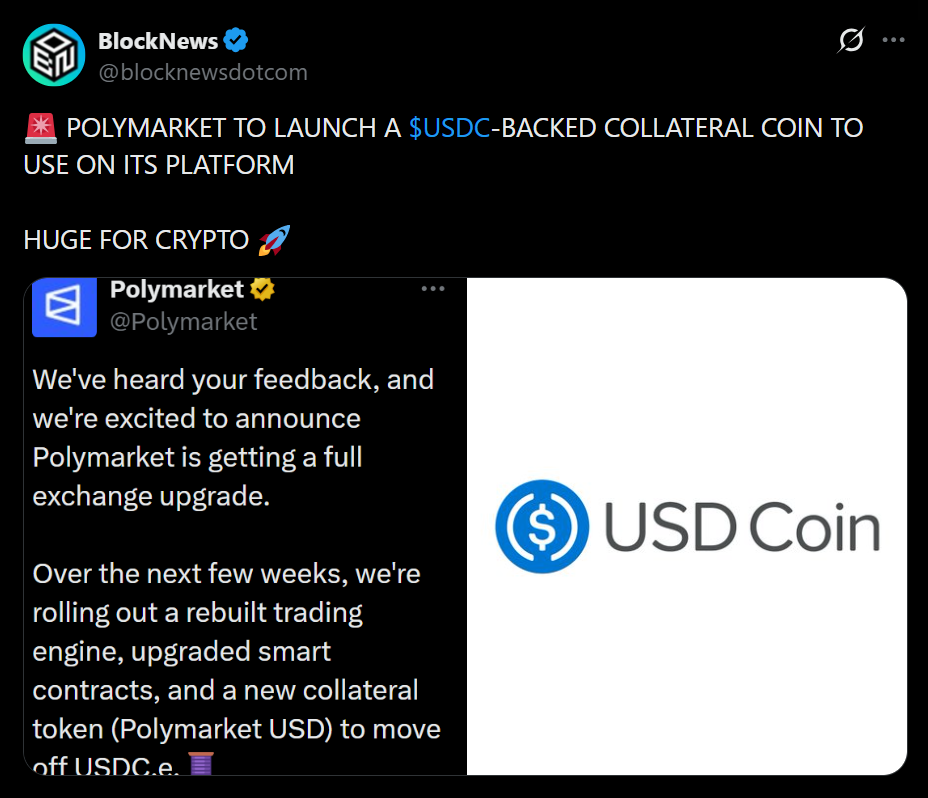
For users, a lot of this will feel seamless. But behind the scenes, nearly every part of the trading stack is being rewritten. And when a platform does that, it usually means it’s preparing for something bigger than just incremental growth.
A Full Rebuild of the Trading Engine
At the center of the upgrade is the new CTF Exchange V2 contract. It simplifies order structures, improves matching efficiency, and introduces support for more advanced features like ERC 1271 signatures. There’s also a new concept called builder codes, which allows onchain attribution for orders, something that could matter more as the ecosystem grows.
This isn’t just optimization, it’s a structural upgrade. Faster matching, cleaner order flows, and better compatibility for integrations all point toward a platform trying to scale more seriously. And for traders running bots or APIs, this will require adjustments, including re-signing orders and updating to new client systems.
Polymarket USD Replaces Bridged Collateral
One of the most important changes is the move away from USDC.e, the bridged version of USDC on Polygon. In its place, Polymarket is introducing Polymarket USD, a new token backed one-to-one by USDC.
That shift reflects a broader trend across crypto, moving away from bridged assets toward more direct, capital-efficient settlement layers. For most users, the transition will happen automatically with a simple approval step. But for advanced users, there’s a bit more work involved, wrapping assets through a new onramp contract.
Migration Will Reset Order Books
There’s also a practical side to this upgrade that traders need to be aware of. During the migration, all open orders will be canceled, and order books will be cleared. It’s a clean reset, which makes sense given the scale of the changes, but it also means timing will matter for active participants.
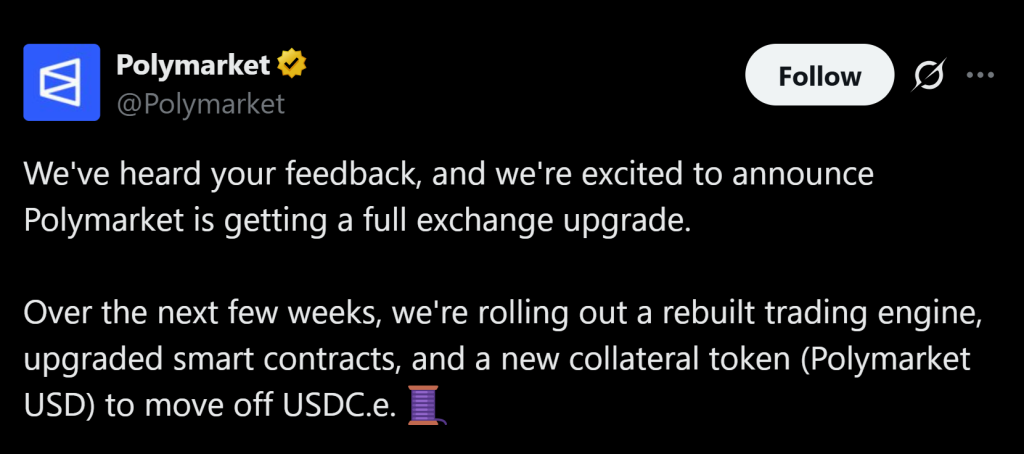
Polymarket has said it will provide at least a week’s notice before the switch, giving users time to prepare. Still, moments like this tend to create temporary gaps in liquidity, even if only briefly.
Regulation and Capital Are Moving In
This upgrade isn’t happening in isolation. Prediction markets are starting to attract more regulatory attention, especially around issues like insider trading and classification as swaps versus gambling products. At the same time, institutional interest is growing fast.
Intercontinental Exchange recently committed $600 million to Polymarket, with plans to invest up to $2 billion. That kind of backing changes expectations. Platforms with this level of capital and scrutiny need infrastructure that can support it, reliably.
Polymarket Is Positioning for the Next Phase
This isn’t just a technical upgrade, it’s a signal. Polymarket is moving toward a more mature, scalable, and institution-ready system. Cleaner collateral, better execution, and deeper integration all point in the same direction.
If prediction markets continue to grow, the platforms that succeed will likely be the ones that can handle both complexity and scale. This upgrade suggests Polymarket is trying to be one of them.
Disclaimer: BlockNews provides independent reporting on crypto, blockchain, and digital finance. All content is for informational purposes only and does not constitute financial advice. Readers should do their own research before making investment decisions. Some articles may use AI tools to assist in drafting, but every piece is reviewed and edited by our editorial team of experienced crypto writers and analysts before publication.






 English (US) ·