
 7 hours ago
12
7 hours ago
12
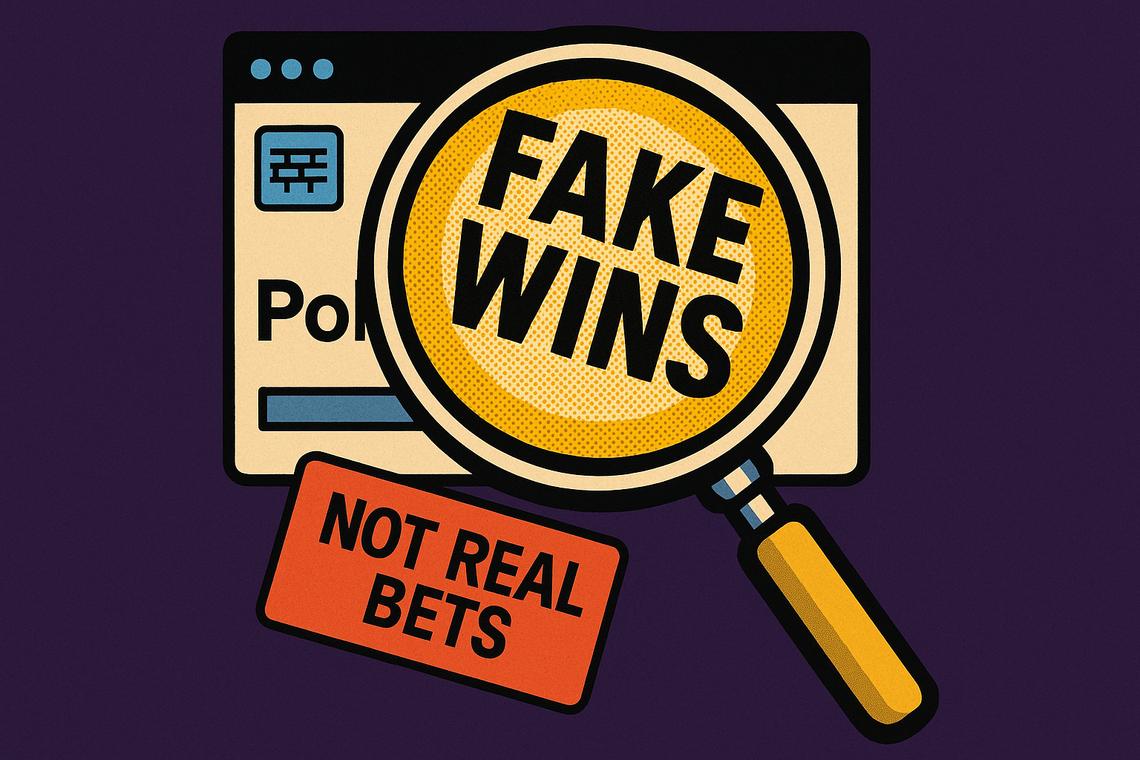
A Wall Street Journal investigation has exposed a sweeping Polymarket social media controversy that goes well beyond aggressive marketing — it describes a coordinated, paid deception campaign targeting American users on a platform that has been banned from serving them since 2022.
Key takeaways
- Polymarket paid creators $2,000 to $3,000 a month to film fake bets on near-identical copies of its website, with none of the roughly $1.9 million in shown wagers being real.
- The WSJ reviewed 1,105 videos from 10 creators posted between December 2025 and mid-May 2026; a bet appeared in about 70% of them.
- Creators were told not to disclose payments from Polymarket; some added “@polymarket partner” to their bios only after journalists started asking questions.
- Polymarket has been barred from serving U.S. users since a 2022 settlement with the CFTC, yet the campaign specifically targeted American audiences via platforms including TikTok, YouTube, and Instagram.
- The clips collectively drew more than 140 million views, according to analytics provider Tubular.
Polymarket’s Deceptive Social Media Strategy
The scheme, as described in the Wall Street Journal’s investigation, was methodical. Polymarket built near-perfect replica websites — including one hosted at the deliberately misspelled URL “poiymarket.com,” which looks identical to the real domain when the letter “i” is capitalized — and instructed creators to film themselves placing and winning bets on those dummy sites. None of it was real money. None of it was real activity.
In one January clip that exemplified the pattern, a college student named George Makihara appeared to win $100,000 on a bet that President Donald Trump would say “McDonald’s” that month. The footage of Trump saying the word was actually two months old. When the Journal checked, more than 50 real users had placed the same bet in January — and every single one of them lost.
Across 118 videos reviewed, creators celebrated nearly $900,000 in fabricated winnings. In reality, those same bets would have lost more than $166,000.
Paid creators and hidden endorsements
The creators at the center of this Polymarket social media controversy were paid approximately $2,000 to $3,000 per month and explicitly instructed not to disclose their financial relationship with the platform. A marketing firm called Virality managed a network of “clippers” who were paid only when at least 60% of their audience was based in the United States — the very market Polymarket is legally prohibited from serving.
Some creators added “@polymarket partner” to their bios only after the Wall Street Journal began asking questions. One creator, Razeen Khan, a college student who worked with Polymarket until March, compared the approach to fast food commercials that make burgers look better than they are: “We’re depicting what actually happens.”
That defense is unlikely to satisfy regulators. Federal advertising law requires the disclosure of paid endorsements. And commodities law — which governs prediction markets — explicitly forbids deceptive and misleading practices. The Commodity Futures Trading Commission has previously taken enforcement action against companies using simulated trades or making unrealistic claims about winnings.
Why this matters for prediction markets
Polymarket has been banned from offering its primary crypto prediction market platform to U.S. users since settling with the CFTC in 2022. That settlement resolved earlier violations. American users can still access the offshore platform through a VPN, which is precisely why a domestic social media recruitment campaign targeting U.S. audiences is so legally fraught.
The scale of reach makes this harder to dismiss as a fringe marketing experiment. The videos drew more than 140 million views across TikTok, YouTube, and Instagram. That is not a side project — it is a systematic effort to build brand awareness and platform traffic in a market where the company is not legally permitted to operate its core product.
Polymarket told the Journal it is “committed to maintaining accurate, fair, and transparent markets” and said it plans a comprehensive audit of its promotional content. The company is also reportedly pursuing efforts to reverse its 2022 settlement and bring its offshore exchange back onshore — a goal that becomes considerably more complicated with a federal investigation framework that already views simulated trades as an enforcement trigger.
Apple’s New CEO Signals Design Revival
On September 1, Apple will get a new chief executive in John Ternus, who comes from the company’s product engineering and design ranks. The transition matters beyond the usual corporate succession story because Apple’s design function has spent the better part of a decade losing the influence it once had.
The decline traces back to 2015, when Jony Ive stepped away from day-to-day management of the design teams to become Apple’s chief design officer. That shift set off a slow erosion: design eventually started reporting into operations rather than sitting at the leadership table, morale dropped, experienced designers left, and the team’s influence inside an increasingly large company shrank. Bloomberg’s Mark Gurman described the consequence plainly — while Apple kept updating devices on schedule, “the pace of new designs, innovation and major new features has slowed.”
Ternus has reportedly spent considerable time with Apple’s industrial designers and has signaled clearly that he understands a shake-up is needed. In a recent meeting with employees, he said: “Apple’s brought truly incredible design to more people than any company in history. We’re going to make sure that stays the case.” Whether that translates into structural change for the design team remains to be seen, but the intention appears to be setting design back at the center of Apple’s identity.
SpaceX-Tesla Merger: Increasing Odds and Market Impact
The prospect of a SpaceX-Tesla merger moved from background speculation to mainstream financial conversation after SpaceX president and COO Gwynne Shotwell declined to dismiss the idea in a CNBC interview with host Morgan Brennan. Shotwell went further than a non-denial — she suggested a tie-up “might make Elon’s life a little easier” and described “a convergence we’re all trying to accomplish in the future.”
The financial logic behind a deal has sharpened since SpaceX went public. With SpaceX’s valuation now elevated, it could acquire Tesla by offering far less stock than would have been required at its pre-IPO price — making a deal structurally easier to execute.
Tesla’s weakening fundamentals versus its towering market cap
The underlying pressure on Tesla is real. GAAP net earnings fell from $15 billion in 2023 to just $3.4 billion over the most recent four quarters — a dramatic deterioration for a company whose market capitalization still hovers around $1.5 trillion. That disconnect between fundamentals and valuation creates exactly the kind of instability a merger could theoretically address.
Wedbush analyst Dan Ives puts the probability of a SpaceX-Tesla merger at 80%. Long-time Tesla investor Ross Gerber has drawn a line from Elon Musk’s decision to fold xAI into SpaceX to the broader goal of running one unified AI-driven technology conglomerate — a kind of Berkshire Hathaway for the AI era.
The numbers involved are almost difficult to process. If both companies maintain their current valuations through a completed deal, the combined entity would carry a market cap of approximately $4 trillion, making it the fourth most valuable U.S. company — behind Nvidia, Alphabet, and Apple, and more than a trillion ahead of Amazon and Microsoft. The catch: unlike every other company at that tier, the combined SpaceX-Tesla would be operating at negative profits. That combination of scale without earnings is unusual enough to be genuinely unprecedented in modern American capitalism, and it raises real questions about how markets would value or sustain it over time.
FAQ
Why is Polymarket under scrutiny for its social media marketing?
Polymarket paid content creators to film fake bets and fabricated winnings on near-perfect copies of its website, specifically targeting U.S. users despite being banned from serving Americans since a 2022 CFTC settlement. The Wall Street Journal found that none of the roughly $1.9 million in bets shown across reviewed videos were real, and creators were instructed not to disclose they were being paid by the platform.
What changes in Apple’s leadership might impact its product design?
John Ternus becomes Apple’s CEO on September 1, replacing Tim Cook. Ternus comes from the company’s engineering and design ranks and has signaled a commitment to revitalizing Apple’s industrial design, which lost influence and momentum after Jony Ive stepped back from day-to-day design management in 2015.
What is the likelihood and rationale behind a SpaceX-Tesla merger?
Wedbush analyst Dan Ives estimates an 80% probability. SpaceX’s post-IPO valuation makes acquiring Tesla with stock more feasible, while Tesla’s earnings have dropped sharply — from $15 billion in 2023 to $3.4 billion over the most recent four quarters — creating pressure to consolidate Elon Musk’s holdings under a single entity. A combined company could reach a $4 trillion market cap, though it would carry negative profits.
Article produced with the assistance of artificial intelligence and reviewed by the editorial team.








 English (US) ·