
 7 hours ago
12
7 hours ago
12
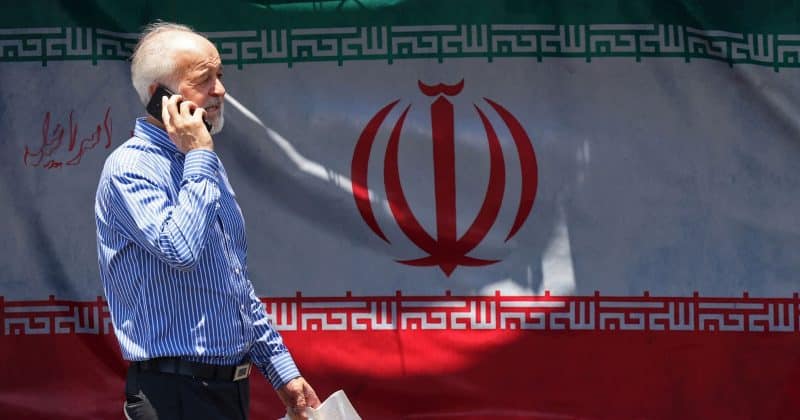
Dozens to hundreds of Iranian-American protesters descended on the Los Angeles area on June 15 as Iran’s national soccer team prepared to take on New Zealand in its opening 2026 FIFA World Cup match at SoFi Stadium. The demonstrations, centered around the team hotel and the stadium vicinity, marked one of the most visible political flashpoints of the tournament so far.
Participants waved the pre-1979 “Lion and Sun” flag, a symbol of Iran before the Islamic Revolution, and chanted against the current regime in Tehran. Their core argument: the Iranian national team is being deployed as a soft-power propaganda instrument by a government with a well-documented record of human rights abuses.
A diaspora divided over a soccer match
Los Angeles is home to the largest Iranian-American community outside of Iran itself. That makes this particular World Cup venue uniquely charged for a match involving Iran’s national squad.
The community response has been far from monolithic. Some members organized boycotts of the match entirely, refusing to offer even indirect support to anything carrying the Islamic Republic’s branding. Others held watch parties, drawing a line between the players on the pitch and the government that fields them.
It’s a tension that’s played out before. During the 2022 World Cup in Qatar, Iranian players made headlines when they refused to sing the national anthem during their opening match against England, a gesture widely interpreted as solidarity with the “Woman, Life, Freedom” protests raging back home at the time.
The protests drew somewhere between dozens and 200 participants, depending on the estimate.
FIFA’s flag ban adds fuel
One particularly sore point for demonstrators: FIFA’s decision to ban the pre-1979 Lion and Sun flag from World Cup venues. The governing body’s position treats the flag as a political symbol that falls outside acceptable match-day expression.
For protesters, this is exactly backwards. They view the Lion and Sun as the legitimate national symbol of Iran, stripped away by a revolutionary government they consider illegitimate. FIFA’s enforcement of the ban, in their eyes, amounts to doing the regime’s work for it.
The broader geopolitical backdrop
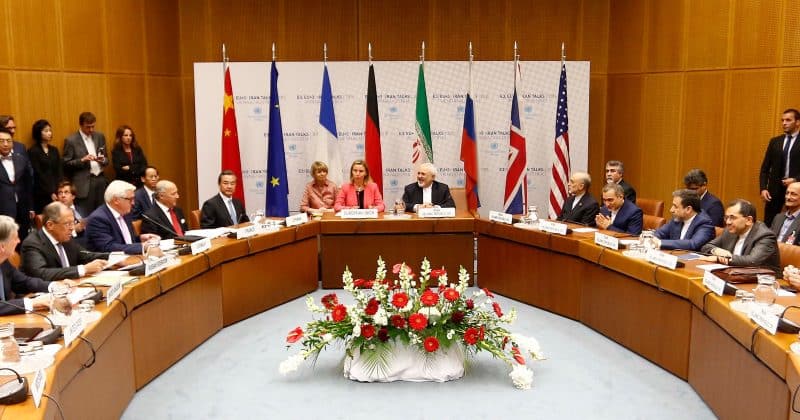
These protests didn’t emerge from a vacuum. US-Iran relations remain deeply strained, with tensions persisting across multiple fronts including nuclear negotiations, regional proxy conflicts, and sanctions enforcement. Notable military episodes like Operation Epic Fury have kept the bilateral relationship in a near-permanent state of friction.
What makes 2026 different is the sheer scale of the Iranian diaspora in the host city. This isn’t a handful of activists who traveled to make a point. These are local residents for whom Iran’s political future is personal, not theoretical.
What this means for brands and the broader tournament
The 2026 World Cup has attracted partnerships with crypto-native companies including Kraken and Avalanche, part of FIFA’s broader push into blockchain-based digital collectibles and fan engagement platforms.
None of these crypto partnerships are directly connected to the Iranian protests. But the episode illustrates a risk that any brand aligned with the tournament needs to consider. When politically contentious nations participate, sponsors and partners can find themselves adjacent to controversies they never anticipated.
Disclosure: This article was edited by Editorial Team. For more information on how we create and review content, see our Editorial Policy.
 English (US) ·