
 1 hour ago
15
1 hour ago
15
Snap (SNAP) stock fell 9.72% to $5.16 on Tuesday after CEO Evan Spiegel unveiled the company’s first commercial augmented reality glasses, priced at $2,195 per unit.
The announcement came at the Augmented World Expo (AWE) 2026 in California. Snap opened preorders the same day, requiring a $200 refundable deposit. Initial shipments will reach the US, UK, and France this fall, with Snap targeting developers and early adopters first.
 SNAP Stock Price Chart. Source: Google Finance
Design Backlash Drives Investor Caution
The Specs project digital content onto the real world and runs without a connected smartphone.
Spiegel positioned the device as a standalone computing platform, with built-in apps covering web browsing, navigation, real-time translation, and an AI assistant. Prescription lens inserts also let multiple users share a single pair.
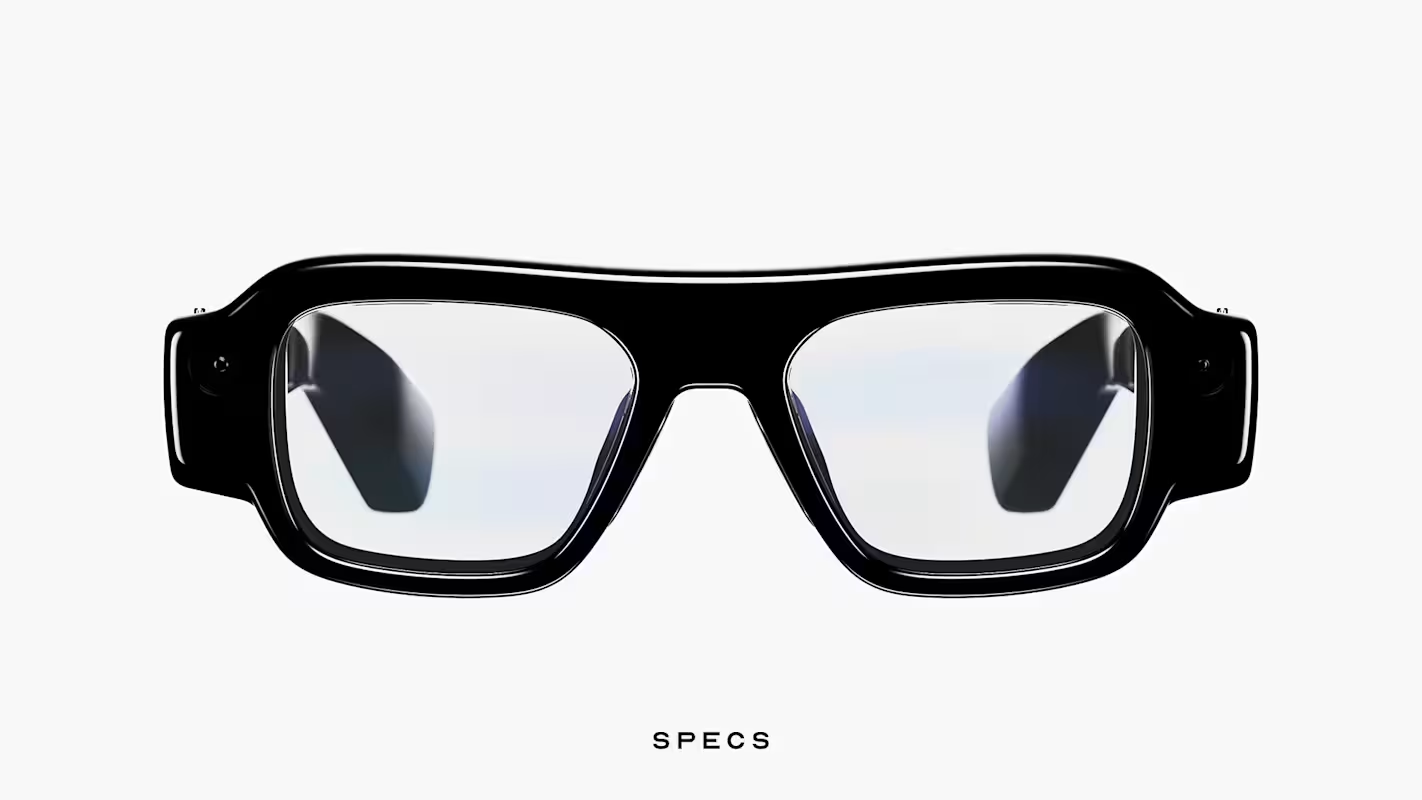 SPECS Augmented Reality Glasses. Source: Snap Inc.
Public reaction focused on the form factor. Users on social media compared the bulky frames to 3D cinema glasses and solar eclipse viewers, casting doubt on everyday wearability.
The pattern mirrors other premium product stock drops in 2026, where high-priced launches triggered investor skepticism before the market could assess actual demand.
The reaction also reached crypto-native channels. Crypto prediction markets reached record transaction levels in 2026. Traders on platforms like Polymarket now track high-profile tech stock catalysts as they unfold, and the SNAP announcement drew rapid attention across those communities.
Snap Enters a Crowded Market at a Premium Price
The $2,195 price tag is more than three times that of Meta’s Ray-Ban smart glasses, which retail below $700. Meta commands roughly 76% of global smart glasses shipments, backed by a developer ecosystem Snap cannot yet match.
The company recently shut down VR metaverse operations to redirect resources toward smart glasses and AI hardware, sharpening its competitive focus.
Apple and Google are also building competing wearables, adding pressure from players with deeper development budgets. Retail stock participation hit its lowest level since Q3 2024, shrinking the speculative buyer base that smaller-cap names like SNAP depend on for price support.
Spiegel framed Specs as a long-term complement to smartphones rather than a replacement for them. He compared the trajectory to how mobile devices extended laptops rather than eliminating them.
“Almost 20 years since the launch of the iPhone, people are ready to think about computing differently,” Evan Spiegel, via Snap
SNAP has shed roughly 33% year to date heading into Tuesday’s drop. With prediction markets flagging stock risk across tech in 2026, Snap has little margin for error with a slow rollout.
Whether Specs can convert developer interest into mainstream demand may become clearer when consumer shipments begin this autumn.
The post Snapchat’s Parent Company Launches $2,000 AR Glasses, But Stockholders Didn’t Like It appeared first on BeInCrypto.









 English (US) ·