
 2 months ago
43
2 months ago
43
- Elliptic links $285M Drift exploit to North Korean DPRK hackers
- Attack shows structured, cross-chain laundering patterns
- Solana’s fragmented model makes tracking attackers more difficult
A massive $285 million exploit on Solana-based Drift Protocol is now being tied to something much bigger than a typical DeFi hack. Blockchain analytics firm Elliptic says the attack carries multiple hallmarks of North Korea’s state-backed DPRK hacking groups, pointing to patterns that feel… very familiar at this point. If confirmed, it would mark yet another chapter in a long-running campaign of crypto theft tied to state-level actors.
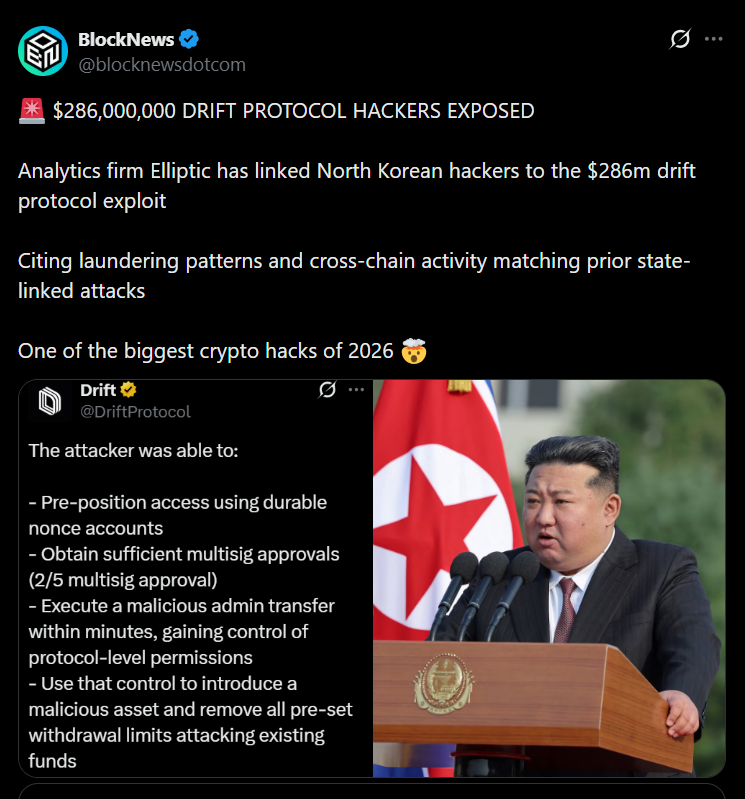
What stands out isn’t just the size of the exploit, though that alone is significant. It’s the structure behind it. Elliptic’s analysis suggests the attack was carefully staged, with early test transactions, pre-positioned wallets, and a coordinated execution that doesn’t look accidental or opportunistic.
A Familiar DPRK Crypto Attack Pattern
According to Elliptic, the behavior seen in this exploit closely mirrors previous attacks linked to North Korean groups. Funds were rapidly consolidated, swapped across assets, and then bridged across multiple blockchains. That kind of movement isn’t random, it’s part of a repeatable laundering strategy designed to obscure origins while keeping control intact.
If verified, this would be the eighteenth DPRK-linked crypto incident tracked this year alone, with over $300 million stolen so far. That adds to an already staggering trend, with billions reportedly taken in recent years and, according to US authorities, funneled toward state programs.
Cross-Chain Laundering Is Getting More Sophisticated
One of the more striking aspects of this case is how quickly funds moved across ecosystems. Data shows over $250 million was shifted from Drift into intermediary wallets before being distributed across multiple addresses and chains. The speed and coordination suggest a well-rehearsed process.

This highlights a growing challenge in crypto investigations. Laundering is no longer confined to a single network, it’s inherently cross-chain. Funds can move from Solana to Ethereum and beyond in a matter of minutes, making it harder to trace without more advanced, interconnected tracking systems.
Solana’s Structure Adds Another Layer of Complexity
Elliptic also points to Solana’s account model as a complicating factor. Because each asset is stored in separate token accounts, activity tied to a single entity can appear fragmented across many addresses. Without linking those accounts, investigators risk seeing only pieces of the puzzle rather than the full picture.
That’s where entity-level clustering becomes essential. By connecting multiple token accounts back to a single actor, analysts can better track exposure across assets and addresses. In an exploit involving numerous tokens, that broader view isn’t just helpful, it’s necessary.
The Bigger Picture for Crypto Security
This incident goes beyond one protocol or one chain. It reflects how state-backed actors are evolving alongside the crypto ecosystem, adapting to new infrastructure and exploiting its complexity. And as laundering techniques become more sophisticated, the tools needed to track them have to evolve just as quickly.
The Drift exploit is already the largest of the year, but its real significance might be what it reveals about the next phase of crypto threats. Not just bigger attacks, but smarter, more coordinated ones that operate across chains and systems almost seamlessly.
Disclaimer: BlockNews provides independent reporting on crypto, blockchain, and digital finance. All content is for informational purposes only and does not constitute financial advice. Readers should do their own research before making investment decisions. Some articles may use AI tools to assist in drafting, but every piece is reviewed and edited by our editorial team of experienced crypto writers and analysts before publication.







 English (US) ·