
 2 months ago
45
2 months ago
45
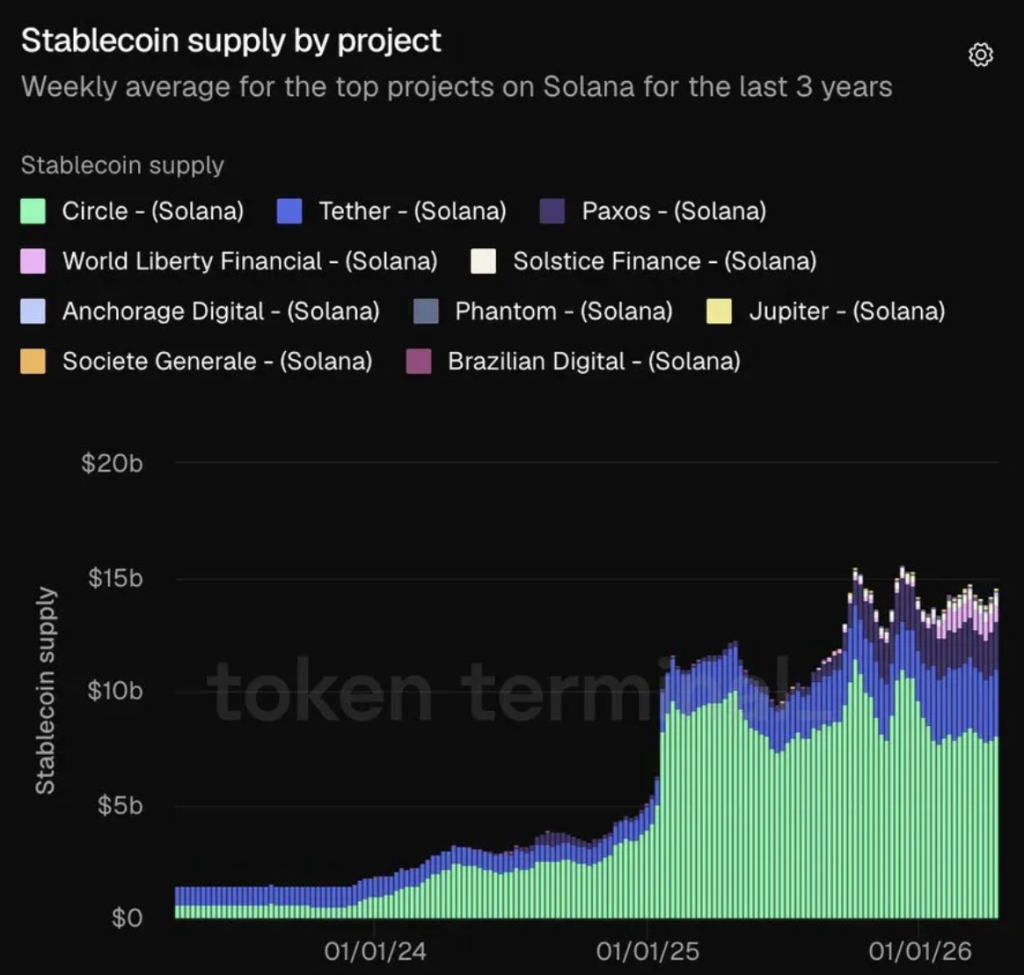
- Solana’s stablecoin supply is projected to reach $14.6 billion by 2026, signaling strong capital inflow
- Growth is driven by increased on-chain activity, low fees, and expanding issuer participation
- Stablecoins are evolving into a core part of Solana’s ecosystem, improving liquidity and overall efficiency
Solana’s stablecoin ecosystem is starting to look… crowded, in a good way. What used to be a relatively modest pool of liquidity is now expanding at a pace that’s hard to ignore, with projections pointing toward a massive $14.6 billion supply by 2026. That kind of growth doesn’t just happen randomly—it usually reflects something deeper, like sustained capital entering the system and actually staying there.
It also says a lot about how stablecoins are being used. They’re no longer just sitting idle or acting as temporary parking spots, they’re actively moving through the network, powering trades, payments, and DeFi activity in a way that feels a bit more… permanent than before.
Growth Accelerates Faster Than Expected
Looking back, the numbers tell a pretty clear story. Solana’s stablecoin supply jumped from around $1.88 billion in 2024 to $5.47 billion in 2025, which is already a sharp increase. But what’s coming next is even more aggressive, with projections climbing toward $14.6 billion in 2026—nearly tripling again in a relatively short window.
That kind of expansion doesn’t happen in isolation. It’s being pushed by rising on-chain activity, faster transaction speeds, and a network that, for the most part, keeps fees low enough to actually encourage usage. When it’s cheap and fast, people tend to… well, use it more.
Big Players and New Entrants Shape the Landscape
Of course, a big part of this growth comes down to who’s issuing these stablecoins. Major names like Circle and Tether are still leading the charge, providing the bulk of liquidity that traders and protocols rely on daily. But what’s interesting is the growing presence of newer or less traditional players—Paxos and even Societe Generale stepping in, adding a bit more diversity to the mix.
That shift matters. A wider range of issuers doesn’t just spread risk, it also opens the door to new types of applications, different compliance models, and maybe even new regions tapping into the ecosystem. It’s not just bigger—it’s becoming more layered, more complex.
Stablecoins Become Core Infrastructure
What’s really changing, though, is how stablecoins fit into the bigger picture. They’re no longer just a side tool for traders—they’re becoming a core piece of Solana’s financial infrastructure. Whether it’s lending, borrowing, swapping, or even simple payments, stablecoins are quietly sitting at the center of it all.
As supply increases, liquidity improves, and that tends to make everything else run smoother. Trades execute faster, slippage drops, and protocols have more capital to work with. It’s one of those feedback loops—more liquidity brings more users, which brings even more liquidity.
A Bigger Role in the Broader Market
If the $14.6 billion projection actually plays out, Solana could start positioning itself as a serious contender in the stablecoin space, not just a fast chain with potential. It would mean more capital flowing through its ecosystem, more reliability in execution, and possibly stronger competition with other networks that have historically dominated this segment.
Still, projections are just that—projections. But the direction feels pretty clear. Solana isn’t just growing, it’s building out a deeper, more liquid foundation… and that might end up being the real story here.
Disclaimer: BlockNews provides independent reporting on crypto, blockchain, and digital finance. All content is for informational purposes only and does not constitute financial advice. Readers should do their own research before making investment decisions. Some articles may use AI tools to assist in drafting, but every piece is reviewed and edited by our editorial team of experienced crypto writers and analysts before publication.








 English (US) ·