
 1 hour ago
16
1 hour ago
16
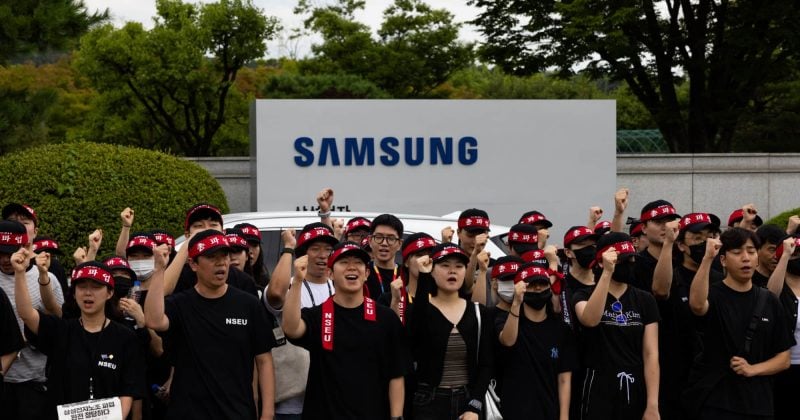
South Korea’s government is pulling out the big guns to stop a Samsung Electronics strike before it starts. Industry Minister Kim Jung-kwan announced the country will use all available options, including emergency arbitration, to prevent a walkout that could cripple the world’s largest memory chip manufacturer.
The labor union has set a May 21 deadline. If negotiations over performance-based bonuses fail by then, workers plan to strike.
The $67 billion question
Kim Jung-kwan put a number on the potential damage: 100 trillion won, roughly $67 billion. Emergency arbitration in South Korea can suspend strikes for up to 30 days, buying time for negotiations while keeping production lines humming. The government frames it as a national economic security measure.
What the workers want
The union wants an institutionalized profit-sharing structure, essentially a formal system that ties worker compensation to company performance in a transparent, repeatable way. They’re also pushing for adjustments to bonus caps that are linked to Samsung’s earnings.
Mediation talks between Samsung management and the labor union have already broken down, which is how things escalated to a government intervention threat.
Emergency arbitration: what it actually means
South Korea’s emergency arbitration mechanism, once invoked, can freeze strike action for up to 30 days. During that window, both sides are legally required to continue negotiating.
What this means for investors
If the government successfully invokes emergency arbitration, the short-term risk drops significantly. Investors should watch the May 21 deadline closely. If emergency arbitration is formally invoked, expect a brief relief trade in Samsung shares followed by attention shifting to whether the underlying dispute actually gets resolved.
Disclosure: This article was edited by Editorial Team. For more information on how we create and review content, see our Editorial Policy.







 English (US) ·