
 2 months ago
46
2 months ago
46
Grayscale’s head of research says Strategy’s leveraged business model has come under pressure, and that pressure could make it harder for the company to keep adding Bitcoin to its holdings.
A Dividend Problem Taking Shape
Zach Pandl made the assessment Thursday after Strategy sold 32 Bitcoin — a tiny slice of its 843,706 BTC stockpile — triggering a wave of selling that has knocked Bitcoin down 16% since the transaction.
Strategy also offloaded $128 million in shares, and its stock has dropped nearly 13% to a two-month low of $126.
At the center of the concern is STRC, a variable-rate preferred equity instrument that Strategy designed to trade at $100 per share and pay an 11.5% dividend. It is now trading around $95 — below the target price — a sign that investors are demanding a higher return than the instrument currently offers.
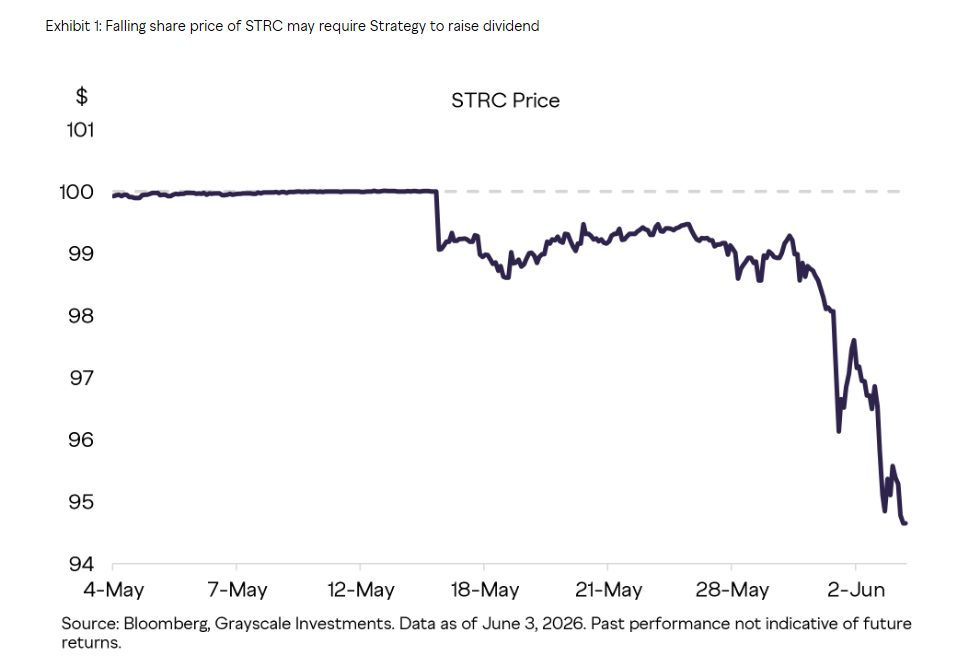
If Strategy responds by raising the dividend to pull STRC back to par, cash obligations grow. Higher cash obligations could push the company toward selling more Bitcoin. More Bitcoin sales could weigh further on prices.
Pandl put it plainly: Strategy’s levered model is under pressure, and that has increased volatility for the Bitcoin market as a whole.
What Saylor’s First Sale Changed
Until this week, Strategy had operated under a strict buy-and-hold approach, treating Bitcoin accumulation as a one-way strategy. The sale of 32 BTC — however small — broke that pattern and shook confidence among investors who had built a bullish thesis around the assumption that Saylor would never sell.
Augustine Fan, a partner at crypto software firm SignalPlus, said markets are blaming the sales and STRC’s discount for driving the latest downturn, but added that even committed supporters are finding fewer reasons to stay structurally bullish.
All eyes, Fan said, are on how Saylor manages liquidity by balancing STRC dividend payments against Bitcoin holdings.
A Healthier Market Without The ConcentrationGrayscale’s Pandl sees a broader upside to a potential shift away from concentrated, leveraged BTC holdings. Less Bitcoin sitting on the balance sheets of highly indebted companies, and more spread across diversified corporate holders, would benefit the Bitcoin ecosystem over the long run, he argued.
Featured image from Unsplash, chart from TradingView


 English (US) ·