
 3 months ago
74
3 months ago
74
- Strong engagement around Bored Ape Yacht Club and Pudgy Penguins suggests NFT communities remain highly active.
- Leading projects are shifting focus from speculation to brands, intellectual property, gaming, and real-world products.
- Recent social media activity indicates demand for top NFT collections may be stronger than many critics believe.
Every few months, the internet declares NFTs dead. The headlines return, the criticism resurfaces, and social media fills with reminders that trading volumes are nowhere near the heights reached during the frenzy of 2021. Yet something interesting keeps happening beneath the surface. The communities surrounding some of the biggest NFT collections continue showing up, engaging, and expanding long after the speculative bubble burst.
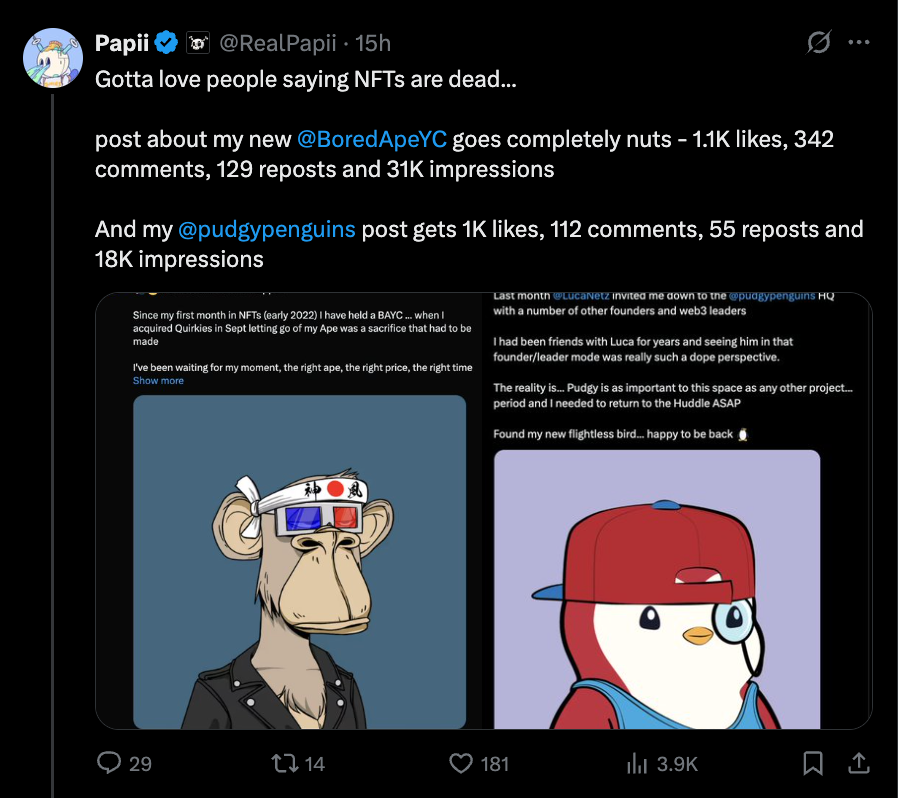
Recent social media activity offers a good example. A post featuring a new Bored Ape Yacht Club NFT generated more than 1,100 likes, hundreds of comments, over 100 reposts, and tens of thousands of impressions. Similar engagement levels have appeared around Pudgy Penguins content as well. These numbers don’t automatically signal a new bull market, but they do challenge the narrative that nobody cares about NFTs anymore. For a sector supposedly on life support, the audience still seems remarkably engaged.
The NFT Market Looks Very Different Today
The NFT landscape of 2026 barely resembles the market that dominated headlines during the last cycle. Back then, speculation often drove everything. Collections exploded in value overnight, traders chased quick profits, and new projects launched faster than investors could evaluate them.
Today, many of the projects that survived have adopted a very different strategy. Rather than focusing solely on floor prices and secondary market activity, they are investing in long-term brand development. Intellectual property, licensing deals, merchandise, gaming integrations, and consumer products have become central parts of the conversation. The market appears to be maturing, even if that process has been quieter than many expected.
The result is an industry that may be smaller in volume but arguably stronger in fundamentals.
Pudgy Penguins and Bored Apes Lead the Shift
Pudgy Penguins has become one of the clearest examples of this evolution. What began as a digital collectible project has grown into a recognizable consumer brand with products appearing in major retail stores. The collection’s success demonstrates how NFT intellectual property can extend beyond blockchain-native audiences and reach mainstream consumers.
Bored Ape Yacht Club remains another major force. While trading activity may not resemble peak bull market levels, the community continues to be one of the largest and most active in Web3. Engagement remains high, partnerships continue developing, and the ecosystem has expanded far beyond simple profile pictures. The conversation has shifted from short-term speculation toward building sustainable communities and long-term brands.
Attention Remains One of Crypto’s Strongest Signals
One metric that many investors underestimate is attention. Markets often follow interest, and sustained attention is difficult to manufacture over extended periods. While trading volumes provide useful data, cultural relevance can sometimes be an equally important indicator of long-term viability.
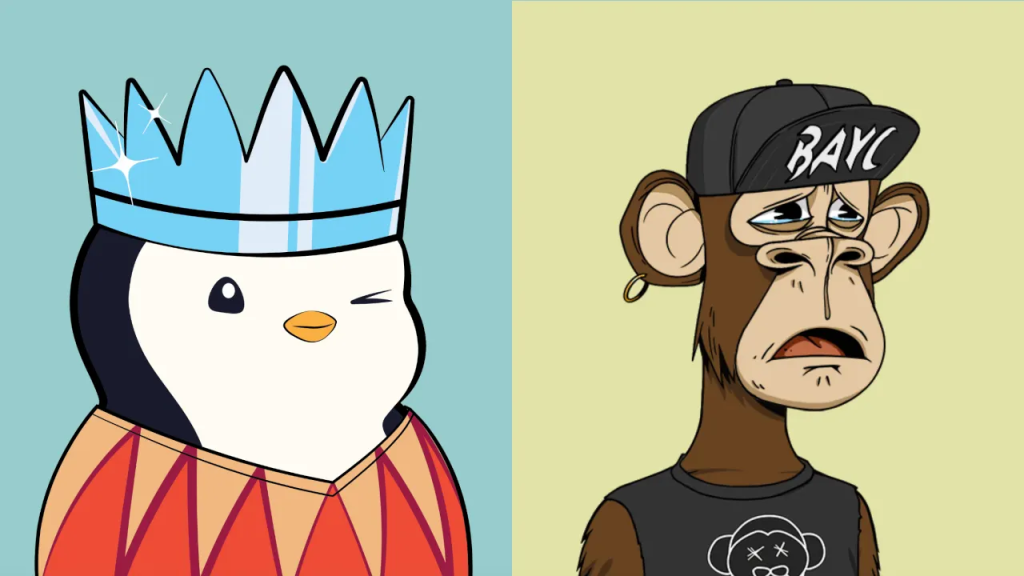
The fact that leading NFT projects continue generating thousands of interactions years after the market peak suggests these communities still occupy an important place within crypto culture. That matters because culture tends to survive far longer than speculation. Financial hype comes and goes, but strong communities often remain.
Increasingly, the most successful NFT collections resemble media brands and entertainment franchises more than traditional collectibles.
The NFT Industry May Be Healthier Than Before
The irony is that today’s NFT market may actually be healthier than it was during its most explosive period. Trading volumes have declined, speculative excess has cooled, and countless low-quality projects have disappeared. While that has reduced overall market activity, it has also removed much of the noise that once dominated the space.
The strongest projects continue attracting engagement, maintaining communities, and building real businesses around their intellectual property. Reports of NFTs’ death appear greatly exaggerated. Instead of chasing the next overnight success story, many leading collections are focused on creating products, brands, and ecosystems that can survive well beyond the next crypto cycle. That may not generate the same excitement as 2021, but it could prove far more sustainable in the long run.
Disclaimer: BlockNews provides independent reporting on crypto, blockchain, and digital finance. All content is for informational purposes only and does not constitute financial advice. Readers should do their own research before making investment decisions. Some articles may use AI tools to assist in drafting, but every piece is reviewed and edited by our editorial team of experienced crypto writers and analysts before publication.



 English (US) ·