
 3 hours ago
15
3 hours ago
15
Key Takeaways
- The 10-year Treasury rate surged past 5.2%, marking its highest reading in approximately twenty years.
- Rates on 30-year bonds reached levels not witnessed since 2004 amid falling bond prices.
- Average mortgage rates for 30-year loans have climbed to 7%, a threshold not crossed since the beginning of 2025.
- Financial advisors recommend considering short-duration Treasuries, mortgage-backed instruments, and investment-grade corporate debt for yield-seeking portfolios.
- The global bond market is experiencing similar pressure, with rates climbing in Germany, Japan, and other major economies.
Treasury yields have experienced a sharp acceleration this week, climbing to territory unseen for nearly two decades. The benchmark 10-year rate pushed beyond 5.2%, while the 30-year rate achieved its steepest level since 2004.
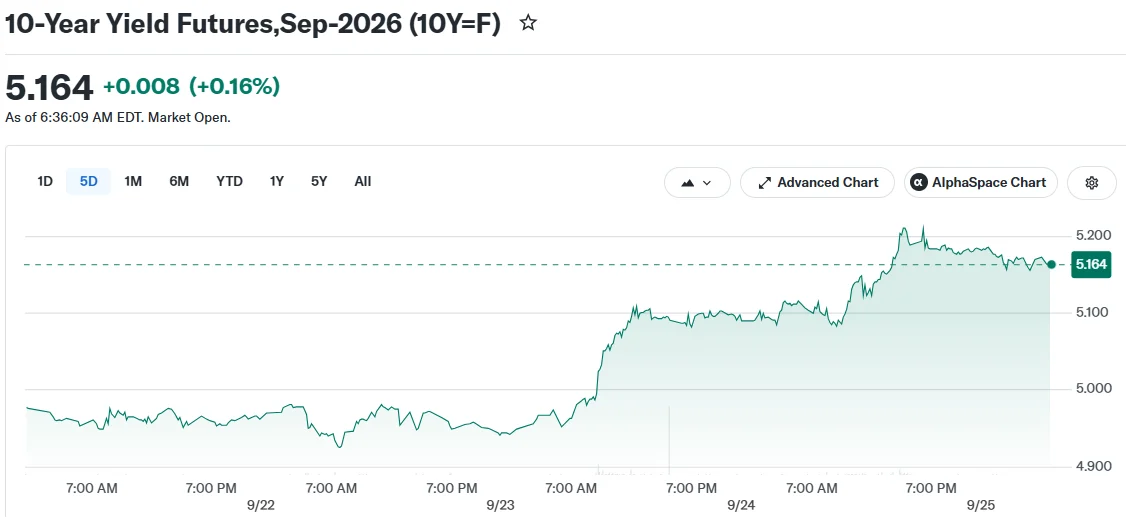 10-Year Yield Futures,Sep-2026 (10Y=F)
The relationship between bond prices and yields operates inversely. As bond values decline, yields increase because investors receive enhanced returns compared to their purchase price.
Forces Behind the Yield Surge
Multiple dynamics are contributing to this upward trajectory. Market participants are concerned about inflationary pressures, partially stemming from elevated oil prices connected to tensions involving Iran.
Federal debt issuance has expanded significantly. When more bonds flood the market, prices decline while yields climb correspondingly.
Technology firms constructing artificial intelligence infrastructure are also flooding the market with substantial debt offerings. This additional supply compounds pressure on the bond market.
Recent economic indicators point to continued resilience. Data released this week revealed business activity expanding at its most robust pace in more than five years, potentially supporting arguments for additional Federal Reserve tightening.
The Federal Reserve implemented its first short-term rate increase since 2023 just last week. Market forecasts anticipate at least one additional hike before year-end.
Consequences for Consumers
The implications of escalating Treasury rates extend well beyond fixed-income portfolios. Mortgage rates on 30-year loans have reached 7% for the first time since the start of 2025.
Elevated rates create affordability challenges in the housing market. They simultaneously increase financing expenses for corporations and government entities.
On the positive side, depositors benefit from improved returns on savings products and short-dated bonds. The 1-year Treasury bill currently offers yields approaching 4.5%.
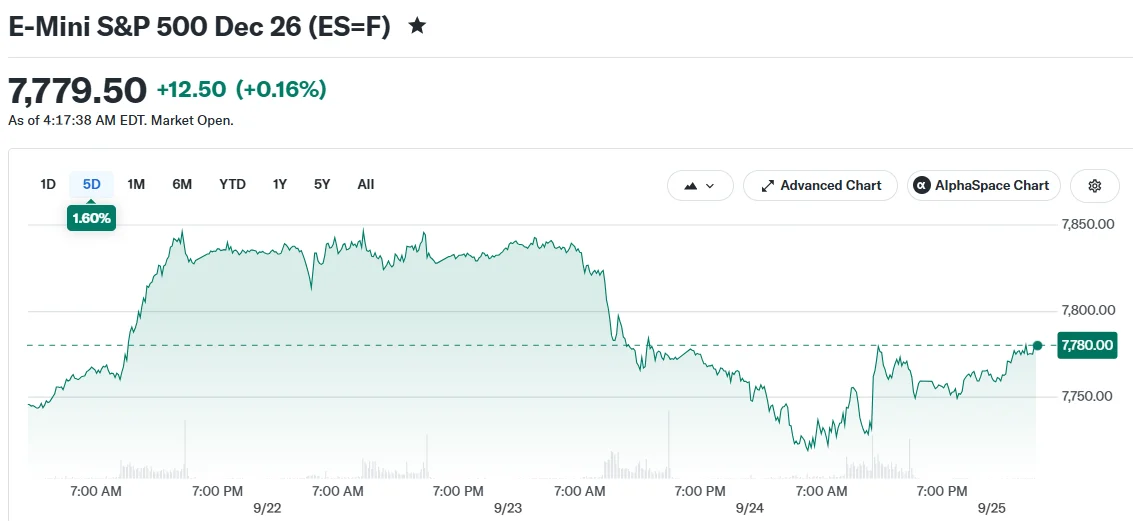
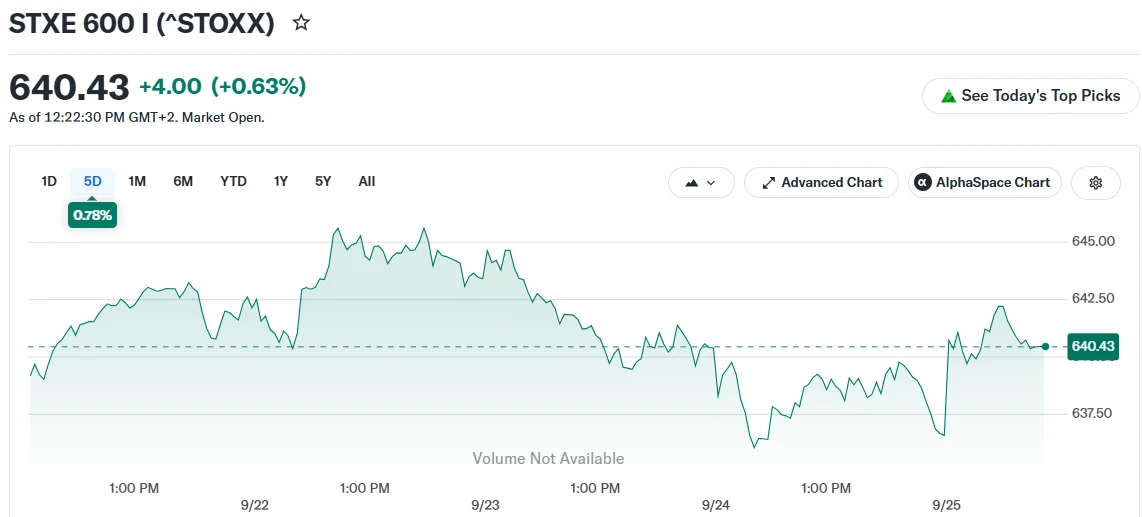
Equity markets haven’t escaped the turbulence. The S&P 500 was hovering near record territory earlier this week before the bond market selloff dampened upward momentum.
The iShares Core U.S. Aggregate Bond fund has declined approximately 5% year-to-date. In contrast, the S&P 500 maintains gains of roughly 13% for the same period.
Strategic Positioning
Market analysts suggest that bonds with shorter maturities may provide superior risk-reward profiles currently. These instruments exhibit less volatility in response to rate fluctuations compared to long-dated Treasuries.
Securities backed by mortgages and other assets are receiving renewed attention from strategists. Exchange-traded funds focused on these categories are delivering yields around 4.5%.
Investment-grade corporate debt represents another segment attracting professional interest. Numerous blue-chip corporations maintain robust balance sheets despite tighter monetary conditions.
Municipal debt instruments are generating heightened interest as well. Their tax-advantaged characteristics become increasingly attractive when paired with elevated yield levels.
Sovereign debt from developing economies is also capturing increased capital flows. One benchmark fund tracking short-maturity obligations from nations including Saudi Arabia and Mexico currently provides 5.6% yields.
International Parallels
This yield expansion isn’t confined to American markets. Germany’s 10-year rate has climbed to approximately 3.60%, representing its loftiest reading since 2008.
Japan’s comparable rate stands at 3.08%. This represents a dramatic reversal from the sub-zero yields the nation experienced as recently as 2020.
Market observers attribute this synchronized movement to escalating sovereign debt burdens and persistent inflation worries spanning numerous developed economies, extending beyond U.S. borders.
The post Treasury Yields Surge to Two-Decade Peak: What Investors Need to Know appeared first on Blockonomi.






 English (US) ·