
 1 hour ago
18
1 hour ago
18
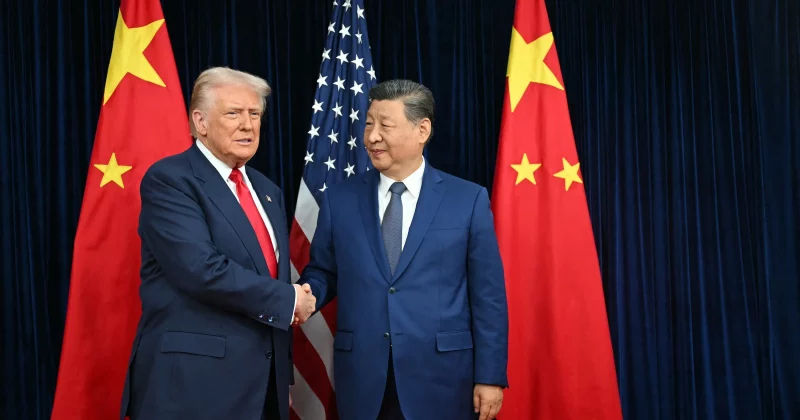
President Trump and Chinese President Xi Jinping are preparing to sit down in Beijing for what amounts to the most consequential US-China summit in nearly a decade. The meeting, set for May 14, 2026, will tackle an agenda shaped almost entirely by two forces: the ongoing Iran war and a trade relationship that has been anything but stable.
It’s the first time a sitting US president has visited Beijing in nine years.
A summit with a stacked guest list
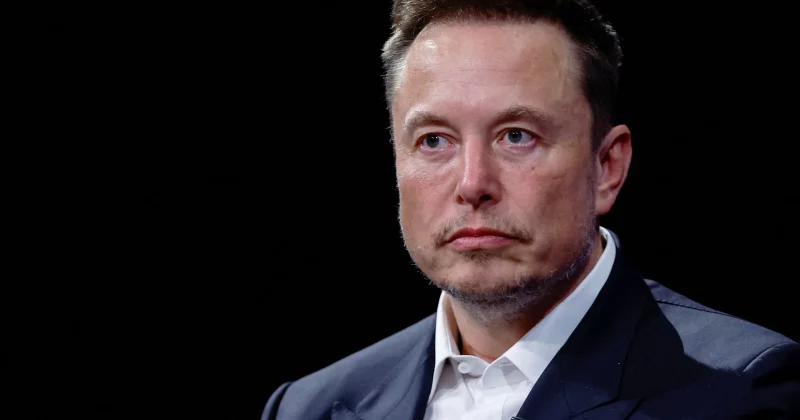
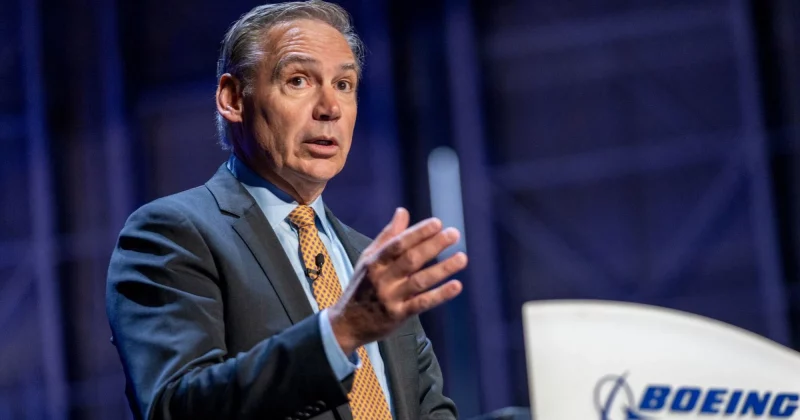
Trump isn’t traveling light. The delegation includes more than 12 major corporate executives, a roster that reads like a who’s-who of American capitalism. Elon Musk, Apple CEO Tim Cook, Boeing’s Kelly Ortberg, BlackRock’s Larry Fink, and Goldman Sachs’ David Solomon are all reportedly part of the entourage.
On the US side, the priorities have been quietly organized around what’s being called the “Five B’s.” That includes Boeing aircraft deals, beef and beans exports, and the creation of new joint trade and investment boards. The framework builds on the trade truce reached in Busan, South Korea, back in October 2025, which temporarily cooled a tariff escalation that had rattled global supply chains for months.
China’s priorities are reportedly structured around the “Three T’s”: extending the existing trade truce, rolling back US support for Taiwan, and easing export controls on advanced semiconductors and chips.
The Iran war looms over everything
While the summit was originally expected to focus on trade and AI competition, the Iran conflict has muscled its way to the top of the agenda. The US has spent an estimated $29B on the war effort so far.
China occupies a unique position in the Iran conversation. As Iran’s top oil buyer, Beijing functions as a kind of unofficial mediator, one with significant economic leverage over Tehran but no formal obligation to use it.
Trump’s posture on the war has been characteristically blunt. When asked whether the cost of living factors into his decisions on the Iran conflict, he responded plainly: “Doesn’t, not even a bit.”
Beyond Iran, the summit agenda includes Taiwan, the South China Sea, fentanyl trafficking, and AI governance. There’s also the case of Jimmy Lai, the Hong Kong media mogul sentenced to 20 years in prison in 2026, whose case has become a symbol of the broader human rights tension between Washington and Beijing.
What’s not on the agenda
Despite the growing intersection between geopolitics and crypto markets, the Beijing summit appears squarely focused on traditional trade, military strategy, and diplomatic horse-trading. Analysts tracking the summit preparations have noted no meaningful linkage between the negotiations and cryptocurrency policy, regulation, or commerce.
What investors should actually watch
The Boeing deals alone could signal the temperature of the relationship. China has historically used large aircraft orders as a diplomatic carrot, and any announcement on that front would suggest the talks are going better than expected.
The semiconductor and AI export controls are arguably the most consequential long-term issue on the table. If China secures any rollback of chip restrictions, it would reshape the competitive landscape in AI development.
The Iran situation adds a wildcard. If Beijing agrees to use its leverage as Iran’s top oil buyer to push for de-escalation, that would be a significant geopolitical shift. If China declines to engage on Iran, or uses its position to extract concessions on Taiwan, the calculus gets much messier.
Disclosure: This article was edited by Editorial Team. For more information on how we create and review content, see our Editorial Policy.



 English (US) ·