
 4 hours ago
41
4 hours ago
41
President Donald Trump took to social media on September 14 to reject any new regulatory guardrails for artificial intelligence, calling safety concerns a “SICK conspiracy” and framing the push for oversight as a gift to China’s tech ambitions.
The timing is not subtle. Trump is scheduled to meet Chinese President Xi Jinping on September 24 in Washington, with AI competition and chip exports sitting near the top of the agenda.
The industry pushback Trump is ignoring
Just days before Trump’s posts, Anthropic CEO Dario Amodei published an essay calling for a deliberate slowdown in AI development until robust safety measures could be established. That position earned backing from two of the most prominent names in tech: OpenAI’s Sam Altman and Elon Musk.
Trump’s response was to single out Amodei by name and criticize the very idea that pacing development might be prudent.
The president’s position is that strong presidential leadership is itself the only safeguard needed against potential AI risks. No new laws, no new agencies, no new frameworks. Just executive discretion.
A policy pattern, not a one-off
This isn’t Trump’s first move to strip AI oversight. Upon returning to office, he revoked Biden-era AI safety measures that had established reporting requirements and risk assessments for advanced models. He followed that up with a new executive order on AI in June 2026, one that prioritized acceleration and competitiveness over caution.
Chinese officials have claimed that US proposals for AI safety measures are themselves a form of containment, designed not to protect humanity but to hinder China’s technological progress.
What the Xi summit could change
The September 24 meeting in Washington is expected to cover the full spectrum of US-China economic competition, but AI will be a centerpiece. Chip export controls, access to advanced semiconductors, and the rules of engagement for AI development are all on the table.
Trump’s pre-summit posture, rejecting guardrails domestically while preparing to negotiate tech boundaries internationally, creates an interesting tension. It’s difficult to credibly push for global AI norms while publicly dismissing the concept of AI safety as conspiratorial thinking.
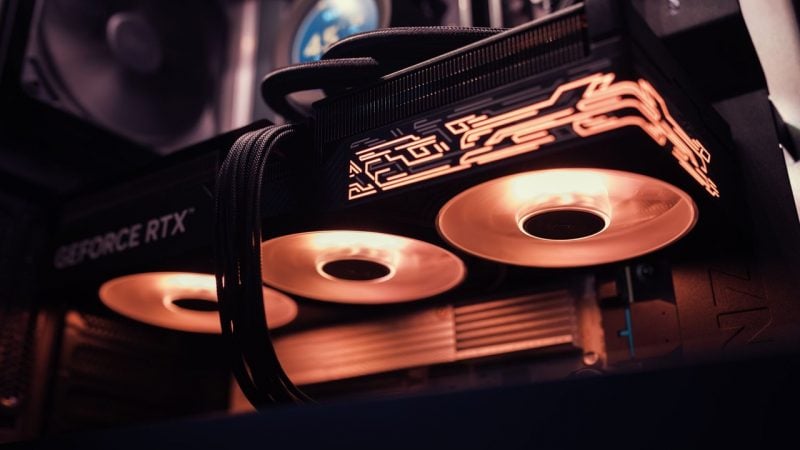
Any changes to chip export restrictions would directly affect companies like Nvidia, whose revenue is heavily tied to AI hardware demand from both US and international customers. A loosening of export controls could expand the addressable market; a tightening could concentrate it.
A White House that views regulation as conspiratorial is unlikely to impose compliance costs or development restrictions on domestic AI companies anytime soon. The coalition asking for guardrails, however, includes the CEOs of the two most prominent AI labs in the world — OpenAI’s Sam Altman and Anthropic’s Dario Amodei.
Disclosure: This article was edited by Editorial Team. For more information on how we create and review content, see our Editorial Policy.





 English (US) ·