
 3 months ago
64
3 months ago
64
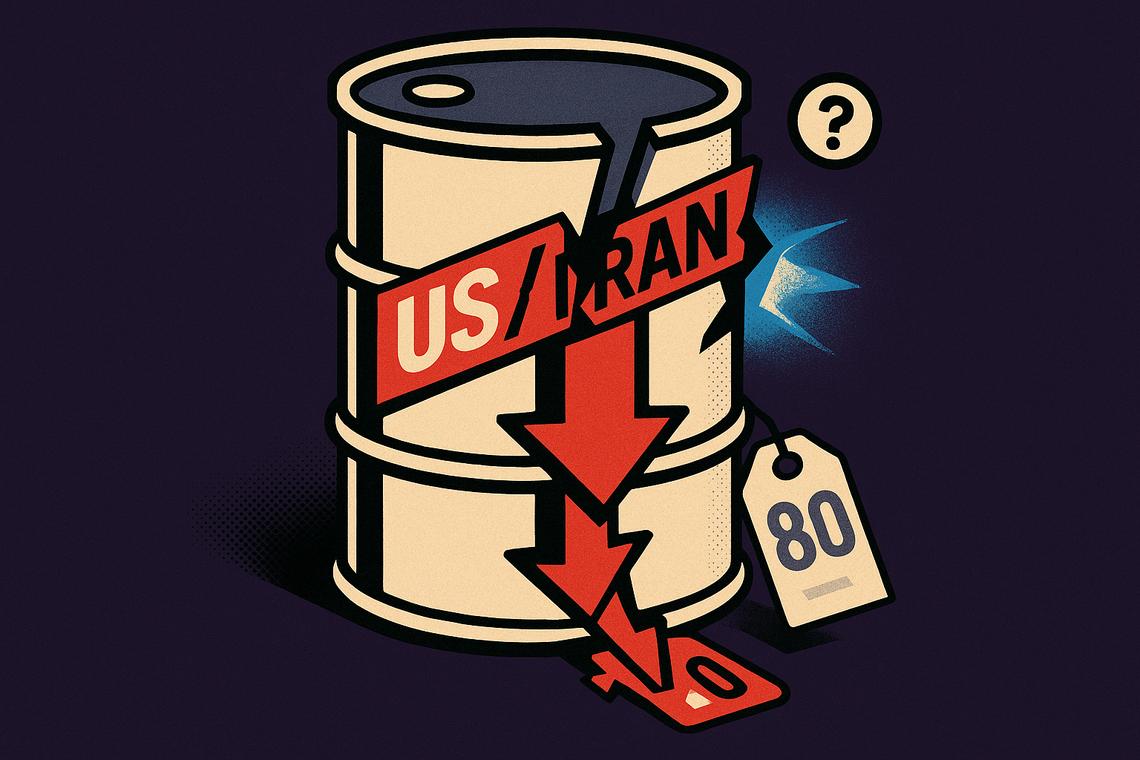
A deal between Washington and Tehran is reshaping global energy markets and sending risk assets higher, with the US-Iran peace deal announced between June 14 and 15 drawing cautious but significant optimism from world leaders — none more measured in his reaction than German Chancellor Friedrich Merz.
Key takeaways
- The US-Iran agreement includes a ceasefire, reopening of the Strait of Hormuz, and lifting of the US naval blockade on Iranian ports.
- Oil prices dropped roughly 33% from a peak of $120 per barrel in early March to around $80 following the deal announcement.
- Bitcoin surged above $65,000, hitting two-week highs in the $65,500–$65,800 range, as risk sentiment improved.
- German Chancellor Friedrich Merz said the deal could “pave the way towards a reinvigorated global economy,” but stressed it must also hold in Lebanon.
- Markets have priced in the announcement — not yet the successful implementation — leaving nuclear talks and Strait of Hormuz verification as the next critical triggers.
What the US-Iran Peace Deal Actually Contains
The agreement represents the first formal ceasefire in a conflict that erupted in late February 2026 and ran for roughly three to four months, killing thousands across the region and hammering European economies dependent on stable energy flows. President Trump announced the deal on social media, writing “Ships of the World, start your engines. Let the oil flow!” — framing it as a diplomatic win that also saves face for a war he initiated.
Iran’s Supreme National Security Council described it as a memorandum of understanding reached after “months of long and difficult negotiations,” with Pakistan serving as a mediator. The formal signing ceremony is scheduled for Friday in Geneva.
Ceasefire and Lifting of the US Naval Blockade
The deal calls for an immediate end to military operations across all active fronts, including Lebanon. Trump confirmed he authorized “the immediate removal of the United States Naval blockade” on Iranian ports — a move that had strangled Iranian trade and contributed to global supply chain stress since the conflict began. The ceasefire framework allows for 60 days of further negotiations on the thorniest remaining issues, including Iran’s nuclear program and the question of sanctions relief, both of which were deliberately left unresolved in the initial agreement.
Reopening of the Strait of Hormuz and Its Significance
The Strait of Hormuz is the narrow chokepoint through which roughly 20% of the world’s daily oil supply flows. During the conflict, Iran had disrupted commercial vessel traffic and at one point demanded tolls from ships seeking passage — a practice the international community rejected as a violation of maritime law. Trump said the strait would reopen with no tolls on Friday, when the deal is formally signed. The interim period is expected to be used for mine clearance operations in the waterway.
The strategic stakes here are hard to overstate. Blocking or taxing a fifth of global oil supply for months was never a sustainable situation for markets, and the commitment to toll-free navigation was one of the clearest wins the international community extracted from the deal.
Oil Prices and Market Reaction
The market reaction was immediate and sharp. Oil prices had spiked to around $120 per barrel in early March as military operations disrupted energy supplies and investors priced in prolonged conflict risk. Following the announcement of the deal, prices dropped to approximately $80 per barrel — a decline of roughly 33% in a matter of hours.
That is an enormous swing, and it reflects how much of the oil price premium over recent months was pure geopolitical risk rather than underlying supply-demand fundamentals. With the Strait of Hormuz set to reopen and the naval blockade lifted, the structural constraint on global energy supply begins to ease — though the speed and completeness of that normalization still depends on implementation.
Bitcoin Price Surge Amid Improved Risk Sentiment
Beyond commodities, the improved sentiment rippled into crypto markets. Bitcoin climbed above $65,000, touching two-week highs in the range of $65,500 to $65,800. The move reflects how sensitive Bitcoin has become to macro geopolitical shifts — when the world steps back from the edge of a broader conflict, risk appetite returns, and digital assets tend to benefit alongside equities.
S&P 500 futures also pointed to modest gains when US trading resumed, suggesting broad-based relief rather than a reaction isolated to any single asset class.
Merz’s Cautious Optimism and the Lebanon Condition
Among the world leaders who responded to the deal, German Chancellor Friedrich Merz offered what may be the most analytically useful reaction. He congratulated both sides, saying the agreement could “pave the way towards a reinvigorated global economy and a more secure Middle East.” But he added a pointed condition: the deal must also hold in Lebanon to truly stabilize the broader situation.
That condition is not rhetorical caution. It reflects a real structural problem. Israel was not a party to the US-Iran negotiations, and Israeli national security minister Itamar Ben-Gvir stated publicly that Israel was not bound by the agreement and would not withdraw from captured territory or compromise on Hezbollah’s dismantlement. An Israeli airstrike on the southern suburbs of Beirut earlier on Sunday had nearly derailed the entire deal before last-minute Qatar-mediated talks brought it back together.
Merz’s position wasn’t isolated. He joined British Prime Minister Keir Starmer, French President Emmanuel Macron, Italian Prime Minister Giorgia Meloni, and Japanese Prime Minister Sanae Takaichi in a joint statement calling the agreement “a moment of opportunity to restore regional stability and stabilize the global economy” — while also pressing for rapid and comprehensive implementation. The five leaders committed to supporting unconditional reopening of the Strait of Hormuz, including through a defensive mission covering mine clearance operations.
What Comes Next and Why It Matters for Investors
The deal as announced is a framework, not a resolution. The most consequential issues — Iran’s nuclear program and the scope of US sanctions relief — have been explicitly deferred to at least 60 days of follow-on negotiations. Those talks will determine whether the current relief in energy markets and risk assets is durable or temporary.
Markets have already done a lot of work. The oil price drop and Bitcoin’s climb above $65,000 show that investors quickly priced in the announcement itself. What they have not yet priced in is successful implementation. That distinction matters enormously for anyone positioned in energy, equities, or crypto heading into summer 2026.
Investors tracking this situation should focus on three specific developments:
- The confirmed reopening status of the Strait of Hormuz, including mine clearance completion and the resumption of normal commercial shipping on Friday.
- The progress and tone of nuclear negotiations and whether verified steps toward sanctions relief materialize within the 60-day window.
- Whether the Lebanon front holds — both Israel’s posture toward the ceasefire and Hezbollah’s compliance will be early signals of whether the broader deal can sustain itself.
The optimism from European leaders is genuine, but it is also conditional. Merz’s framing — that the deal could stabilize the global economy — is precisely calibrated. A deal that holds only in the US-Iran theater but fractures in Lebanon would leave one of the region’s most volatile conflict lines still active, with all the energy market and humanitarian consequences that come with it.
The harder question now is whether the same diplomatic architecture that produced the June 14-15 framework — Qatar’s mediation, European pressure, and Trump’s desire for a transactional win — can also navigate the nuclear file. That is a significantly more complex negotiation, and history offers little encouragement for optimism on short timelines.
FAQ
What are the main terms of the US-Iran peace deal?
The deal includes a ceasefire calling for an immediate end to military operations on all fronts, the reopening of the Strait of Hormuz for toll-free commercial shipping, and the lifting of the US naval blockade on Iranian ports. The formal signing is scheduled for Friday in Geneva, with at least 60 days of follow-on negotiations planned to address Iran’s nuclear program and potential sanctions relief.
How did the peace deal affect oil prices and Bitcoin?
Oil prices dropped approximately 33%, falling from a peak of around $120 per barrel in early March 2026 to roughly $80 per barrel following the deal announcement. Bitcoin surged above $65,000, reaching two-week highs in the $65,500 to $65,800 range, driven by improved risk sentiment across global markets.
Why does German Chancellor Friedrich Merz stress the importance of Lebanon in this deal?
Merz said the deal could stabilize the global economy only if it also holds in Lebanon, where Israel and Hezbollah continue to fight. Israel was not a party to the US-Iran negotiations and has stated it is not bound by the agreement, making Lebanon a potential flashpoint that could undermine the broader peace framework if left unresolved.
What should investors watch following the deal announcement?
Investors should monitor the confirmed reopening of the Strait of Hormuz and completion of mine clearance, the progress of nuclear negotiations and any concrete steps toward sanctions relief within the 60-day window, and whether the ceasefire holds in Lebanon — since that condition, flagged by Merz, will be an early test of the deal’s durability.
Article produced with the assistance of artificial intelligence and reviewed by the editorial team.





 English (US) ·