
 2 months ago
44
2 months ago
44
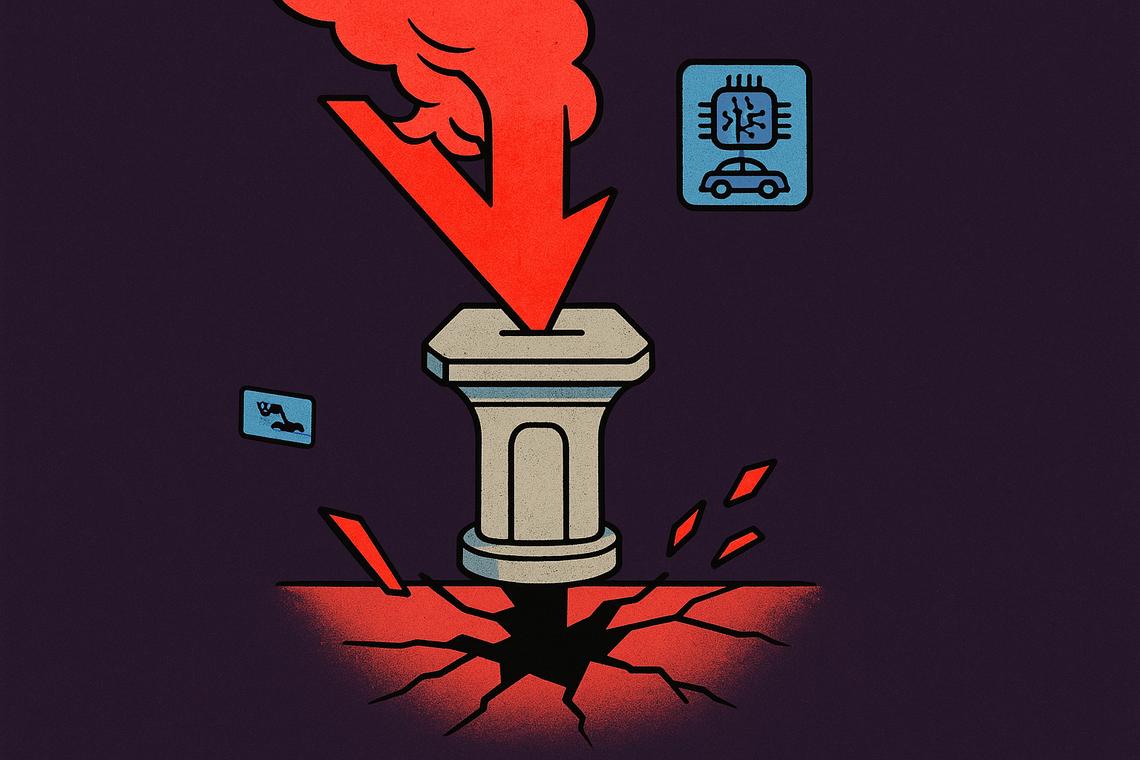
Something shifted in markets on Wednesday morning — and it wasn’t just a routine pullback. Wall Street futures declined ahead of one of the most closely watched earnings days of the season, with Alphabet and Tesla both set to report after the closing bell. The technology sector’s strong momentum from the prior session stalled almost instantly, raising a pointed question: was Tuesday’s rally a genuine recovery, or simply borrowed time before the numbers arrive?
Key takeaways
- Nasdaq 100 futures fell 0.8%, S&P 500 futures dropped 0.3%, and Dow Jones contracts edged down 0.2% in early Wednesday trading.
- Alphabet’s earnings are expected to reveal the scale of its artificial intelligence infrastructure spending, with analysts at BMO targeting a price of $455 on the stock.
- Tesla’s report is anticipated to update investors on robotics, self-driving progress, and vehicle deliveries, which have recovered from a two-year low.
- Bitcoin held near $66,300, with its price movements showing stronger correlation with semiconductor stocks than with currency markets.
- The Japanese yen fell past 163 per dollar for the first time since 1986, while US-Iran hostilities entered their eleventh consecutive day, with the conflict’s financial toll reaching $37.5 billion.
Wall Street Futures Decline Ahead of Key Earnings Reports
The numbers were hard to ignore. Futures contracts on the S&P 500 decreased 0.3%, Nasdaq 100 contracts fell 0.8%, and Dow Jones contracts edged down 0.2% — a broad-based retreat that cut against the prior session’s tech-led advance.
Tuesday had been a solid day. The Nasdaq Composite climbed 1.3%, the S&P 500 gained 0.9%, and the Dow added 0.7%. The Philadelphia Semiconductor Index surged an impressive 5.2%, driven by chip sector optimism. But the overnight futures told a different story — traders pulling back, hedging exposure, waiting to see whether Alphabet and Tesla could justify the run-up.
This kind of pre-earnings hesitation is entirely rational. When two megacaps of this scale report on the same afternoon, the market effectively holds its breath. According to CNBC, of the roughly 50 S&P 500 companies that had reported by mid-week, 88% exceeded analyst earnings expectations — a strong baseline. But strong seasons can still produce individual disappointments, and the two names on Wednesday’s docket carry enormous index weight.
What Alphabet and Tesla Need to Deliver
Alphabet’s AI Spending Under the Microscope
Alphabet is expected to report earnings and revenue growth of more than 20% for the quarter, according to LSEG. But the headline number may matter less than the detail buried in the capital expenditure figures. Last quarter, the Google parent raised its full-year capex guidance to as high as $190 billion — a staggering commitment to artificial intelligence infrastructure. Wednesday’s report will show whether that spending is translating into competitive advantage, or simply widening a cost base that the market is beginning to scrutinize.
BMO raised its price target on Alphabet to $455 ahead of the report, up from $435, implying a 31% gain from Friday’s close. Analyst Brian Pitz noted that investors now largely expect Alphabet’s Gemini models to stay competitive with those from OpenAI and Anthropic — meaning any sign of falling behind on next-generation AI capabilities could hit the stock hard. Alphabet has exceeded earnings expectations for 13 consecutive quarters, and on average its stock advances 1.3% on results days, per Bespoke data.
Tesla’s Broader Story: Robots, Robotaxis, and Recoveries
Tesla’s report carries a different kind of weight. Analysts expect the EV maker’s earnings to have grown roughly 25% year-over-year, according to LSEG — a sharp acceleration from recent quarters. But investors are watching beyond the income statement.
The key watch items include updates on robotics initiatives, self-driving technology, and vehicle delivery figures, which have recovered from their two-year low. Jefferies analyst Philippe Houchois noted that Q2 volume strength in China and Europe validates Tesla’s value proposition, but flagged that low implied Cybercab output suggests further delays in ramping up the Robotaxi program. Tesla shares have fallen after three of the company’s last four earnings releases, including an 8.2% drop on mixed Q2 2025 results — a pattern that keeps investors cautious even when the fundamentals look better.
Also reporting Wednesday: Philip Morris International, GE Vernova, and AT&T. Texas Instruments and Intel are scheduled for later in the week, with Intel expected to post year-on-year revenue growth exceeding 12%.
Cryptocurrency and Semiconductor Market Correlations
Bitcoin Holds Steady Near $66,300
Bitcoin remained stable near $66,300 during Wednesday’s session, registering roughly 1% in daily gains and a 3% advance over the prior week. Trading volume reached $31 billion across 24 hours, with price action ranging between $65,400 and $66,900 — relatively contained movement for an asset that can swing dramatically on geopolitical headlines.
Ether traded near $1,935, posting 3% weekly gains. XRP added 2% to reach $1.14. HYPE was the session’s notable laggard, declining 4% to $60 and surrendering 10% over the past seven trading days.
Why Crypto Is Moving With Chips, Not Currencies
The more analytically significant development in digital assets isn’t the price level — it’s what’s driving it. Cryptocurrency price movements have shown a stronger correlation with semiconductor stocks than with currency fluctuations, a dynamic that became especially visible given the Philadelphia Semiconductor Index’s 5.2% surge the prior day and the concurrent strength across digital assets.
This matters because it reframes how investors should think about crypto exposure. If Bitcoin and its peers are trading more like risk-on technology plays than like alternative currencies or inflation hedges, then the same macro forces that move chip stocks — AI spending cycles, geopolitical supply chain risk, earnings visibility — are increasingly relevant to digital asset positioning. The yen’s depreciation past 163 per dollar, which some Bitcoin advocates have cited as justification for hard-supply-capped assets, appears to be having less direct influence on price than chip sector momentum.
Geopolitical and Currency Risks Compounding the Pressure
Japanese Yen Hits Weakest Level Since 1986
Japan’s currency crossed a threshold not seen in four decades, depreciating past 163 per dollar for the first time since 1986. Japanese financial officials signaled readiness to intervene in the currency market, though the yen has continued weakening against a resilient dollar. Currency intervention from Tokyo would introduce a new layer of volatility into already unsettled global markets — a development that institutional traders are watching closely.
US-Iran Conflict Enters Eleventh Day
The military confrontation between the United States and Iran extended into its eleventh consecutive day on Wednesday, with operations ongoing between both nations. President Trump issued warnings regarding potential strikes on Iranian nuclear facilities, a statement that added further uncertainty to an already tense situation.
Defense Secretary Pete Hegseth disclosed that the conflict’s financial impact has totaled $37.5 billion. Crude oil prices reached five-week highs as a direct consequence, intensifying concerns about inflation and the trajectory of monetary policy. Rising energy costs at a time when central banks are calibrating rate decisions create a particularly uncomfortable backdrop for equity markets — especially those already priced for strong earnings delivery.
The convergence of these pressures — a 40-year yen low, an active military conflict driving oil higher, and a critical technology earnings session — means Wednesday’s market action carries implications well beyond a single day’s futures reading. Whether Alphabet’s AI spending story and Tesla’s delivery rebound are strong enough to absorb that external noise will define how the broader market reacts heading into the second half of earnings season.
FAQ
Why did Wall Street futures decline ahead of Alphabet and Tesla earnings?
Futures declined as traders adopted a cautious stance after the prior session’s technology rally lost momentum. With Alphabet and Tesla both scheduled to report after Wednesday’s close, market participants pulled back to hedge their exposure before the numbers arrived. S&P 500 futures fell 0.3%, Nasdaq 100 contracts dropped 0.8%, and Dow Jones futures edged down 0.2%.
What key topics are expected in Alphabet and Tesla’s earnings reports?
Alphabet’s report is expected to center on artificial intelligence capital expenditures, following last quarter’s capex guidance of up to $190 billion. Tesla’s results are anticipated to include updates on robotics initiatives, self-driving technology progress, and vehicle delivery figures, which have recovered from a two-year low. LSEG consensus forecasts earnings growth of over 20% for Alphabet and roughly 25% for Tesla year-over-year.
How are cryptocurrency prices related to semiconductor stocks currently?
Digital asset prices have shown a notable correlation with semiconductor sector performance rather than with currency movements or crypto-specific catalysts. This dynamic was visible when the Philadelphia Semiconductor Index surged 5.2% and Bitcoin simultaneously held gains near $66,300, while the Japanese yen’s sharp depreciation had comparatively little direct impact on crypto valuations.
What geopolitical risks may be impacting financial markets currently?
US-Iran hostilities have continued for eleven consecutive days, with Defense Secretary Pete Hegseth placing the conflict’s total financial cost at $37.5 billion. Crude oil prices have reached five-week highs as a result, raising inflation concerns. Separately, the Japanese yen’s fall past 163 per dollar — its weakest since 1986 — has prompted intervention warnings from Tokyo, adding currency volatility to an already complex macro environment.
Article produced with the assistance of artificial intelligence and reviewed by the editorial team.





 English (US) ·