
 1 month ago
57
1 month ago
57
The 2026 World Cup may have marked the point when crypto betting stopped looking like a niche experiment.
According to a Chainalysis report published on July 30, the tournament generated $20 billion in prediction market volume and $24 million in digital collectible trades, with more than 400,000 wallets participating in blockchain-based betting throughout the World Cup.
Hundreds of thousands of participating wallets point to something more interesting than a large headline number. Football fans were becoming comfortable using blockchain infrastructure to express a view on a match.
And as the 2026–27 European season begins, that behavior has somewhere else to go.
The World Cup Was a Large-Scale Test
Crypto and football have crossed paths for years through sponsorships, fan tokens, NFTs and exchange advertising. Betting creates a more direct connection because cryptocurrency becomes the payment and settlement mechanism rather than the branding around the product.
Prediction markets entered the 2026 World Cup with considerable momentum. The tournament itself was unusually suitable for these markets. The expanded format included 48 teams and 104 matches, creating far more individual outcomes to trade than previous World Cups.
The important development was behavioral. Fans learned that a football opinion could become an on-chain position.
Instead of depositing euros or pounds with a conventional bookmaker, a user could fund a wallet, acquire crypto or stablecoins and use blockchain-based platforms to speculate on football outcomes.
The infrastructure suddenly had a very large live demonstration.
Prediction Markets and Crypto Sportsbooks Are Different
It is useful to separate two products that are often grouped together.
A prediction market usually allows participants to buy and sell contracts representing possible outcomes. Prices fluctuate according to supply and demand and can function as implied probabilities.
A sportsbook works differently. The operator posts odds and the bettor places a wager against those odds. Football bettors already understand this model from traditional bookmakers.
Crypto sportsbooks retain that familiar betting structure while changing how users fund and withdraw from their accounts.
That creates a relatively short learning curve.
A football fan does not need to understand order books, liquidity provision or prediction market contract pricing. They can choose a match, select a market such as match winner, both teams to score or total goals, enter a stake and place the bet.
The main difference sits underneath the betting interface: the balance can be denominated and settled in cryptocurrency.
Why Stablecoins Fit Football Betting Particularly Well
Bitcoin remains the best-known cryptocurrency, but stablecoins solve a practical problem for bettors.
Suppose someone deposits $500 worth of BTC on Friday to bet on Premier League matches during the weekend. By Sunday evening, the dollar value of that BTC may have changed even before betting results are considered.
USDT and USDC largely remove that variable because they are designed to track the U.S. dollar.
A 50 USDT stake therefore remains approximately a $50 stake. Bettors can calculate potential profit and loss without simultaneously taking a meaningful directional position in Bitcoin or Ether.
Stablecoins also travel across several blockchain networks. The choice of network affects transaction cost and confirmation speed, so bettors increasingly need to pay attention to the chain as well as the coin.
Sending USDT through Ethereum, Tron, Polygon and BNB Chain, for example, does not produce identical transaction economics.
This creates a new layer of choice that traditional sportsbook users rarely encounter.
The Wallet Is Becoming a Betting Payment Method
The traditional sportsbook payment flow usually involves a card, bank transfer or payment service.
Crypto changes the sequence:
-
The bettor holds cryptocurrency in a wallet or exchange account.
-
Funds are transferred to the sportsbook using a supported blockchain network.
-
The sportsbook credits the crypto balance.
-
Bets are placed from that balance.
-
Withdrawals are returned in cryptocurrency to the user's wallet.
The process can reduce dependence on card processors and international bank transfers. It also creates risks that conventional deposits do not have. Blockchain transactions are generally irreversible. Sending a token to an incorrect address or selecting an incompatible network can result in lost funds.
That trade-off helps explain why crypto betting tends to appeal most strongly to people already comfortable using wallets.
The World Cup figures cited by Chainalysis suggest that this group is no longer trivial in size.
Dexsport Shows What a Crypto-Native Sportsbook Looks Like
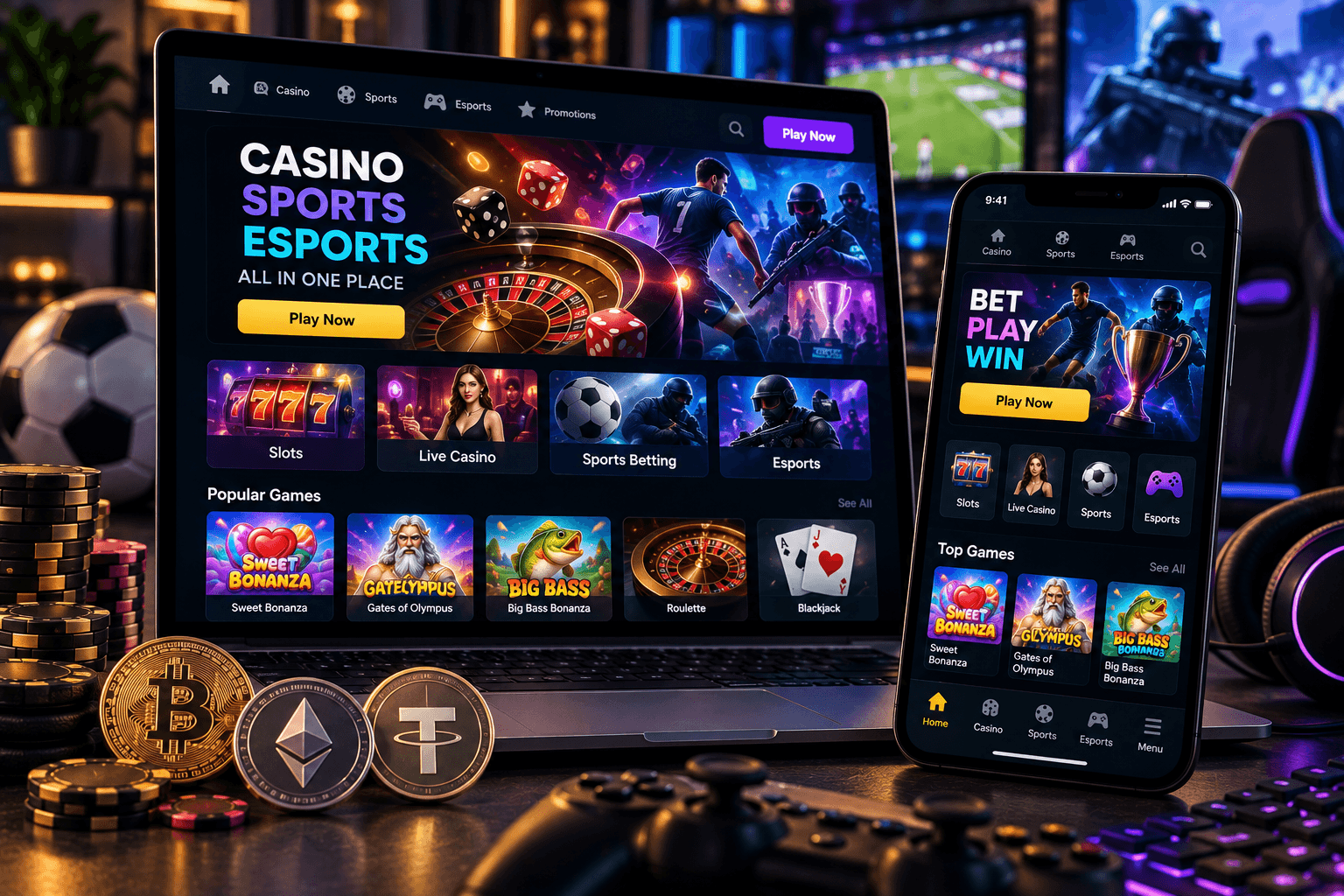
Dexsport exemplifies how the sportsbook side of this market is developing. The platform combines conventional sports markets with crypto-native account funding. Its sportsbook covers football alongside tennis, MMA, basketball, hockey and other sports, with pre-match and in-play markets. Dexsport also supports wallet-based access and multiple cryptocurrencies across numerous blockchain networks.
For a football bettor, the interface still revolves around familiar markets and odds. The difference appears when money enters and leaves the platform.
Dexsport supports assets including Bitcoin, Ethereum, USDT, BNB and TRON, while its broader crypto support extends across multiple blockchain networks. Users can also connect wallets such as MetaMask and Trust Wallet.
USDT illustrates the practical benefit. Dexsport supports the stablecoin across networks including Ethereum, Tron, Polygon and BNB Chain, allowing bettors to choose a network according to availability and transaction costs.
Its sportsbook also includes in-play betting and cash-out functionality, which means using crypto does not require abandoning features that football bettors already expect from conventional betting sites.
Dexsport therefore represents the sportsbook version of the same broader trend visible during the World Cup: crypto is moving closer to the transaction layer of sports betting.
Football and Crypto Already Share an Audience
There is another reason the transition appears relatively natural.
A 2026 OKX survey of 2,000 football fans who trade cryptocurrency found that 56% associated football with crypto more strongly than any other sport. Esports came second at 19.6%.
The overlap also appeared in how respondents thought about prediction. Some 84% believed skills associated with crypto trading, including probabilistic thinking and pattern recognition, overlap with predicting football outcomes.
The survey population was specifically composed of football fans who already traded crypto, so the results should not be extrapolated to football supporters generally. But it illustrates why football became an obvious testing ground for crypto-based prediction products.
Both activities have large digital communities. Both involve constantly changing prices or odds. Both can be followed in real time from a phone. And both have users accustomed to comparing platforms before committing money.
The Economics Are More Complicated Than "Crypto Is Cheaper"
Crypto betting is sometimes presented as an automatic route to lower fees. The reality depends heavily on the transaction.
A blockchain transfer can be inexpensive, particularly on low-cost networks. It can also become comparatively expensive when network demand increases. Users moving funds from a centralized exchange may face an exchange withdrawal fee in addition to blockchain costs.
There may also be conversion costs.
Someone who earns euros, buys USDT, transfers it to a sportsbook, withdraws USDT and eventually converts it back into euros has several potential cost points. A bettor who already holds USDT faces a much simpler calculation.
Speed has similar qualifications.
Blockchain transfers can settle rapidly, but sportsbook withdrawal processing and compliance checks remain separate from blockchain confirmation. A fast network does not guarantee that every operator will approve every withdrawal immediately.
The technology improves the payment rail. It does not remove the need to evaluate the operator using it.
Regulation Remains Fragmented
This is probably the largest constraint on further adoption.
Prediction markets, offshore crypto sportsbooks and locally licensed bookmakers can all offer products linked to the same football match while operating under very different legal structures.
The World Cup made this especially visible.
Prediction markets expanded quickly enough that FIFA itself entered the category through its partnership with ADI Predictstreet. At the same time, the legal status of sports event contracts continues to face disputes in some jurisdictions.
Crypto sportsbooks introduce another layer because a platform can be accessible technically without necessarily being authorized to provide gambling services everywhere its website can be reached.
Players therefore need to distinguish between blockchain accessibility and legal availability.
A wallet capable of connecting to a platform does not determine whether using that platform is permitted in the bettor's jurisdiction.
What Carries Over Into the 2026–27 Football Season
The World Cup was unusually large, but the European club calendar offers something the tournament cannot: frequency.
The Premier League, Champions League, EFL Championship and other domestic competitions create matches almost every week for most of the year.
The important indicators this season will be less spectacular than a $20 billion headline. They will include repeat deposits, active wallets, stablecoin usage, withdrawal behavior and whether World Cup users continue betting after the tournament ends.
Prediction market volume showed that football can generate enormous blockchain activity. The next question is how much of that activity becomes habitual.
Crypto sportsbooks such as Dexsport offer one route for that transition because they package blockchain payments inside the betting format football fans already know.
The World Cup Changed the Baseline
Before 2026, crypto betting could reasonably be described as a specialist corner of online gambling.
Billions of dollars in prediction market trading, hundreds of thousands of participating wallets and an official FIFA prediction market partnership brought blockchain-based speculation directly into mainstream football.
That does not mean conventional bookmakers are about to disappear. Cards, bank transfers and regulated betting apps remain easier for millions of users, particularly people who have no reason to own cryptocurrency.
But the World Cup demonstrated that there is now a substantial group on the other side: football fans who already have wallets, already understand stablecoins and see little reason to convert their crypto back into fiat before placing a bet.
For them, betting with crypto is increasingly becoming another payment choice attached to a familiar football habit.
The 2026–27 season will show whether that behavior survives after the World Cup spotlight has moved on.
Disclaimer: The information here is provided for general purposes only and is not legal, tax, investment, or financial advice, and nothing here is a betting tip or prediction. Market availability and platform features change over time, so confirm current details before betting. Betting carries risk, and rules vary by country, so check the law where you live. Please gamble responsibly, within your means, and only if you are of legal age.






 English (US) ·