
 1 hour ago
27
1 hour ago
27
The 2026 World Cup is the first to feature 48 teams, and with that expansion comes something the beautiful game hasn’t seen before: a parallel economy of prediction markets and crypto partnerships running alongside every group-stage fixture. Algeria vs. Austria, a Group J match kicking off at 9 p.m. local time at Kansas City Stadium, is a case study in how deeply blockchain infrastructure has embedded itself into global sports.
Polymarket, the decentralized prediction platform, has recorded approximately $2.82 million in trading volume on this single match outcome. Bettors on the platform are pricing a draw as the most likely result at roughly 46.5%, with Algeria given about a 26.5% chance of winning and Austria at approximately 25.5%.
Kraken, fan tokens, and the crypto layer underneath the pitch
Kraken serves as FIFA’s official crypto exchange partner for the 2026 tournament. The exchange has integrated NFTs and fan engagement tools into the World Cup experience, including a dedicated Fan Fest that has drawn over 63,000 attendees.
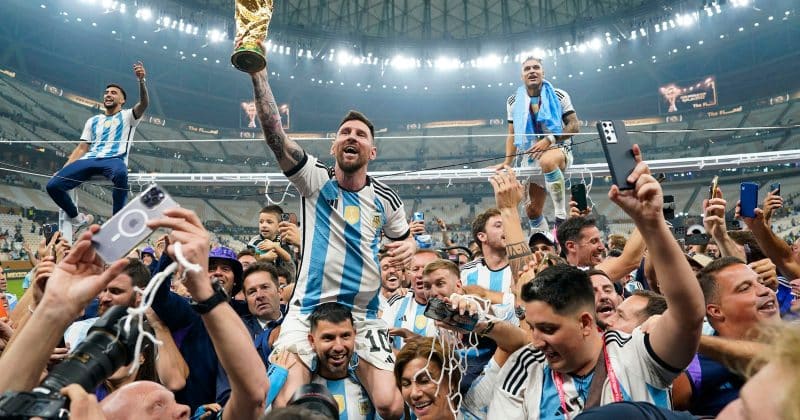
Neither Algeria nor Austria currently has a national fan token listed on major platforms. Argentina’s fan token (ARG), traded on Socios.com, has demonstrated clear price sensitivity to group-stage results, meaning match outcomes can move token prices in real time. The absence of tokens for these two teams represents a missed revenue stream, both for the federations and for traders looking to speculate on sentiment.
Algeria’s crypto paradox
Here’s the thing about Algeria’s presence in this crypto-adjacent World Cup ecosystem: the country enforces a nationwide ban on cryptocurrency ownership, trading, mining, and promotion. Algerian law treats virtually all crypto activity as illegal.
That creates a genuinely strange dynamic. Algerian fans watching their team play in a tournament sponsored by a crypto exchange, at a Fan Fest powered by NFTs, cannot legally participate in the prediction markets or token economies built around the event. They’re spectators to a financial layer that’s been explicitly designed for fan engagement, but legally barred from engaging.
Austria, by contrast, sits within the European Union’s regulatory framework, where crypto is legal and increasingly regulated under MiCA (Markets in Crypto-Assets Regulation). Austrian fans can trade on Polymarket, hold fan tokens, and interact with Kraken’s World Cup integrations without legal friction.
What this means for investors
The $2.82 million in Polymarket volume on a single group-stage match between two mid-tier footballing nations tells a larger story. Prediction markets are scaling alongside the World Cup in ways that weren’t possible four years ago.
Platforms like Polymarket stand to benefit from the sheer volume of matches in the expanded format. Forty-eight teams means 104 matches, each one a discrete prediction market.
The fan token market remains a space to watch carefully. Socios.com has demonstrated that token prices for teams like Argentina correlate with on-pitch performance, creating short-term trading opportunities around match results.
The risk, as always, is regulatory. Algeria’s blanket ban is an extreme case, but it reflects a posture that several other nations maintain to varying degrees. Any expansion of fan tokens or prediction markets into jurisdictions with unclear or hostile crypto laws could face sudden enforcement actions, creating downside risk for holders and platforms alike.
Disclosure: This article was edited by Editorial Team. For more information on how we create and review content, see our Editorial Policy.



 English (US) ·