
 2 months ago
42
2 months ago
42
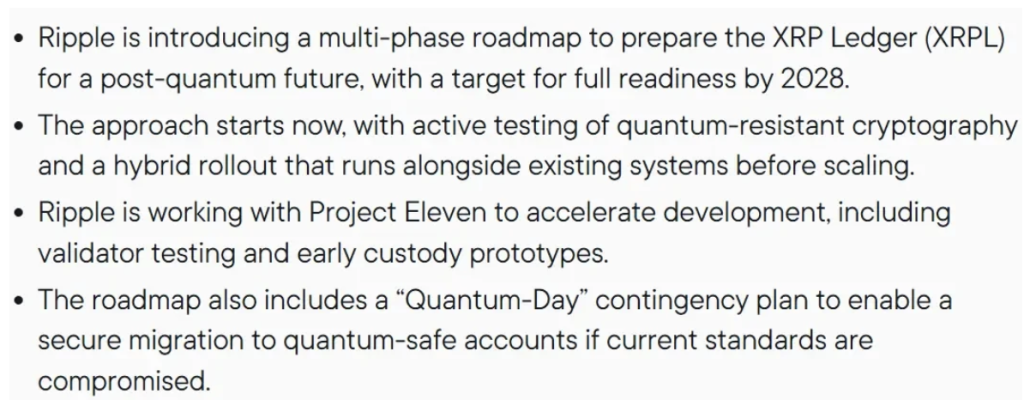
- XRP Ledger aims for full quantum resistance by 2028 through a phased roadmap
- Hybrid cryptography rollout allows smooth transition without disrupting the network
- “Quantum-Day” plan ensures emergency migration if threats emerge faster than expected
Ripple is starting to take the long view—and it’s a pretty ambitious one. The XRP Ledger is now on a roadmap toward becoming quantum-resistant, with a target set for 2028. That might sound far off, but in tech terms… it’s actually not.
The idea isn’t to rush it. Instead, Ripple is planning a gradual transition, making sure the network keeps running smoothly while the underlying cryptography evolves. No sudden switches, no chaos—at least, that’s the goal.
A Step-by-Step Approach, Not a Sudden Leap
The roadmap itself is broken into phases, which makes sense. You don’t just swap out core cryptography overnight, especially on a live network handling real value. Ripple seems aware of that.
Each phase allows developers, validators, and ecosystem players to adjust bit by bit. Test, refine, repeat. It’s not flashy, but it’s practical. And honestly, that’s probably what you want when dealing with something as sensitive as security.
There’s also a bigger message here—this isn’t a short-term patch. It’s a long-term commitment to making sure XRPL can handle future threats, even ones that don’t fully exist yet.
Hybrid Strategy Keeps Things Stable
One of the more interesting parts of the plan is the hybrid rollout. Instead of replacing existing cryptography all at once, Ripple plans to run new quantum-resistant algorithms alongside the current system.
That dual setup does a few things. It keeps everything compatible, avoids breaking existing infrastructure, and gives the network time to adapt. It’s like upgrading a plane mid-flight… carefully.
It also gives partners—wallet providers, exchanges, developers—time to migrate without pressure. Less disruption, fewer mistakes.
Testing and Partnerships Behind the Scenes
Ripple isn’t doing this alone either. They’ve partnered with Project Eleven to help push forward testing and development. That includes validator-level testing, which is critical since validators sit at the heart of network consensus.
There’s also a focus on custody solutions, especially around private keys. Quantum computing could, in theory, threaten traditional key security, so getting ahead of that risk is… pretty important.
These early tests aren’t about solving everything right now. They’re about finding weaknesses before they become real problems.
“Quantum-Day” Plan Adds a Safety Net
Then there’s something called “Quantum-Day.” It sounds dramatic—and maybe it is—but the idea is simple. If quantum threats suddenly accelerate faster than expected, the network needs a fallback plan.
Quantum-Day acts like an emergency switch, allowing users to migrate from older cryptography to quantum-safe accounts quickly and safely. No scrambling, no panic—at least, that’s the intention.
Because the reality is, no one really knows when quantum computing becomes a serious threat. It could take years… or surprise everyone sooner.
A Future That’s Uncertain, But Being Prepared For
What stands out here isn’t just the tech—it’s the mindset. Ripple is treating quantum risk as something real, even if it’s still a bit abstract today.
And instead of waiting, they’re preparing. Slowly, methodically… maybe even a bit cautiously.
That might not grab headlines the same way price moves do. But in the long run, it’s the kind of groundwork that matters.
Disclaimer: BlockNews provides independent reporting on crypto, blockchain, and digital finance. All content is for informational purposes only and does not constitute financial advice. Readers should do their own research before making investment decisions. Some articles may use AI tools to assist in drafting, but every piece is reviewed and edited by our editorial team of experienced crypto writers and analysts before publication.







 English (US) ·