
 1 hour ago
12
1 hour ago
12
- Nearly 2.4 million ZEC participated in a holder poll, with about 2,397,669 ZEC supporting a proposal to cut Zcash block times from 75 seconds to 25 seconds.
- Coinholders overwhelmingly backed keeping Zcash’s existing halving model, with 2,375,932 ZEC supporting halvings compared with 22,384.875 ZEC favoring smoother issuance.
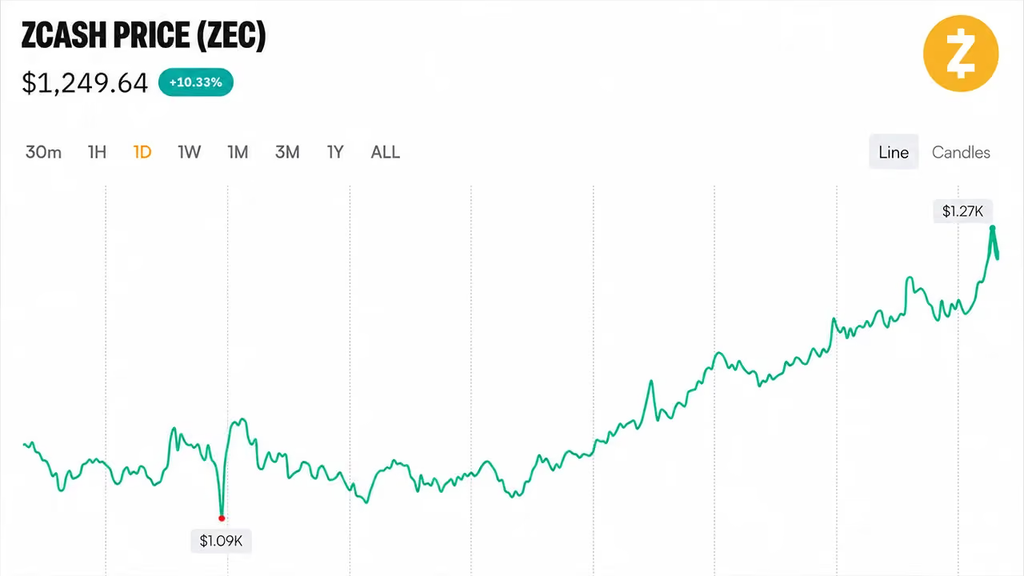
- ZEC rose 10.4% on Wednesday to around $1,245 after reaching an intraday high of $1,270, extending its 30-day gain to 138%.
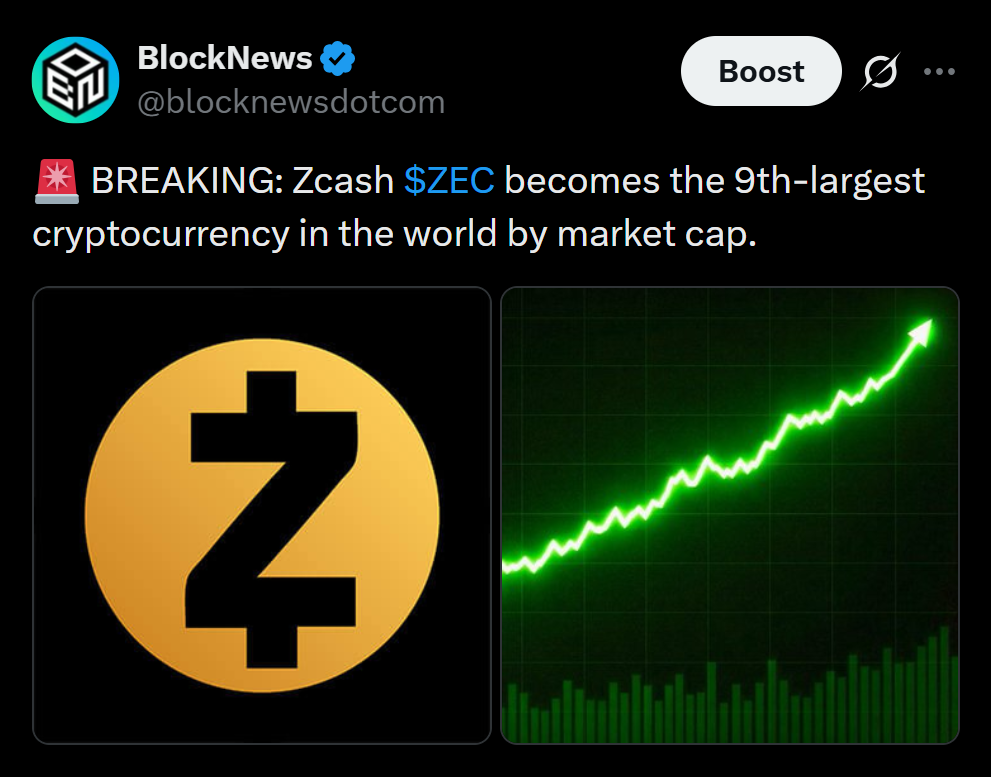
Zcash holders have overwhelmingly backed a proposal to make the network three times faster while maintaining its existing Bitcoin-like halving schedule.
Nearly 2.4 million ZEC participated in the poll that closed Sept. 14, representing roughly two-thirds of the 3.6 million coins eligible to vote.
Approximately 2,397,669 ZEC supported ZIP 218, which proposes reducing Zcash’s target block time from 75 seconds to 25 seconds. Only 141.6 ZEC voted against the proposal.
Coinholders also strongly favored keeping the existing halving system, with 2,375,932 ZEC supporting halvings compared with 22,384.875 ZEC backing a smoother issuance curve.
Zcash Vote Preserved Holder Privacy
Voting eligibility was based on spendable shielded ZEC held in the Ironwood pool at block 3,459,350 on Aug. 24, with each eligible ZEC representing one vote.
The system allowed holders to participate without publicly revealing their individual votes or balances.
Ballots were homomorphically encrypted and split, allowing validators to determine the final results without reconstructing individual voter identities.
Interestingly, a separate Zcash Community Advisory Panel poll produced a much closer result. Among 135 participants, 57 supported smoother issuance while 54 preferred halvings.
By comparison, coinholders backed maintaining halvings with approximately 98.9% support.
Faster Blocks Could Increase Network Pressure
ZIP 218, drafted by Dev Ojha and Evan Forbes of Valar Group, would reduce average waiting time for a first confirmation by roughly three times.
The change would not increase daily ZEC issuance because the subsidy awarded per block would also be reduced by the same factor. Zcash’s 21 million ZEC maximum supply would therefore remain unchanged.
However, faster blocks could create additional technical challenges.
ZIP 218 estimates a theoretical stale-block rate of around 3.26%, compared with roughly 0.4% currently.
A geographically distributed Zebra-node experiment using 2 MB blocks recorded a 4.86% stale rate and a 0.37% fork rate, highlighting the additional pressure faster blocks could place on network propagation.
ZEC Rallies Following Poll Results
The holder vote does not automatically change Zcash’s consensus rules.
Developers still need to complete development, reviews, testing, wallet support and an activation plan before the changes can become part of NU7.
Holders also supported beginning Network Sustainability Mechanism reissuance in February 2031, disabling legacy Sprout transactions at NU7 and shipping whichever features are ready by Sept. 30.
Meanwhile, ZEC rose 10.4% on Wednesday and traded around $1,245 at 10 a.m. ET after reaching an intraday high of $1,270.
The privacy coin has gained 138% over the past 30 days and 53% over the past two weeks. Its market capitalization reached approximately $21 billion, placing Zcash ninth among cryptocurrencies by market value at the time of the report.
Disclaimer: BlockNews provides independent reporting on crypto, blockchain, and digital finance. All content is for informational purposes only and does not constitute financial advice. Readers should do their own research before making investment decisions. Some articles may use AI tools to assist in drafting, but every piece is reviewed and edited by our editorial team of experienced crypto writers and analysts before publication.







 English (US) ·