
 1 month ago
43
1 month ago
43
- Zcash plans to launch quantum-recoverable wallets within weeks as part of a broader security overhaul
- The privacy-focused blockchain aims to complete a full post-quantum transition within 18 months
- ZEC has surged more than 75% in 30 days as privacy and quantum security narratives gain momentum
Zcash is moving aggressively toward a post-quantum future, and the timing honestly feels deliberate. Speaking at Consensus Miami, Zcash Open Development Lab CEO Josh Swihart revealed that the privacy-focused cryptocurrency expects to introduce quantum-recoverable wallets within weeks, while targeting a full post-quantum migration across the network over the next 12 to 18 months.
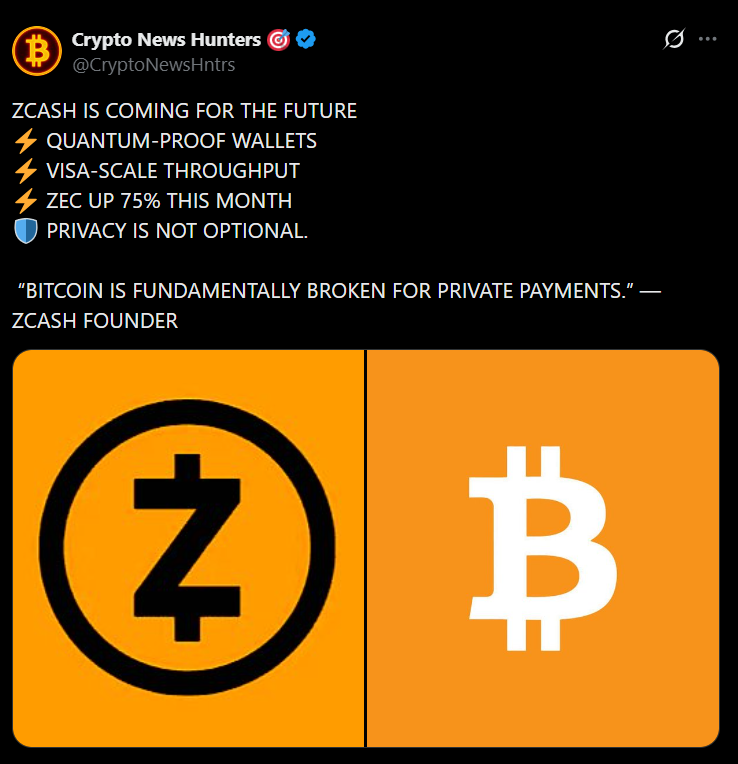
The announcement arrives as concerns around quantum computing continue growing across the crypto industry. At the same time, Zcash itself has been rallying hard, climbing more than 75% over the last month as investors rotate back toward privacy-focused assets and quantum-resistant blockchain narratives.
Zcash Thinks Quantum Threats Are Becoming Real
According to Swihart, the danger posed by future quantum computers is no longer something crypto networks can afford to ignore casually. Powerful enough quantum systems could eventually break the elliptic curve cryptography currently securing Bitcoin, Ethereum, and most major blockchains.
For privacy-focused projects like Zcash, the stakes are arguably even higher. If encrypted transaction data gets exposed later through quantum breakthroughs, the entire premise of financial privacy begins collapsing underneath the network itself.
One of the biggest concerns is the so-called “harvest now, decrypt later” strategy. In that scenario, attackers collect encrypted blockchain data today with the expectation that future quantum hardware will eventually become capable of decrypting it years later.
For normal financial systems, that’s already dangerous. For privacy coins, it’s existential.
Zcash Is Building Quantum-Recoverable Wallets
To prepare for that future, Zcash is rolling out what it describes as a multi-phase quantum-resistance strategy. The first major step involves launching quantum-recoverable wallets designed to help users transition assets safely if quantum attacks ever become viable against older cryptographic systems.
The broader initiative reportedly includes Project Tachyon alongside upgrades strengthening the network’s FROST cryptographic infrastructure and Zebra node implementation. Analysts following the project believe Zcash may actually hold certain advantages over Bitcoin when adapting to post-quantum security because of its existing privacy-focused architecture and flexible cryptographic foundations.

That doesn’t mean the transition will be simple, obviously. Migrating an active blockchain toward quantum resistance is technically difficult almost no matter how you approach it. But Zcash at least appears willing to confront the issue directly rather than waiting until it becomes unavoidable.
Swihart Says Bitcoin Failed The Privacy Vision
Swihart also used the Consensus stage to criticize Bitcoin’s current role within crypto, arguing it no longer fulfills the original cypherpunk vision of private peer-to-peer money. According to him, transparent blockchain balances leave users vulnerable to financial surveillance, monitoring, and potential asset seizure over time.
That criticism taps into a growing divide inside crypto between networks prioritizing institutional transparency and those still focused heavily on privacy and censorship resistance. As governments tighten oversight and blockchain analytics improve, privacy-focused cryptocurrencies are increasingly positioning themselves as alternatives for users uncomfortable with fully transparent financial systems.
And honestly, that broader privacy conversation seems to be helping drive renewed interest in ZEC itself lately.
Zcash Is Also Chasing Massive Scale
Beyond quantum security, Swihart said Zcash is simultaneously working toward scaling the network to transaction volumes comparable to major payment giants like Visa and Mastercard. That’s obviously an ambitious target, especially for a privacy-focused blockchain where cryptographic complexity tends to increase computational demands significantly.
Still, the company appears convinced privacy, scalability, and quantum resistance all need to evolve together rather than separately. If digital payments become mainstream globally while quantum risks continue accelerating, networks unable to adapt could eventually struggle badly.
At press time, ZEC traded around $580 according to CoinGecko data, rising another 3.5% over the previous 24 hours as momentum across privacy coins continued building. Whether the rally fully holds is another question, but Zcash clearly wants investors thinking beyond short-term price action and toward what crypto security may look like in a post-quantum world.
Disclaimer: BlockNews provides independent reporting on crypto, blockchain, and digital finance. All content is for informational purposes only and does not constitute financial advice. Readers should do their own research before making investment decisions. Some articles may use AI tools to assist in drafting, but every piece is reviewed and edited by our editorial team of experienced crypto writers and analysts before publication.








 English (US) ·