
 3 months ago
45
3 months ago
45
- Inflation trends mirror the 1970s cycle with risk of a second wave
- Markets may be underpricing renewed inflation and tighter policy
- Crypto could face short-term pressure but long-term narrative may strengthen
A familiar pattern is starting to show up again, and it’s making some analysts uneasy. Recent data suggests today’s inflation cycle is tracking closely with what happened between 1966 and 1982. Back then, inflation didn’t just spike once and fade away. It surged, cooled off, gave markets a sense of relief… and then came back even stronger.
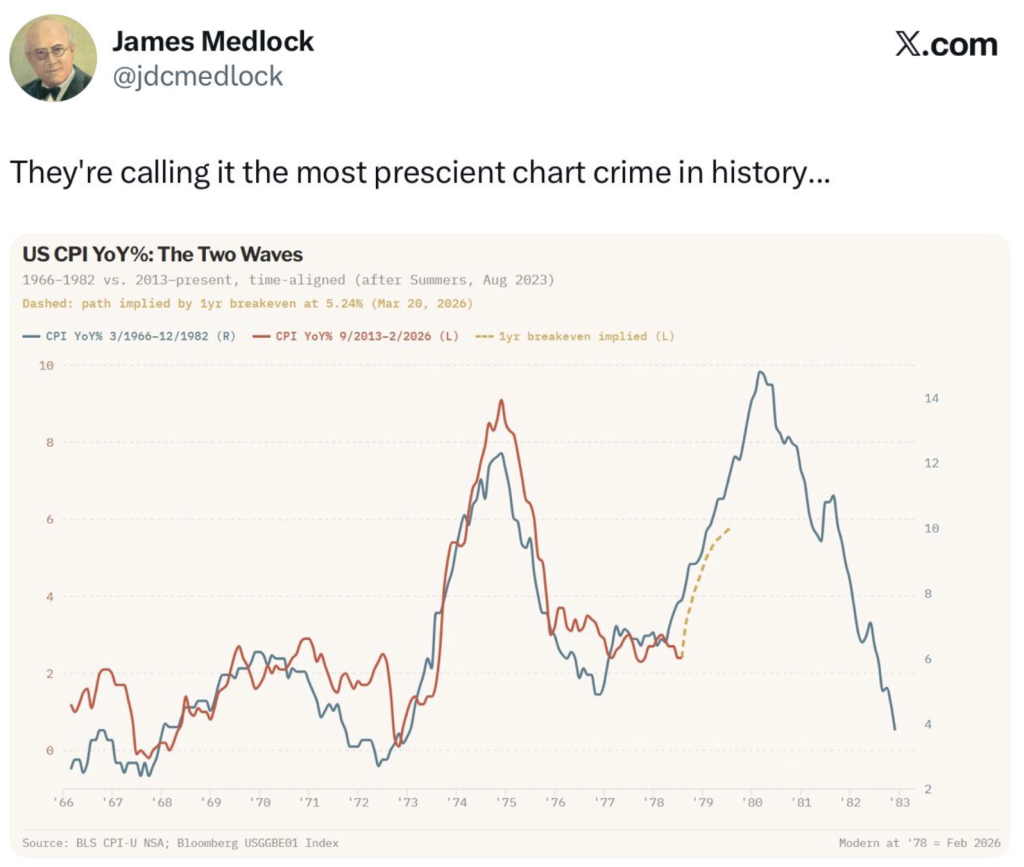
Right now, inflation has eased from its recent highs, and the general expectation is that it continues drifting lower. But if this historical pattern holds, what we’re seeing might not be the end of the cycle. It could just be a pause before another push higher, and that changes how everything should be priced.
Markets May Be Underestimating Inflation Risk
Current expectations, especially those reflected in inflation breakevens, suggest only a mild rebound ahead. Nothing extreme, nothing disruptive. But the 1970s comparison challenges that view pretty directly.
If inflation does reaccelerate, the impact won’t just be on prices, it’ll hit policy decisions fast. Central banks don’t follow expectations, they follow data. And if that data turns upward again, rate cuts could be delayed, or worse, tightening could return. That’s not the scenario most markets seem positioned for right now.
Higher Rates Could Pressure Crypto Short-Term
For crypto, this kind of environment tends to create friction. Higher interest rates and tighter liquidity usually weigh on risk assets. You often see increased volatility as traders adjust expectations and reposition quickly.
If inflation surprises to the upside again, crypto markets may feel that pressure in the short term. Capital becomes more cautious, and speculative flows tend to slow down. It’s not a collapse scenario, but it can shift momentum.
Long-Term Narrative Could Strengthen
Zooming out, though, the picture starts to look different. Persistent inflation, especially if it arrives in waves, tends to erode confidence in traditional monetary systems. Over time, that’s where crypto narratives regain strength.
Bitcoin, in particular, is often framed as a hedge against fiat debasement. If inflation proves harder to control than expected, that argument doesn’t disappear, it gets louder. The timing may not be immediate, but the direction becomes harder to ignore.
The Risk Is in the Second Wave
What makes this pattern important isn’t just inflation itself, it’s the timing. The first wave gets attention, the second wave catches markets off guard. And historically, that’s when the real damage happens.
This isn’t a prediction, but it is a warning signal. If inflation returns when markets believe it’s already under control, the repricing could be sharp. And in environments like that, crypto doesn’t move in isolation, it reacts alongside everything else, at least at first.
Disclaimer: BlockNews provides independent reporting on crypto, blockchain, and digital finance. All content is for informational purposes only and does not constitute financial advice. Readers should do their own research before making investment decisions. Some articles may use AI tools to assist in drafting, but every piece is reviewed and edited by our editorial team of experienced crypto writers and analysts before publication.





 English (US) ·