
 3 months ago
56
3 months ago
56
- Polymarket odds show ~40% chance of a Fed rate hike by 2026
- Oil above $110 and rising import costs fuel stagflation fears
- Crypto faces pressure as higher rates and inflation collide
Something shifted in the macro picture this week, and markets are starting to price it in, maybe a bit faster than expected. Polymarket odds are now hovering near a record high of around 40% for a potential Federal Reserve rate hike by 2026. That’s a noticeable shift, especially considering rate cuts were the dominant narrative not long ago.
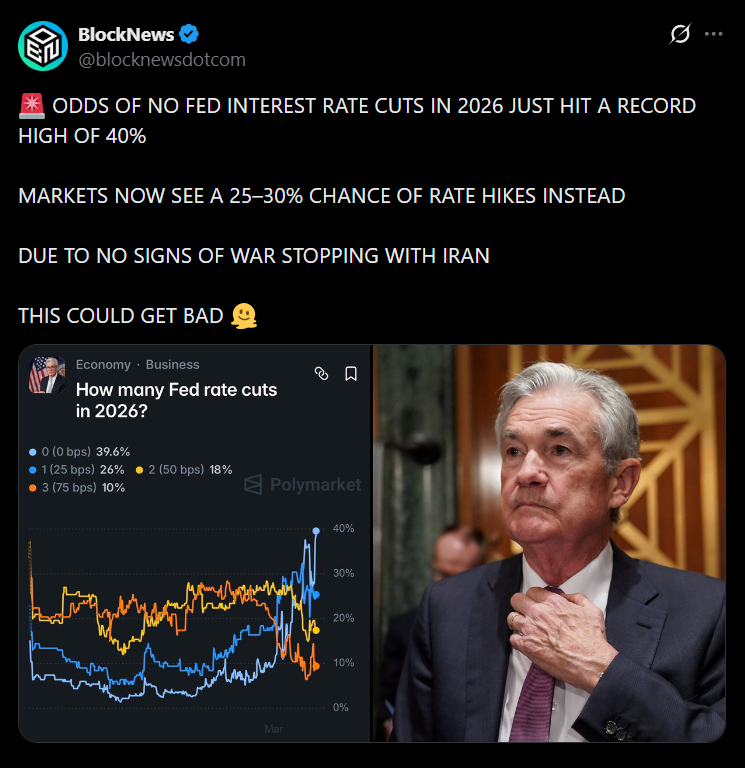
The driver behind this change is pretty clear. Inflation pressure isn’t fading the way many expected. Oil prices have surged past $110, import costs are climbing, and the broader narrative is starting to tilt toward stagflation, slow growth combined with persistent inflation. That combination tends to make policy decisions… messy.
Inflation Is Reaccelerating in Key Areas
Recent data continues to reinforce the concern. Import prices jumped 1.3% in February, the largest increase since 2022, while export prices also moved higher. At the same time, forecasts are being revised upward, with inflation expectations now sitting well above central bank targets.
When multiple signals start pointing in the same direction, markets adjust. Not always perfectly, but quickly. And right now, that adjustment is leaning toward inflation sticking around longer than anticipated.
Stagflation Risk Is Back in Focus
Alongside inflation, recession risks are also creeping higher. Several institutions are now assigning meaningful probabilities to an economic slowdown over the next year. That creates a difficult setup for policymakers, inflation remains elevated, but growth may not be strong enough to handle aggressive tightening.

This is where stagflation enters the conversation again. It’s not just about rising prices, it’s about those prices rising while the economy slows. Historically, that’s one of the toughest environments for central banks to navigate.
Markets Are Repricing Expectations
Even without a confirmed policy shift, expectations are already moving. The idea of multiple rate cuts has faded, replaced by a more cautious outlook. Some scenarios now even include the possibility of further tightening, something that felt unlikely just months ago.
The next Fed meeting is still expected to result in no change, but expectations matter more than immediate action. Once markets begin repricing future policy paths, asset behavior tends to follow.
Crypto Faces Short-Term Pressure
For crypto, this environment typically creates friction. Higher rates and tighter liquidity tend to weigh on risk assets, at least in the short term. Bitcoin and altcoins often react to these macro shifts, especially when inflation and yields move together.
At the same time, there’s a longer-term angle. Persistent inflation can reinforce crypto’s role as an alternative system, even if the immediate reaction is negative. It’s a bit of a split narrative, pressure now, potential strength later.
A Delicate Macro Setup
Right now, the balance is fragile. Inflation is pushing one way, economic slowdown risk is pulling the other. And markets are starting to feel that tension more clearly with each new data point.
If inflation continues to rise, pressure builds for tighter policy. If growth weakens, that pressure becomes harder to act on. Either way, volatility isn’t going anywhere soon, and crypto will likely move alongside that uncertainty.
Disclaimer: BlockNews provides independent reporting on crypto, blockchain, and digital finance. All content is for informational purposes only and does not constitute financial advice. Readers should do their own research before making investment decisions. Some articles may use AI tools to assist in drafting, but every piece is reviewed and edited by our editorial team of experienced crypto writers and analysts before publication.




 English (US) ·