
 3 months ago
86
3 months ago
86
- Bitcoin continues to attract long-term investors due to its fixed supply and scarcity model.
- Hyperliquid is gaining attention through aggressive token buybacks funded by platform revenue.
- Despite ongoing market weakness, both assets offer different paths to potential long-term value creation.
Bear markets have a habit of exposing reality. When prices are soaring, almost every project looks like a winner. When liquidity dries up and sentiment turns sour, that’s when investors start finding out which assets have actual staying power and which were mostly built on hype.
Even Bitcoin hasn’t escaped the pain. The world’s largest cryptocurrency is trading at roughly half of its peak value from late 2025, and many assumptions investors carried into 2026 have been challenged. Yet despite the uncertainty, some market participants still see a handful of opportunities worth accumulating. For some, that list has narrowed to just two names: Bitcoin and Hyperliquid.
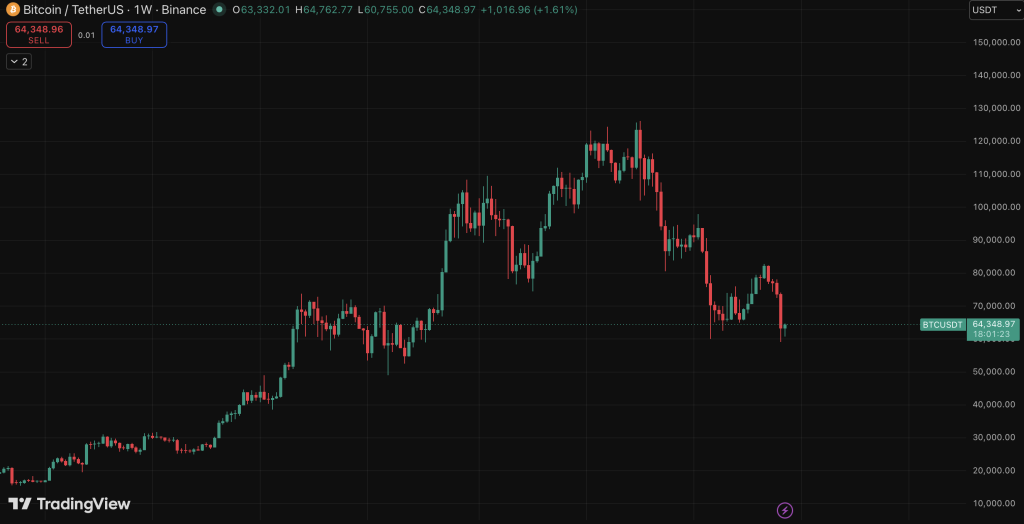
Bitcoin’s Scarcity Story Hasn’t Changed
The case for Bitcoin remains remarkably simple, maybe even boring depending on who you ask. Only 21 million BTC will ever exist, and every four years the network cuts new supply issuance through its halving mechanism. The next halving is scheduled for 2028, reducing the flow of newly mined coins even further.
That supply structure has always been the centerpiece of Bitcoin’s investment thesis. Demand fluctuates, sentiment swings wildly, and markets panic from time to time, but scarcity remains constant. It’s the one thing Bitcoin doesn’t compromise on.
Of course, the market around Bitcoin has changed considerably. Large corporate holders now control meaningful portions of circulating supply. Strategy, formerly MicroStrategy, owns hundreds of thousands of BTC, representing a sizable share of the asset’s total eventual supply. Other digital asset treasury firms followed a similar strategy, though many have recently slowed purchases or reduced exposure as market conditions tightened.
Still, long-term investors argue that as long as buyers continue entering the market over time, a fixed supply creates a natural upward pressure on price. It may not happen quickly, and it certainly won’t happen in a straight line, but the scarcity narrative remains intact.
Hyperliquid Takes a Different Approach
While Bitcoin relies on scarcity, Hyperliquid appeals to investors for an entirely different reason. The decentralized trading platform has become one of the most active venues for perpetual futures trading, processing enormous trading volumes across its ecosystem.
What stands out most isn’t just the platform’s growth. It’s what happens to the revenue generated from that activity.
Hyperliquid directs roughly 99% of its collected trading fees toward buying HYPE tokens on the open market. Once acquired, those tokens are removed from circulation through a burn mechanism. The result is a continuous reduction in supply funded directly by platform usage.
Since the buyback program launched, billions of dollars worth of value have reportedly been directed toward token repurchases. For investors who prefer assets that return capital rather than simply promise future utility, that model has become increasingly attractive.
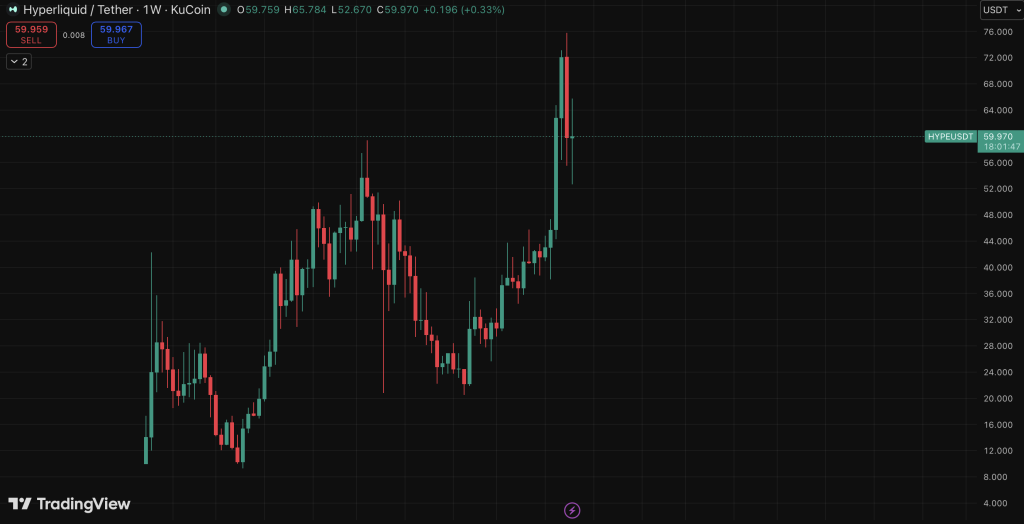
Expansion Could Strengthen the Bull Case
Another reason some investors remain optimistic about Hyperliquid is its expansion beyond perpetual futures. The platform has gradually broadened its product lineup, moving into prediction markets and tokenized trading products tied to stocks, commodities, and foreign currencies.
That matters because additional markets can create additional trading activity. More trading volume means more fees, and more fees ultimately support larger token buybacks.
It’s a relatively straightforward feedback loop. If platform adoption grows, revenue grows. If revenue grows, buybacks grow. And if buybacks continue reducing circulating supply faster than new tokens enter the market, holders may benefit over the long run.
The strategy isn’t without risks, though. A large percentage of HYPE’s total supply has yet to enter circulation, with token unlocks scheduled to continue through 2027. For the buyback model to remain effective, demand generated by repurchases needs to outpace dilution from newly unlocked tokens.
So far, it has managed to do that. The question is whether it can continue.
Competition Is Becoming Harder to Ignore
The bigger concern may be competition. Hyperliquid currently commands a significant share of the decentralized perpetual futures market, but rivals are moving quickly.
Recent regulatory approvals have opened the door for more traditional financial players to enter the space. Kalshi launched a regulated Bitcoin perpetual futures product in the United States, and many market observers expect additional platforms to follow. Robinhood is frequently mentioned as a potential competitor, although it is unlikely to be the last.
As new entrants arrive, maintaining market share becomes more difficult. Hyperliquid’s current dominance has been impressive, but crypto markets rarely stay static for long. Success often attracts challengers.
Two Different Paths to Long-Term Value
Bitcoin and Hyperliquid represent two very different investment philosophies. Bitcoin focuses on scarcity, decentralization, and long-term supply constraints. Hyperliquid focuses on cash flow generation, ecosystem growth, and returning value through aggressive buybacks.
For investors looking at today’s crypto market, both offer narratives supported by tangible mechanisms rather than pure speculation. That doesn’t make them risk-free, far from it. But in a market where many projects continue struggling to prove their worth, they stand apart for different reasons.
Bitcoin’s future still depends on the power of scarcity. Hyperliquid’s future depends on maintaining growth and sustaining its value-capture model. Whether either thesis ultimately succeeds remains to be seen, but for some investors, these are among the few crypto assets still worth accumulating while the broader market searches for direction.
Disclaimer: BlockNews provides independent reporting on crypto, blockchain, and digital finance. All content is for informational purposes only and does not constitute financial advice. Readers should do their own research before making investment decisions. Some articles may use AI tools to assist in drafting, but every piece is reviewed and edited by our editorial team of experienced crypto writers and analysts before publication.







 English (US) ·