
 3 months ago
69
3 months ago
69
- Bitcoin is trading sideways near $65,000 as traders watch for either a bear trap or deeper correction.
- Cooling oil prices and easing geopolitical pressure may support a more bullish macro backdrop.
- On-chain signals remain cautious, with ETF outflows and elevated open interest showing that risk has not fully cleared.
Bitcoin is sitting in one of those awkward market zones where both bulls and bears can make a decent argument. The price has continued to move sideways around $65,000, and that kind of range-bound action often creates a liquidity-heavy setup. Sometimes, it becomes the base for a sharp upside move. Other times, well, it turns into a trap for traders who get too comfortable.
The key issue right now is volatility. If volatility breaks higher, Bitcoin could stage a bear-trap move and push back above major resistance levels. That would likely trigger short liquidations and bring fresh FOMO back into the market. But if volatility breaks lower, the picture changes quickly. A deeper correction could catch overexposed long traders off guard and pull the broader crypto market back into a risk-off mood.
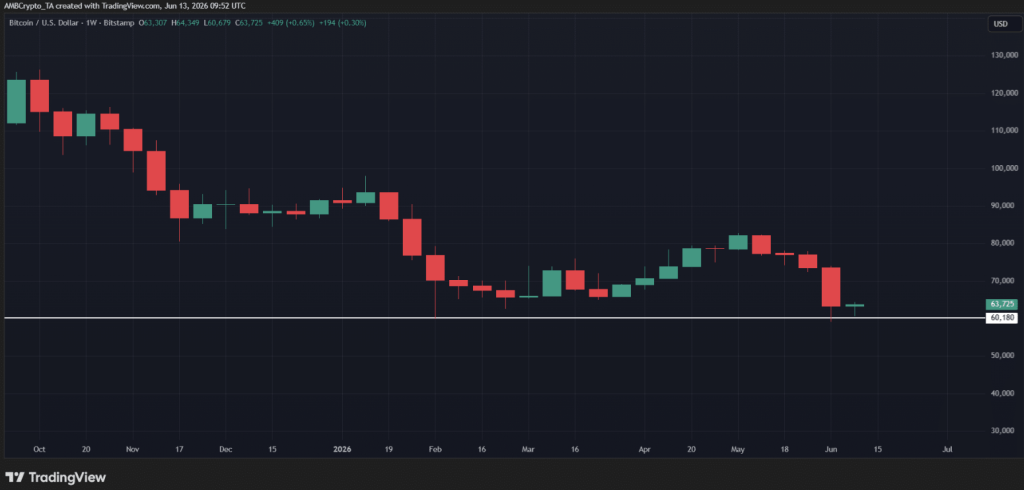
Bitcoin Price Action Points to a Possible Bear Trap
Bitcoin’s current technical structure appears to be forming in real time. With macro uncertainty starting to ease, the broader setup may be leaning slightly toward the bullish scenario. BTC has not collapsed despite recent pressure, and that matters. It has held near the $65,000 zone while liquidity continues to build on both sides of the range.
This type of market behavior often appears before a larger move. When traders crowd into one direction and price refuses to follow through, the eventual reversal can be sharp. A move above key resistance could force short sellers to close positions, adding more buying pressure and potentially turning a quiet market into a fast rally.
Still, the setup is not clean enough to call it confirmed. Bitcoin needs stronger participation and better momentum before traders can confidently say the correction is over.
Cooling Oil Prices Improve the Macro Picture
Hard macro data is also starting to support the bullish side of the argument. Oil prices have resumed their decline after rallying nearly 70% during the first quarter, a move that lined up with Bitcoin’s 22% correction. That relationship stood out because rising energy prices tend to raise inflation concerns, which can weigh heavily on risk assets like BTC.
Now the picture looks different. In the second quarter, oil prices have fallen more than 17%, while Bitcoin has corrected only around 6.5%. That suggests capital has cooled on the energy trade while Bitcoin has remained relatively firm. It is not a perfect signal, but it does hint that investor risk appetite may be improving.
Easing geopolitical tensions are also helping. As fears around global conflict fade, investors often become more willing to rotate back into risk assets. That could explain why Bitcoin has held up better than many expected, even with bearish pressure still hanging over the chart.
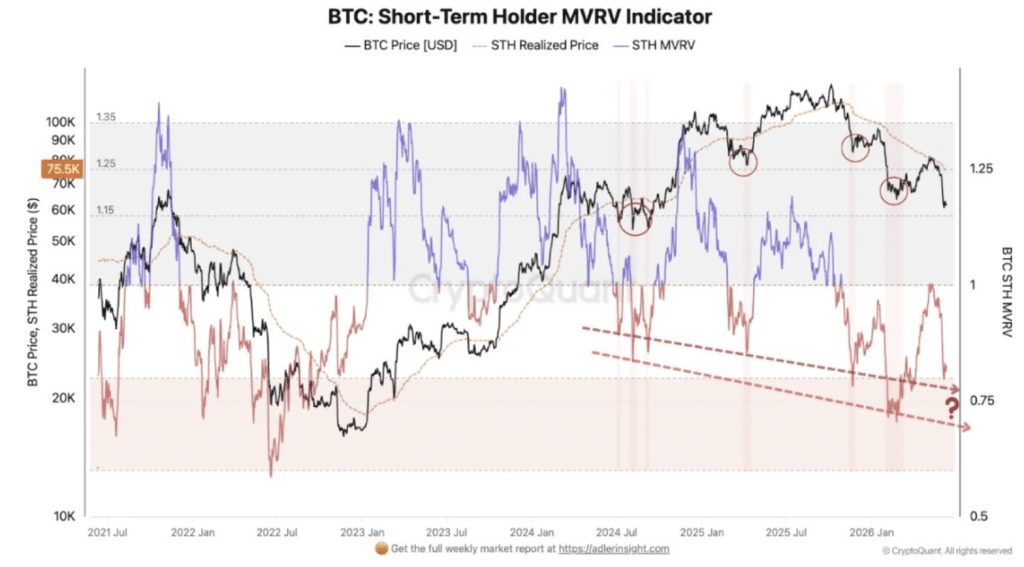
On-Chain Signals Are Still Flashing Caution
The problem is that Bitcoin’s on-chain data has not fully caught up with the improved macro backdrop. Institutional buyers, for example, have not shown a strong dip-buying response yet. Spot Bitcoin ETFs continue to see net outflows, suggesting larger players are still hesitant rather than aggressively accumulating.
CryptoQuant data also points to a mixed picture. Bitcoin may be entering a zone that has historically been linked with bottom formation, but the short-term holder MVRV index still looks closer to capitulation than confirmation. In simple terms, the market may be getting near a healthier reset, but it has not clearly stabilized yet.
This creates a strange divergence. The macro backdrop is becoming more supportive, while blockchain-based indicators still suggest caution. And when those two signals conflict, traders usually get a choppy market.
Open Interest Keeps the Risk Elevated
Another concern is Bitcoin’s elevated open interest. When open interest stays high during uncertain conditions, the market becomes more vulnerable to sudden liquidation events. A sharp move in either direction can force leveraged traders out quickly, making price swings more violent than expected.
Some analysts believe Bitcoin may still need a deeper positioning reset before a cleaner rally can begin. A slow move below $60,000, while uncomfortable, could flush out excessive leverage and create a stronger base for the next leg higher. That would not necessarily break the larger bullish case, but it would shake out weak hands first.
This view also lines up with prediction market activity. Kalshi traders are reportedly pricing in a 69% chance that BTC moves to $55,000 before making a run toward $100,000. That does not mean the scenario is guaranteed, but it shows that traders are thinking in stages rather than expecting a straight-line rally.
Bitcoin’s Next Move Could Define Market Sentiment
For now, Bitcoin remains caught between improving macro conditions and cautious on-chain signals. That makes the current setup especially important. If BTC can hold the $65,000 area and reclaim resistance with strong volume, the bear-trap argument becomes much stronger.
But if support breaks and leverage starts unwinding, a move toward $60,000 or even $55,000 could come first. It would be painful in the short term, sure, but some traders may view it as the final reset before a larger push higher.
Bitcoin is not giving a simple signal right now. It is giving two. Macro relief says risk appetite may be returning, while on-chain data says the market still needs proof. The next decisive move will likely show which side is right.
Disclaimer: BlockNews provides independent reporting on crypto, blockchain, and digital finance. All content is for informational purposes only and does not constitute financial advice. Readers should do their own research before making investment decisions. Some articles may use AI tools to assist in drafting, but every piece is reviewed and edited by our editorial team of experienced crypto writers and analysts before publication.









 English (US) ·