
 3 months ago
77
3 months ago
77
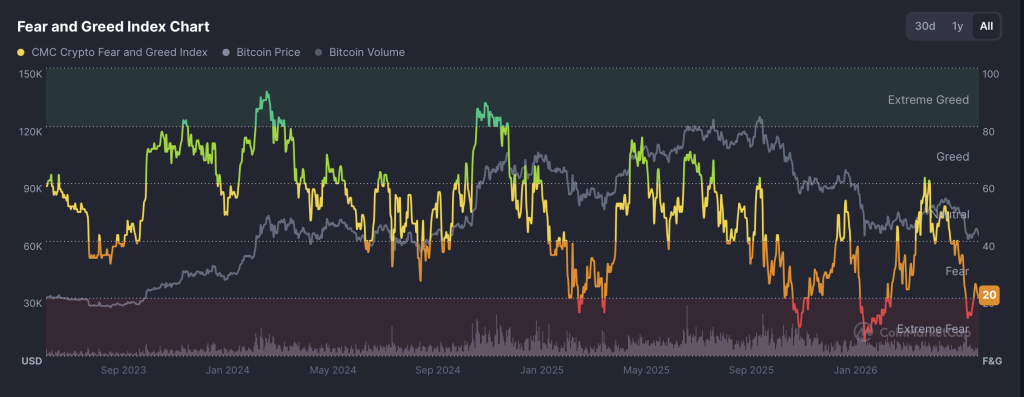
- The Crypto Fear and Greed Index remains deep in fear territory, reflecting ongoing market uncertainty.
- Historical data shows some of Bitcoin’s strongest recoveries began when sentiment was at its worst.
- Long-term investors often view extreme fear as an opportunity rather than a warning sign.
Crypto investors are famous for their mood swings.
One week, Bitcoin is supposedly headed to zero. The next, everyone is calculating how soon they’ll be able to retire. There rarely seems to be any middle ground. That emotional rollercoaster is exactly why many experienced investors keep a close eye on sentiment indicators like the Crypto Fear and Greed Index.
The index doesn’t predict the future, and it certainly doesn’t tell investors exactly when to buy or sell. What it does offer is a snapshot of market psychology. And sometimes, understanding how scared or euphoric the crowd has become can be surprisingly valuable.
What the Fear and Greed Index Actually Measures
The Crypto Fear and Greed Index operates on a scale from 0 to 100.
A reading near zero signals extreme fear, while higher readings point toward growing optimism or outright greed. The model pulls data from several sources, including market volatility, trading activity, Bitcoin dominance, and social sentiment across the crypto ecosystem.
In simple terms, it attempts to quantify how investors are feeling.
When the index falls below 25, the market enters what is classified as “extreme fear.” Readings above 75 suggest excessive optimism. Neither extreme tends to last forever, and that’s what makes the indicator interesting to contrarian investors.
Market bottoms rarely feel comfortable. In fact, they usually feel awful.
Prices are falling, confidence disappears, and many traders swear they’re done with crypto forever. Ironically, those moments often create the conditions for future recoveries, though nobody knows exactly when they’ll arrive.
February’s Panic Became a Useful Example
A recent example helps illustrate the point.
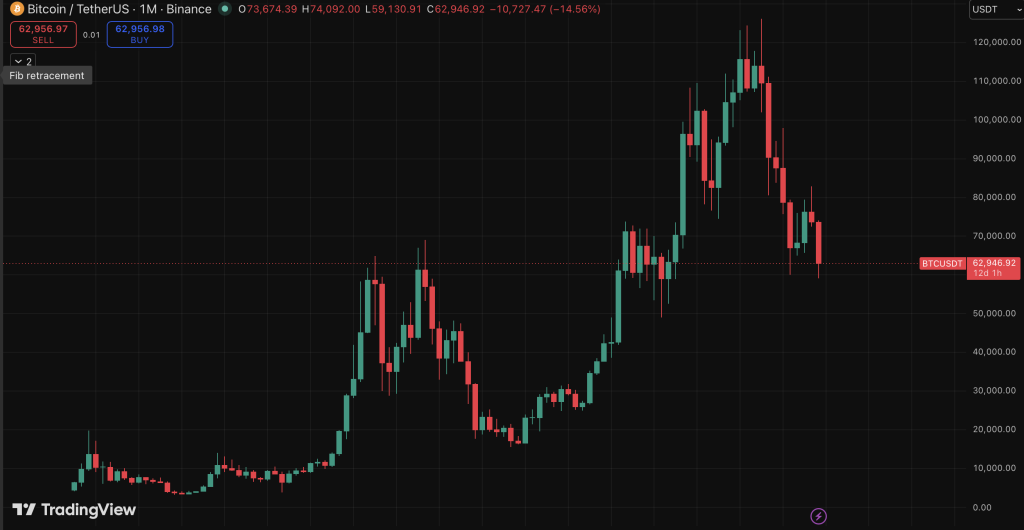
In February 2026, the Fear and Greed Index collapsed to a reading of just 5. That’s not merely fearful, it’s about as close to panic as markets can get.
At the same time, Bitcoin fell to roughly $62,700.
The mood across crypto was grim. Investors were worried about macroeconomic uncertainty, declining prices, and the possibility of further downside. Social media feeds were full of bearish predictions, frustration, and plenty of doom-posting.
Then something interesting happened.
Within roughly three months, Bitcoin had recovered about 30% from those lows. By early May, the Fear and Greed Index had climbed back to 52 as sentiment improved alongside prices.
Of course, the recovery didn’t move in a straight line. By June, fear returned once again, pushing the index back toward 15 as Bitcoin experienced another pullback.
That’s the nature of crypto markets. Volatility never really disappears.
Why Contrarian Investors Pay Attention
Buying during periods of extreme fear doesn’t guarantee immediate profits. Sometimes prices continue falling after investors step in.
But the strategy isn’t about perfect timing.
Instead, it’s about improving probabilities. Investors who buy during periods of widespread panic are often accumulating closer to local lows than local highs. They’re leaning against the crowd rather than following it.
That approach feels uncomfortable for a reason.
Human nature pushes people to buy when prices are rising and excitement is everywhere. Unfortunately, that often means purchasing after much of the move has already happened. Fear works the opposite way. It discourages buying precisely when assets become cheaper.
The Fear and Greed Index helps highlight those emotional extremes.
Sentiment Is Not the Same as Fundamentals
It’s important to understand what the index is—and what it isn’t.
The Fear and Greed Index measures sentiment. It does not evaluate technology, network growth, adoption, revenues, or long-term utility. For most cryptocurrencies, those fundamental metrics remain difficult to measure consistently anyway.
What the indicator captures is mood.
Think of it like a weather forecast rather than a roadmap. It can help investors understand current conditions, but it cannot predict exactly when the storm will end or how long sunshine will last.
Still, that information can be useful.
By paying attention to sentiment, investors may avoid one of the most common mistakes in any market: buying when excitement is at its peak and selling when fear dominates. Historically, those decisions tend to produce disappointing results.
Bitcoin Investors Are Still Cautious
As of June 17, the Fear and Greed Index sits at 24.
That keeps the market firmly within extreme fear territory. Investors remain cautious, uncertainty is still elevated, and confidence hasn’t fully returned.
For some traders, that’s a reason to stay away.
For others, especially those with a long-term outlook, it’s exactly the type of environment worth watching closely. After all, some of crypto’s best opportunities have emerged when sentiment looked its worst.
Disclaimer: BlockNews provides independent reporting on crypto, blockchain, and digital finance. All content is for informational purposes only and does not constitute financial advice. Readers should do their own research before making investment decisions. Some articles may use AI tools to assist in drafting, but every piece is reviewed and edited by our editorial team of experienced crypto writers and analysts before publication.





 English (US) ·