
 2 months ago
34
2 months ago
34
- $290M ETF outflows reflect macro pressure, not weak Bitcoin demand
- Bitcoin holding stronger than equities during geopolitical stress
- Short-term fear may be masking long-term institutional positioning
Bitcoin ETF outflows are back in the spotlight, and the headline number, $290 million leaving in a week, sounds heavy. Add in a large single-day outflow tied to BlackRock’s IBIT, and it’s easy to assume institutions are backing away. But that surface-level read doesn’t really hold up once you look at the bigger picture.
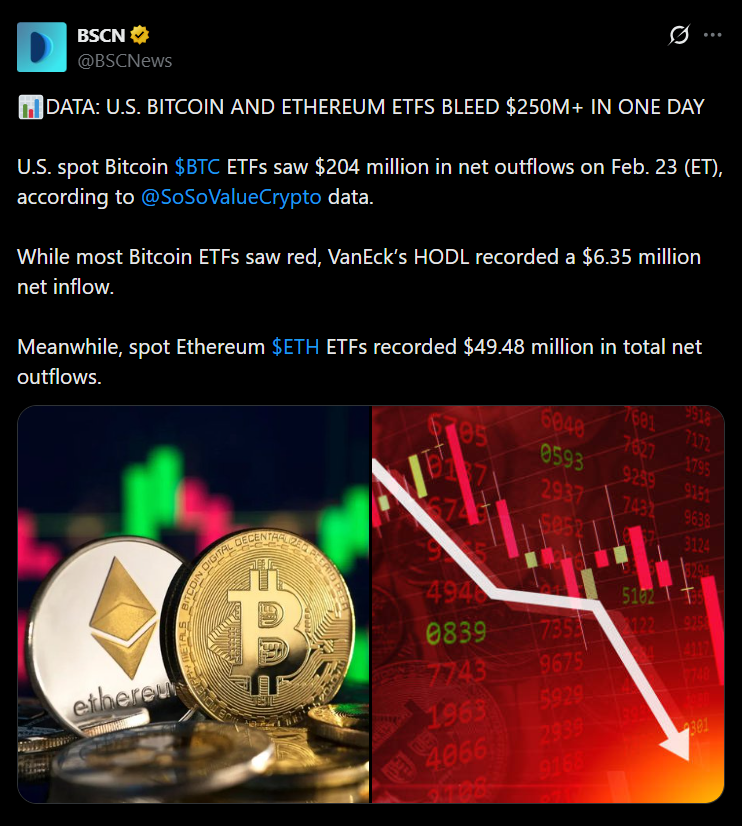
This doesn’t feel like rejection. It feels more like repositioning. Markets right now are being driven by macro forces, not crypto-specific weakness, and Bitcoin is simply reacting to that environment, not leading the downside.
Macro Pressure Is Driving the Move
The current backdrop is classic risk-off. Oil prices are rising again, inflation concerns are creeping back, and expectations for rate cuts are fading. On top of that, geopolitical tension tied to the Iran conflict is adding another layer of uncertainty.
In this kind of setup, capital tends to rotate defensively across all markets. Equities, bonds, crypto, everything feels it. Bitcoin didn’t trigger these outflows, it’s just part of the broader adjustment happening across global assets.
Bitcoin Is Showing Relative Strength
What’s getting less attention is how Bitcoin is actually performing compared to traditional markets. While stocks are sliding into multi-week losses, Bitcoin’s pullback has been relatively contained. That’s a subtle shift, but an important one.
In earlier cycles, similar macro stress would have pushed Bitcoin much lower, much faster. Now, the market seems to absorb selling pressure more steadily. That doesn’t look like weakness, it looks more like structural maturity starting to take hold.
ETF Flows Don’t Tell the Full Story
ETF flows can be misleading if taken at face value. Not all outflows represent long-term investors exiting positions. A large portion comes from hedge fund strategies, basis trades, and periodic rebalancing.

These flows are often mechanical rather than emotional. Treating them as a direct signal of sentiment misses how these instruments are actually used. Sometimes, money moves without changing the bigger picture at all.
Short-Term Fear, Long-Term Positioning
What we’re seeing right now feels more like a stress test than a breakdown. Weak hands get shaken out, leverage gets cleared, and positioning resets. That process can look messy in the short term, but it often strengthens the market underneath.
Meanwhile, longer-term players tend to move more quietly. They don’t react to every macro headline, they position around them. And that kind of behavior doesn’t always show up clearly in weekly flow data.
A Setup, Not a Signal of Weakness
It’s easy to read outflows as a warning sign, but context changes the story. This looks less like institutions abandoning Bitcoin and more like them adjusting around a volatile environment.
If anything, this kind of phase tends to build a stronger base. And when conditions stabilize, those same flows can reverse just as quickly, sometimes faster than expected.
Disclaimer: BlockNews provides independent reporting on crypto, blockchain, and digital finance. All content is for informational purposes only and does not constitute financial advice. Readers should do their own research before making investment decisions. Some articles may use AI tools to assist in drafting, but every piece is reviewed and edited by our editorial team of experienced crypto writers and analysts before publication.








 English (US) ·