
 2 months ago
60
2 months ago
60
- Bernstein upgraded major Bitcoin miners after identifying over $90 billion in AI infrastructure opportunities
- Miners now control more than 14 gigawatts of energized power capacity highly valuable to AI hyperscalers
- The market is starting to value miners less for hash rate and more for power infrastructure and AI hosting potential
Wall Street is beginning to realize that Bitcoin miners may have accidentally built one of the most valuable businesses in artificial intelligence infrastructure.

Bernstein issued fresh Outperform ratings on IREN, Riot Platforms, CleanSpark, and Core Scientific after concluding that the sector’s real value increasingly comes from energy infrastructure rather than Bitcoin mining itself.
The shift is significant. Instead of pricing miners purely on hash rate production and Bitcoin exposure, analysts are now valuing them based on power capacity, grid access, and long-term AI hosting contracts.
Power Is the New Scarcity
For years, Bitcoin miners aggressively secured cheap energy contracts, rural land, substations, and grid connections to lower mining costs. At the time, it looked like pure crypto optimization.
Now those same assets are becoming critical for AI companies desperately searching for power and data center infrastructure fast enough to support exploding compute demand.
Bitcoin miners collectively control more than 14 gigawatts of pre-secured grid capacity, giving them a massive advantage as hyperscalers face infrastructure bottlenecks and multi-year delays tied to new energy connections.
In some regions, traditional interconnection timelines now stretch up to seven years. A miner with an already energized site can move dramatically faster.
AI Is Changing How Miners Are Valued
Bernstein’s new valuation model reflects that transformation directly. The firm now applies a sum-of-parts framework that values AI-contracted power sites at roughly $3 million per megawatt rather than focusing primarily on mining economics.
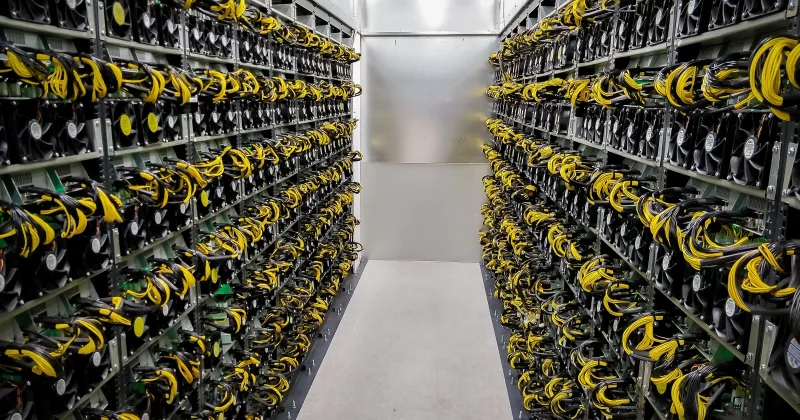
Core Scientific emerged as one of the biggest beneficiaries in Bernstein’s analysis after signing a massive long-term AI hosting agreement with CoreWeave. That deal alone covers roughly 590 megawatts of capacity over 12 years and is projected to generate nearly $10 billion in revenue.
According to Bernstein, AI infrastructure now represents roughly 86% of Core Scientific’s enterprise value estimate, while Bitcoin mining itself contributes only a small fraction.
Bitcoin Mining Is Becoming a Secondary Business
Some analysts now believe several large miners could derive the majority of their future revenue from AI and high-performance computing infrastructure rather than crypto mining.
That changes the investment thesis entirely. Miners are increasingly evolving into hybrid energy-and-data-center companies that happen to still mine Bitcoin on the side.
The economics are also fundamentally different. Long-term AI hosting contracts offer recurring, predictable cash flow compared to the highly cyclical nature of mining revenue tied directly to Bitcoin prices and network difficulty.
Infrastructure Is Winning the Market Narrative
The broader takeaway is that Bitcoin miners may have spent years unintentionally assembling one of the most strategically valuable asset classes in modern technology: energized infrastructure connected to the power grid.
Hash rate can eventually become commoditized. Access to scalable power, permitted land, cooling systems, and live substations cannot be replicated nearly as easily.
And right now, as AI companies race to secure infrastructure faster than supply can be built, Wall Street is finally starting to price that reality in.
Disclaimer: BlockNews provides independent reporting on crypto, blockchain, and digital finance. All content is for informational purposes only and does not constitute financial advice. Readers should do their own research before making investment decisions. Some articles may use AI tools to assist in drafting, but every piece is reviewed and edited by our editorial team of experienced crypto writers and analysts before publication.









 English (US) ·