
 5 months ago
76
5 months ago
76
- Square enables automatic Bitcoin payments for U.S. merchants
- Lightning Network powers instant, low-cost transactions
- Fee waivers and default rollout could drive mass adoption
Bitcoin just took a quiet but meaningful step into everyday commerce. Square has started rolling out automatic Bitcoin payments for eligible U.S. sellers, and the key detail here is easy to miss, it’s turned on by default. Merchants don’t need to opt in, configure anything, or even think about it. The feature is simply… there.
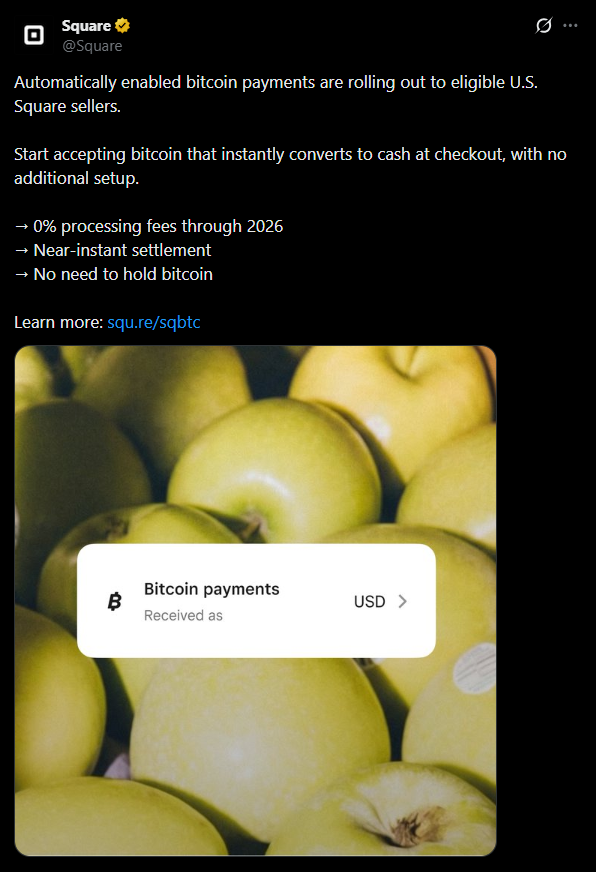
That shift changes how adoption works. Instead of asking businesses to choose crypto, the platform is embedding it directly into the payment experience. And with millions of merchants using Square, the potential reach is massive.
Bitcoin Payments Without the Usual Friction
The setup is designed to feel simple for both sides. Customers can pay using Bitcoin through a QR code, while transactions settle almost instantly via the Lightning Network. That removes one of the biggest barriers crypto has faced in payments, speed.
At the same time, merchants aren’t exposed to volatility unless they want to be. Payments are converted into U.S. dollars at checkout by default, meaning businesses can accept Bitcoin without holding it or worrying about price swings. It’s crypto without the risk, at least from the merchant’s perspective.
Fees Drop Below Traditional Payment Rails
Square is also removing another major barrier, cost. Processing fees for Bitcoin payments are being waived through 2026, making it cheaper than many traditional card networks. That alone creates a strong incentive for businesses to lean into the feature.
When payments become both faster and cheaper, behavior tends to shift. Not overnight, but gradually, and then all at once. Cost is usually the deciding factor for merchants, and this tilts the equation.
Block Is Expanding Bitcoin Across Its Ecosystem
This rollout isn’t happening in isolation. It’s part of a broader strategy by Block to integrate Bitcoin more deeply across its products. Square already sits at the center of merchant payments, and layering Bitcoin into that system expands its role beyond just fiat transactions.
Jack Dorsey has been consistent about this direction, positioning Bitcoin as a core part of the company’s future. Making it a default feature instead of an optional one reinforces that vision.
From Optional to Embedded Adoption
The biggest shift here isn’t technical, it’s structural. Crypto payments are moving from opt-in features to embedded infrastructure. Users don’t need to seek it out, it becomes part of the normal flow.
That’s usually when adoption starts to stick. Not when people are convinced to use something new, but when it’s already integrated into what they’re doing.
Bitcoin Moves Closer to Everyday Use
Square enabling Bitcoin by default doesn’t guarantee mass adoption overnight, but it lowers the barrier significantly. And when you combine scale, low fees, and seamless integration, the conditions start to line up.
It’s a subtle change, but an important one. Bitcoin isn’t just being traded or held, it’s being used, quietly, in the background of everyday transactions.
Disclaimer: BlockNews provides independent reporting on crypto, blockchain, and digital finance. All content is for informational purposes only and does not constitute financial advice. Readers should do their own research before making investment decisions. Some articles may use AI tools to assist in drafting, but every piece is reviewed and edited by our editorial team of experienced crypto writers and analysts before publication.









 English (US) ·