
 3 hours ago
13
3 hours ago
13
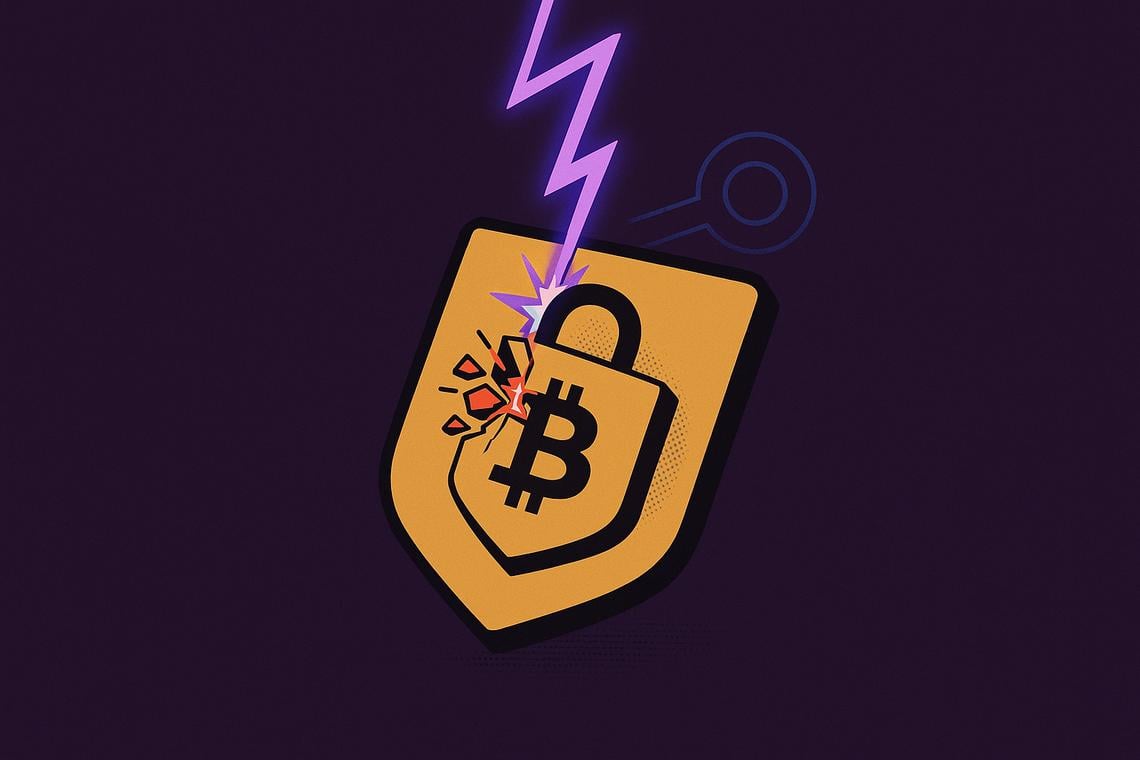
Roughly one-third of all Bitcoin ever mined could be vulnerable to a sufficiently powerful quantum computer — and Galaxy Digital is now putting real money behind the effort to close that window before it opens. The US-based crypto financial services firm has committed $5 million to a Bitcoin Quantum Readiness Initiative, funding developers tasked with hardening the network’s security against quantum computing threats before the technology matures enough to cause serious damage.
Key takeaways
- Galaxy Digital has established a $5 million fund to support Bitcoin developers working on quantum-resistant defenses.
- The fund backs projects focused on quantum-resistant signature schemes, wallet migration tools, and security audits.
- Approximately 6.9 million BTC — about one-third of all mined Bitcoin — have exposed public keys on-chain and are potentially at risk.
- Quantum attacks threaten Bitcoin’s digital signatures, not its supply or mining mechanism.
- Developer migration proposals BIP-360 and BIP-361 are already in progress, but widespread adoption is expected to be slow.
Galaxy Digital Launches $5 Million Bitcoin Security Fund
The threat quantum computing poses to Bitcoin is not about inflating supply or disrupting mining. It targets something more fundamental: the digital signature system that proves ownership and authorizes transactions. That distinction matters, because it means the risk is concentrated, traceable, and — in theory — addressable. Galaxy Digital is betting $5 million that addressing it now is worth the investment.
According to reporting by CoinDesk, the initiative is now accepting grant applications from developers working on three core areas: quantum-resistant signature schemes, tools to help users migrate their wallets to safer address formats, and security audits of existing infrastructure. The firm is also seeking additional backing from other companies in the industry to accelerate the adoption of new cryptographic standards.
Why This Fund Signals a Strategic Shift
This kind of proactive institutional commitment is relatively rare in Bitcoin’s development culture, where major protocol changes move deliberately and by consensus. By channeling outside capital directly to developers, Galaxy Digital is essentially trying to compress a timeline that would otherwise stretch across years of community deliberation. The move also signals that at least some major crypto financial players consider bitcoin quantum security a near-term strategic priority rather than a distant theoretical concern.
Quantum Computing Threats Target Bitcoin’s Digital Signatures
A quantum computer powerful enough to attack Bitcoin would not simply “hack” the blockchain. The specific mechanism is more surgical. When a Bitcoin transaction is made, the sender’s public key is revealed on-chain. Under current cryptography, that public key cannot be reverse-engineered back into a private key. Quantum computing changes that calculus.
Mechanism of the Attack
A sufficiently advanced quantum machine could, in theory, derive a private key from a revealed public key and use it to forge a transaction — effectively stealing funds from an address whose owner has already spent from it. This is not a brute-force attack on the blockchain itself; it is a targeted exploit of the elliptic curve cryptography underpinning Bitcoin’s signature system.
Critically, newer Bitcoin address formats offer some protection. Coins that have never been spent do not expose their public keys on-chain, leaving them less immediately vulnerable. The danger is concentrated in addresses where a transaction has already occurred and the public key is permanently visible.
Extent of Vulnerability in Bitcoin Addresses and Developer Responses
The scale of exposure is substantial. According to CoinDesk, an estimated 6.9 million BTC have public keys already visible on-chain. That figure includes early pay-to-public-key outputs and coins held in reused addresses where prior spending revealed the key. At current prices, that pool represents hundreds of billions of dollars in potentially at-risk holdings — and roughly one-third of all Bitcoin ever mined.
At-Risk Bitcoin Holdings
That one-third figure is worth pausing on. It suggests that a large portion of long-held Bitcoin — including coins from Bitcoin’s earliest years, when different address formats were standard — sits in a more exposed position. Many of those coins have not moved in years, and their owners may not even be aware of the cryptographic distinction between their address type and a more modern one.
Ongoing Migration Proposals and Adoption Challenges
The developer community is not waiting. Proposals BIP-360 and BIP-361 are already in progress, with BIP-360 having merged into the official repository in February 2026. BIP-361 outlines a phased transition away from legacy signature schemes toward quantum-resistant alternatives. The proposals represent a serious technical framework — but framework is not adoption.
The Taproot upgrade offers an instructive precedent. Taproot activated in 2021, yet wallets and exchanges took years to implement full support. A post-quantum migration would be considerably more complex, involving larger signature sizes that could push transaction fees higher and reduce network throughput. Those tradeoffs will generate real friction during any transition, and they are precisely the kind of engineering challenges the Galaxy Digital fund aims to accelerate.
The deeper implication is straightforward: the window between “quantum computers cannot break Bitcoin” and “they can” is unknown, but the time required to prepare Bitcoin for that moment is measured in years, not months. Funding developers today is essentially a bet on having enough runway to finish the job before the threat becomes real. Whether the broader ecosystem — wallets, exchanges, custodians, and individual holders — moves fast enough to follow is the question the $5 million alone cannot answer.
FAQ
What is the purpose of Galaxy Digital’s $5 million Bitcoin security fund?
The fund supports Bitcoin developers working on protections against future quantum computing attacks, with a focus on quantum-resistant signature schemes, wallet migration tools, and security audits of existing infrastructure.
How do quantum computers threaten Bitcoin?
A sufficiently powerful quantum computer could reverse-engineer a revealed public key into a private key, allowing an attacker to forge transactions and steal funds. The threat targets Bitcoin’s digital signature system, not its supply or mining process.
How many Bitcoins are considered at risk due to exposed public keys?
Approximately 6.9 million BTC — about one-third of all mined Bitcoin — have public keys already visible on-chain, making them potentially vulnerable if quantum computing advances far enough to exploit current cryptographic standards.
What are BIP-360 and BIP-361 in the context of Bitcoin quantum security?
They are developer migration proposals designed to phase out legacy digital signatures in favor of quantum-resistant alternatives. BIP-360 merged into Bitcoin’s official repository in February 2026, while BIP-361 outlines a structured, phased transition away from vulnerable signature schemes.
Article produced with the assistance of artificial intelligence and reviewed by the editorial team.






 English (US) ·