
 3 hours ago
14
3 hours ago
14
Bitcoin traded near $64,400 on Wednesday morning at 8:30 a.m. EDT, up roughly 1.6% over the previous 24 hours as positioning accelerated ahead of the Federal Reserve’s afternoon rate decision.
Key Takeaways
- Bitcoin gained 1.6% to trade near $64,400, rebounding from a $62,684 low set a day earlier.
- Binance holds 35% of the $65 billion crypto derivatives market, per Cryptoquant’s July 28 report.
- The Fed announces its rate decision at 2 p.m. EDT today, with markets pricing 30% hike odds.
Price Rebounds From Overnight Low
The move higher came after bitcoin briefly slipped below $63,000 in the prior session before buyers consistently defended that area. Once price reclaimed $64,000, momentum slowed instead of accelerating, a sign that traders were willing to bid the dip but remained reluctant to chase strength before a major macro event.
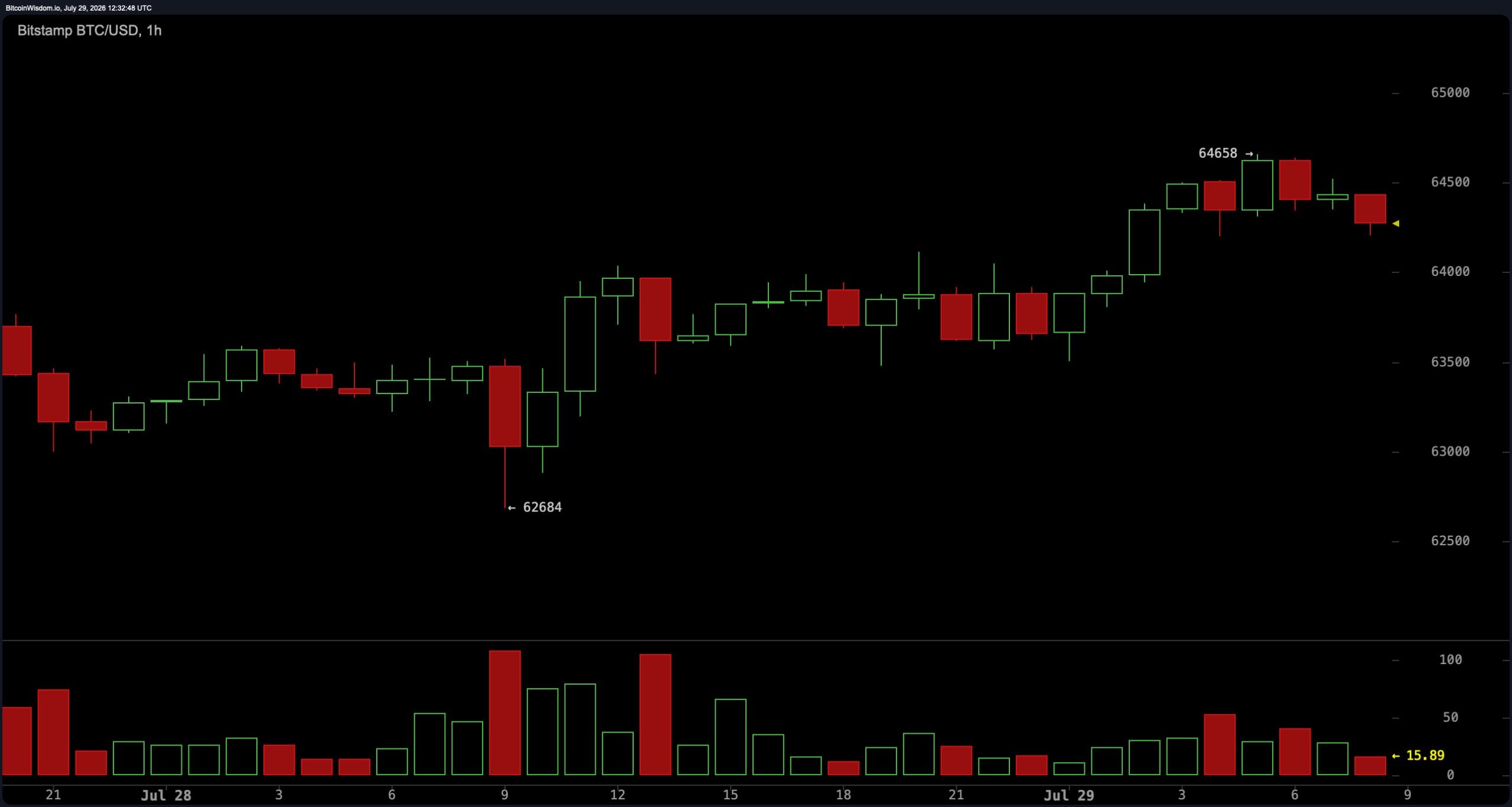 BTC/USD 1-hour chart via Bitstamp on July 29, 2026. Image source via bitcoinwisdom.io.
Market data on Wednesday shows bitcoin trading in the mid-$64,000 range, while daily volume holds between $24 billion and $25 billion. Market capitalization remains near $1.29 trillion with approximately 20.06 million BTC in circulation. The recovery only retraced part of July’s decline.
Bitcoin spent the first half of the month testing the $66,000 to $67,000 area before sellers gradually took control, eventually pushing the price toward the upper $63,000s. Even after Wednesday’s rebound, bitcoin remains roughly 45% to 49% below its October 2025 record just above $126,000, leaving longer-term sentiment cautious despite the intraday recovery.
Fed Decision Looms Large
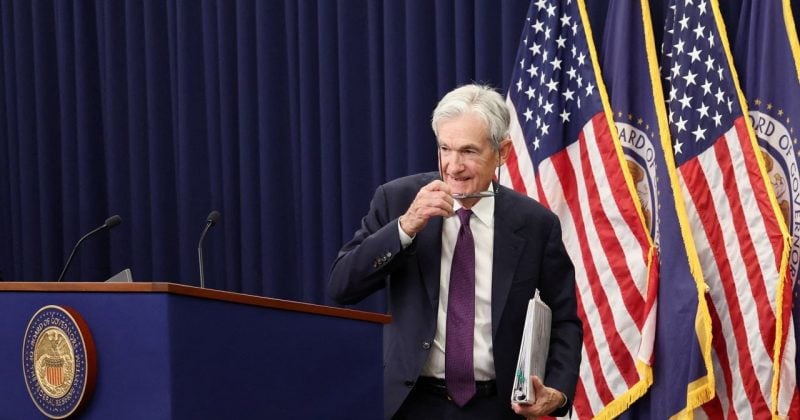
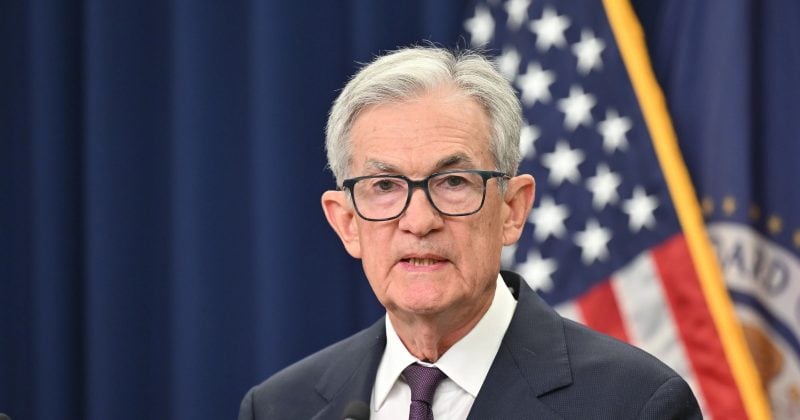
Markets often become less responsive to technical signals in the hours before a Federal Reserve decision, with traders reducing exposure rather than committing to new positions. Wednesday’s FOMC statement and Fed Chair Kevin Warsh‘s press conference represent the type of event that routinely overrides chart patterns, particularly when rate expectations remain divided.
Consensus still favors the Fed holding its benchmark rate between 3.50% and 3.75%, although futures and prediction markets have continued assigning meaningful odds to another increase. Sticky inflation readings and elevated energy prices have kept that possibility alive, even after Brent crude retreated from its recent spike.
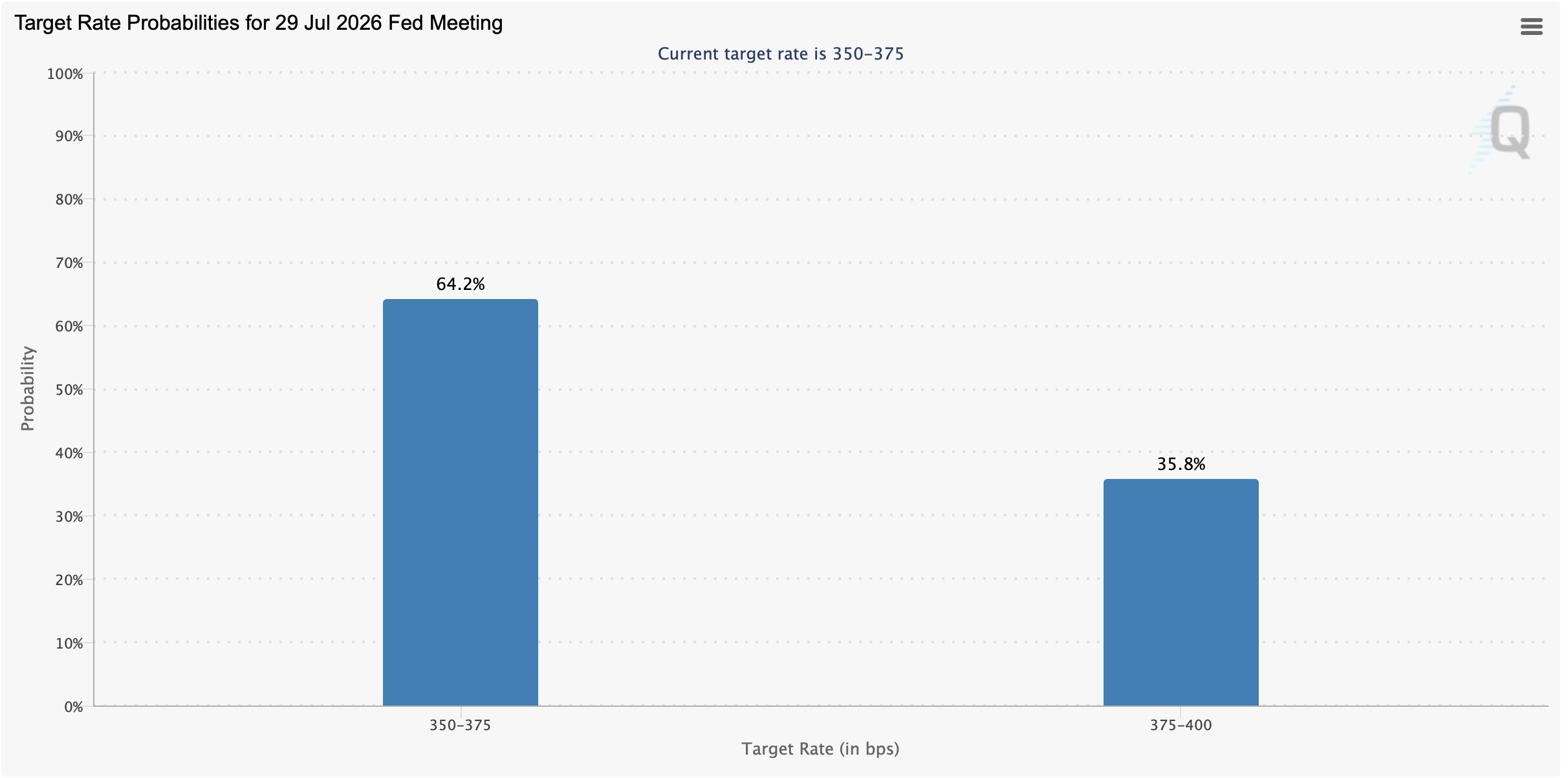 According to futures markets, there’s a 35% chance of a rate hike. Image source: cmegroup.com Fedwatch Tool on July 29, 2026, at 8:30 a.m. EDT.
Treasury yields also remain part of the equation. With 10-year yields holding in the mid-to-high 4% range and real yields elevated, capital has continued flowing toward interest-bearing assets. That backdrop has repeatedly limited bitcoin rallies throughout the summer, particularly once the price reaches obvious resistance levels.
Technicals Point to a Standoff
The daily chart reflects a market waiting for a catalyst instead of establishing a clear trend. Oscillators and the moving average summary remain rather neutral, and the 14-day relative strength index (RSI) near 51 supports that view. Shorter-term exponential moving averages (EMAs) have started turning higher, but the longer-term trend has yet to confirm the recovery, with both the 100-day and 200-day averages continuing to act as overhead resistance.
The recent trading has also established well-defined levels. Buyers have repeatedly defended the $62,500 to $63,300 region, making it the first area to watch if selling resumes. Overhead, resistance between $64,500 and $65,000 has consistently attracted profit-taking, while the broader $66,800 to $67,000 zone remains the larger technical hurdle. Until one of those ranges breaks with conviction, short-term price action is likely to remain choppy rather than directional.
Onchain Data Shows a Cautious Market
Network fundamentals continue sending a different message than price. Hashrate remains just below 900 EH/s, indicating miners have largely maintained operations despite weaker prices. That level of security has held steady even as margins tightened across much of the mining sector.
Other onchain metrics have softened. Transaction counts remain relatively high, but much of that activity continues to come from smaller OP_RETURN-related transactions instead of larger value transfers typically associated with broader network usage. Active addresses have also drifted toward 600,000 on a 30-day average, a pattern that generally reflects reduced participation rather than expanding demand.
Institutional flows have echoed that hesitation. Spot bitcoin exchange-traded funds (ETFs) attracted inflows earlier in July before reversing course, with recent sessions posting outflows ranging from roughly $11 million to $50 million. That pattern suggests institutions are still waiting for greater clarity on interest rates before rebuilding positions.
Derivatives Market Stays Concentrated
Derivatives positioning also shows traders becoming more selective with risk. Cryptoquant statistics estimated perpetual futures open interest near $65 billion around July 28, down roughly 20% from last September’s peak. That decline reflects leverage leaving the market instead of building into another speculative run.
Liquidity also remains concentrated. Binance, Bybit and Gate account for roughly 63% of perpetual open interest, with Binance alone representing about $22.86 billion, or approximately 35% of the market. That concentration means large moves in derivatives liquidity still originate from only a handful of venues, making those exchanges central to short-term price discovery.
The same exchanges also dominate the emerging market for perpetual contracts tied to traditional assets such as metals, oil, and equities. Although that segment has expanded rapidly to more than $2 billion since late May, it remains only a small fraction of the broader crypto derivatives market.
What Comes Next
Once the Fed decision passes, attention will quickly shift to Thursday’s GDP and PCE inflation reports, both of which have the potential to reinforce or reverse whatever direction markets take after the FOMC meeting. Earnings from Coinbase and Strategy will add another layer of information about institutional demand and crypto-related business activity.
The immediate reaction will likely depend less on the rate decision itself than on Chair Warsh’s guidance. If markets interpret his comments as leaving room for easier policy later this year, bitcoin has room to challenge the $65,000 area and potentially retest higher resistance. If the tone shifts more hawkish, recent support around $62,500 will become the first level to watch. Current onchain data does not point to widespread forced selling, but without stronger ETF demand, macro policy remains the primary driver of bitcoin’s next significant move.




 English (US) ·