
 3 hours ago
14
3 hours ago
14
Bitcoin heads into another CPI day with a narrow margin for error. Traders are watching whether the market can reclaim and hold the $68,000$80,000 band — a zone that has repeatedly flipped between support and resistance during recent macro shocks.
The next U.S. CPI print is scheduled for Wednesday, June 10, 2026 at 8:30 a.m. ET, according to the U.S. Bureau of Labor Statistics (U.S. Bureau of Labor Statistics (CPI)). With liquidity thinning around high-impact releases, the first move often exaggerates direction before price settles back into the prevailing range.
In the run-up, Bitcoin has telegraphed where the fights happen. After a hotter-than-expected CPI in mid-May, BTC briefly dipped toward ~$79.8k and rebounded near ~$81.2k the next day — reinforcing $80k as a contested pivot (CoinDesk). Then on June 3, amid ETF redemptions and a rotation into AI equities, price probed down to roughly $65.7k, testing lower support and triggering liquidations (CoinDesk). Those swings outline why $68k$80k has become the CPI-day reclaim zone to watch.
Editor's note: The streak of spot ETF outflows changed how quickly BTC faded rallies. On two CPI weeks I tracked closely, the first move was routinely faded within 30 minutes, but the follow-through hinged on whether flows stabilized by the close. My takeaway: the $68k$80k band matters less as a magical number and more as a gauge of acceptance. If itis reclaimed and held, traders lean in; if not, they stand back. 97 Lena Carter
$68k$80k matters because itis where Bitcoin has most recently flipped between supply and demand during CPI-driven volatility. A decisive reclaim and acceptance inside — and ideally above — this band keeps the broader uptrend argument alive; repeated failures to hold it raise the odds of deeper retracements. Into the June 10 print, ETF flows and cross-asset moves (notably AI equities) could amplify wicks on either side before direction is clarified.
- $80k is a pivot that rejected on hot CPI and was defended soon after, marking a key resistance-to-support battleground.
- Early-June selling probed the mid-to-high $60k area, mapping the lower edge of the range.
- ETF outflows and AI rotation have magnified intraday swings around macro data.
- Confirmation comes from acceptance and follow-through, not the first 515 minutes after the release.
What is the $68K$80K reclaim zone, exactly?
Traders use reclaim to describe price moving back over a level or band that recently failed — and then holding it on retests. The $68k$80k area is the most active recent battleground: sellers capped rallies near $80k around a hot CPI, while buyers defended deep pulls into the high-$60ks during ETF-driven stress. Itis the practical middle ground where the market decides trend continuation versus deeper mean reversion.
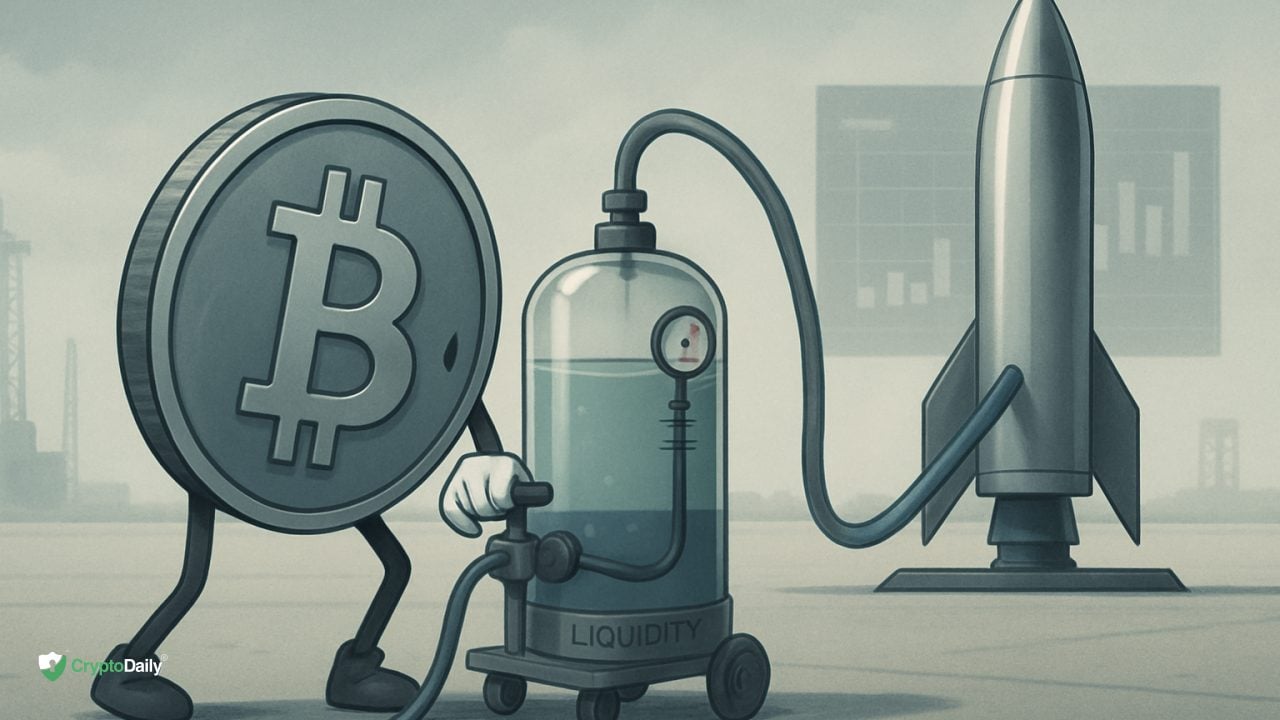
Why a band instead of a single level? CPI days widen spreads and reduce liquidity at the top of book. The market hunts stops above and below obvious price markers. Using a band helps frame acceptance (multiple closes and higher lows within it) rather than reacting to every wick.
Evidence of this behavior surfaced mid-May when BTC briefly slipped toward ~$79.8k before reclaiming ~$81.2k within a day (CoinDesk). Then, on June 3, it undercut supports into the mid-$60ks during heavy redemptions before snapping back (CoinDesk). Together, those moves sketch the reclaim zone now under scrutiny.
How could the June 10 CPI print move Bitcoin within this band?
Macro prints change the path, not the destination: they alter how quickly price reaches the next liquidity pool. The June 10 CPI release at 8:30 a.m. ET (U.S. Bureau of Labor Statistics (CPI)) creates three broad paths. None guarantees a trend; each sets odds for whether $68k$80k is accepted, rejected, or chopped through.
Use the following table to map scenarios to behaviors and focus points. Treat it as a playbook, not a promise — CPI reactions are path-dependent and often mean-reverting after the first impulse.
CPI outcome First BTC reaction (typical) Implication for $68k$80k Trader focus Cooler than expected Upward impulse; spread widens Faster tests of $80k; potential break and hold if volume confirms Watch for acceptance above prior highs; avoid chasing initial wick Inline with expectations Whipsaw; range reverts Band acts as magnet; chop risk high inside $68k$80k Fade extremes back to mid-range; wait for structure to form Hotter than expected Downward impulse; stops trigger Risk of losing $68k; deeper probes toward prior liquidity sweeps Look for failed breakdowns and reclaim signals before risk-on
Timing matters too. Initial 15 minute candles often overrun levels as algos react to the surprise component. Patience around the 1530 minute mark can reduce slippage and false entries, especially near the edges of the reclaim zone.
What are ETF flows and cross9asset rotation saying about risk?
Flows set the backdrop. Late May carried a marked risk-off tone in listed products: CoinShares9 weekly report (Volume 287) showed about US$1.47 billion of outflows from digital-asset funds, with Bitcoin products accounting for roughly US$1.315 billion — the year9s largest weekly BTC outflow at that point (Yahoo Finance reporting CoinShares).
In the U.S., spot Bitcoin ETFs saw their longest and largest withdrawal streak since launch — approximately US$3.45 billion removed over 11 straight sessions through early June, according to CoinDesk. That unwind coincided with strength in AI-related equities, a rotation that can siphon incremental risk capital away from BTC on data days.
Why does this matter for $68k$80k? Sustained outflows tend to weaken bounces into resistance and deepen dips into support, making acceptance inside the band harder to sustain. Conversely, if flows stabilize or turn modestly positive into or after CPI, the market often grants more time above reclaimed levels, improving the odds that a break over $80k sticks.
Where are the nearby invalidation levels and liquidity traps?
Invalidations help you survive uncertainty. If the market accepts below the lower-$70ks and repeatedly fails to reclaim $68k on hourly closes, it signals that CPI has likely shifted the balance toward deeper retracement. That doesnt predict a crash — it warns that dip-buying has lower odds until fresh demand appears.
On the upside, multiple attempts and holds above $80k, especially on expanding spot and futures volume, improve the case for range expansion. The mid-May rejection just under $80k and swift reclaim near ~$81.2k show how quickly this pivot can flip when liquidity returns (CoinDesk). On the downside, the early-June sweep toward ~$65.7k is a reminder that liquidity vacuums can extend further than expected in ETF redemption windows (CoinDesk).
- Checklist for confirmation: higher lows on 1560m inside the band
- Funding and basis normalizing after the first impulse
- ETF net flows stabilizing or improving day-over-day
- Correlation with AI mega-cap indices easing back toward neutral
- Failed breakdowns or breakouts that quickly reverse back into $68k$80k
Pro tip: On CPI days, the first drive often runs stops on both sides of the prior day9s range. Let the initial impulse and fade complete before judging whether the reclaim is real.
Is it smarter to trade the print or wait for confirmation?
It depends on your playbook. Event traders might bracket the release with predefined risk, aiming to catch the first expansion. Swing traders often wait for acceptance signals (e.g., two consecutive closes back inside $68k$80k or a clean break-and-hold over $80k) before committing size.
Practical tactics include staggering entries, avoiding wide slippage by reducing order size into the print, and using alerts rather than market orders during the first minutes. Options traders can lean on defined-risk structures (debit spreads) to avoid liquidation risk if the initial move reverses.
Above all, size for volatility. CPI can double or triple normal intraday ranges, especially when structural flows (ETF creations/redemptions) and cross-asset rotations add fuel. A small but repeatable approach typically outperforms all-in bets on single prints.
Which instrument fits CPI day: spot, futures, or options?
Different vehicles carry different trade-offs when spreads widen and liquidity thins. Heres a high-level comparison to help align tools with intent on CPI day.
Instrument Strength on CPI day Watch-outs Best used when Spot Simple exposure, no liquidation risk Full delta; no convexity; capital intensive You want clean reclaim confirmation with low operational risk Perpetual futures Flexible sizing; can hedge quickly Funding spikes, slippage, liquidation cascades Youre trading the first impulse but can cut fast Dated futures Cleaner basis; defined expiry Less liquid into data; basis can gap You have a multi-day view post-CPI Options (calls/puts) Defined risk; convexity if move extends Implied vols often elevated; decay hurts if chop You expect a break and hold beyond $68k$80k Options spreads Reduce premium; target range expansion Capped upside; execution complexity You want exposure to direction with limited theta bleed
Whichever vehicle you choose, map your invalidation to the reclaim band. If price rejects the band and fails to reclaim, reduce risk and reassess rather than averaging down into uncertainty.
Common Mistakes
- Chasing the first candle: Early prints often overrun levels. Wait for structure (higher low or lower high) before sizing up.
- Using static stops at round numbers: Liquidity hunts cluster around $500 and $1,000 increments; stagger stops or place them beyond obvious pools.
- Ignoring flows: Large ETF outflows can blunt bounces. Track daily creations/redemptions alongside price to avoid fading strong currents.
- Over-leveraging perps: Funding spikes and thin books can trigger forced exits. Use reduced size and wider, predefined risk.
- Forgetting the calendar: CPI at 8:30 a.m. ET can cause overnight gaps for non-U.S. traders; plan positions and alerts ahead of the release.
For ongoing macro coverage, real-time levels, and context across digital assets, visit Crypto Daily.
Frequently Asked Questions
What if CPI is exactly inline does the band still matter?
Yes. Inline prints often produce whipsaws that revert to the most recent fair-value area — currently mapped by $68k$80k. The band can act as a magnet until new information (flows, earnings, policy headlines) shifts positioning.
Could AI equity strength keep pressure on BTC even if CPI cools?
It might. CoinDesk noted BTC weakness alongside strong AI-led equity indices in early June as ETFs saw redemptions. If that cross-asset rotation persists, it can cap upside attempts into $80k even on benign CPI.
How do I know a reclaim is real and not just a wick?
Look for acceptance: multiple closes within or above the band, rising spot participation, and normalized funding/basis. Failed moves that quickly reclaim the band are stronger signals than breakouts without follow-through.
Where does invalidation sit if Im long from inside the band?
Theres no universal level, but a practical rule is: if price loses the lower edge (around the high-$60ks) and fails to win it back on retests, reduce or exit. Use time-based stops on CPI day to avoid death-by-a-thousand-wicks.
Are options better than futures for CPI?
Options provide defined risk and benefit from large, directional moves, but implied volatility is usually elevated into CPI. If you expect chop inside $68k$80k, premium can decay quickly; consider spreads to reduce cost.
What data besides CPI could swing BTC this week?
Watch for ETF flow prints, major earnings that affect risk appetite, and any policy commentary that shifts rate-cut odds. These can reinforce or negate CPIs initial impulse.
Disclaimer: This article is provided for informational purposes only. It is not offered or intended to be used as legal, tax, investment, financial, or other advice.







 English (US) ·