
 3 months ago
39
3 months ago
39
- Gold has surged 60% over the past year while Bitcoin has declined, shifting investor sentiment
- Bitcoin still offers higher upside potential through adoption and scarcity, but comes with higher volatility
- Gold remains the safer, more stable option, while Bitcoin suits those seeking growth and risk exposure
It’s been a bit of a weird stretch for markets, honestly. Gold, through the SPDR Gold Shares ETF, has surged about 60% over the past year, quietly outperforming most major assets. Meanwhile, Bitcoin, often labeled as “digital gold,” has actually dropped around 12% over the same period, which… raises some eyebrows.
Naturally, that contrast has people questioning the narrative. If Bitcoin is supposed to mirror gold’s role as a store of value, why are they moving in completely different directions? And maybe more importantly, where do they go from here, especially if you’ve got, say, $500 to put to work?
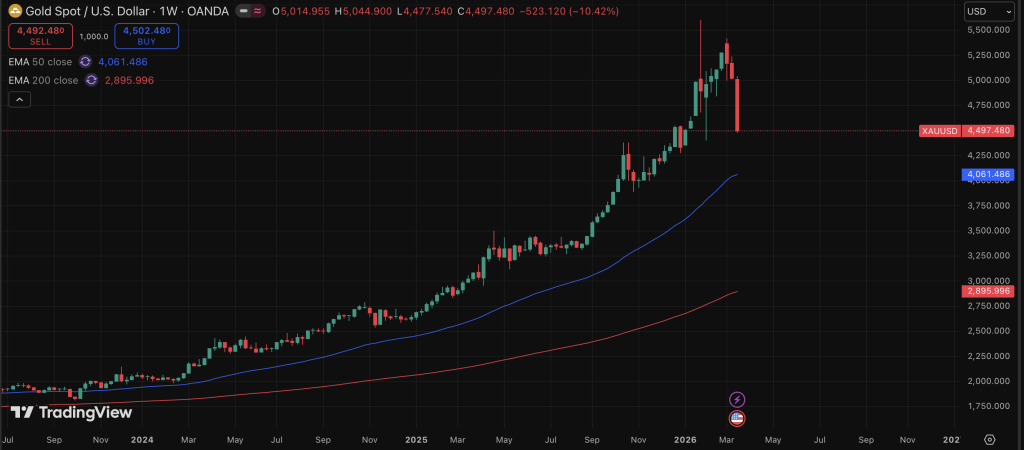
Gold’s Strength Comes From Stability, Not Hype
Gold’s appeal hasn’t really changed, and that’s kind of the point. It’s been around forever, trusted across generations, and more importantly, it tends to hold its value when things get messy. Wars, inflation fears, currency concerns… gold usually finds a way to stay relevant.
Lately, central banks have been buying it at a pace we haven’t seen in years. That’s not random. Concerns around U.S. debt, a weakening dollar, and broader geopolitical tension have pushed institutions toward assets that don’t rely on anyone else’s promise to hold value. Gold just sits there, doing its thing.
And while it’s been climbing recently, gold still isn’t known for wild swings. Even during the 2022 market downturn, when stocks and crypto took heavy hits, gold stayed relatively steady. That consistency is why it often ends up in long-term portfolios, not because it explodes higher, but because it doesn’t fall apart.
Bitcoin Still Offers Upside, But With More Risk
Bitcoin, on the other hand, plays a slightly different game. It shares that “scarcity” narrative with gold, limited supply, no central control, but it doesn’t have the same historical backing. It’s newer, less tested, and because of that, a bit more volatile… sometimes a lot more.
That said, adoption is still growing. Since spot Bitcoin ETFs launched in 2024, they’ve pulled in over $57 billion in net inflows, which signals that institutions are slowly getting more comfortable with it. That kind of demand matters, especially for an asset with a capped supply.
And then there’s the halving cycle. Every few years, Bitcoin’s new supply gets cut in half, tightening availability. Combine that with long-term holders locking up coins, and you’ve got a setup where even moderate demand can push prices higher over time. It’s not guaranteed, but the mechanics are there.
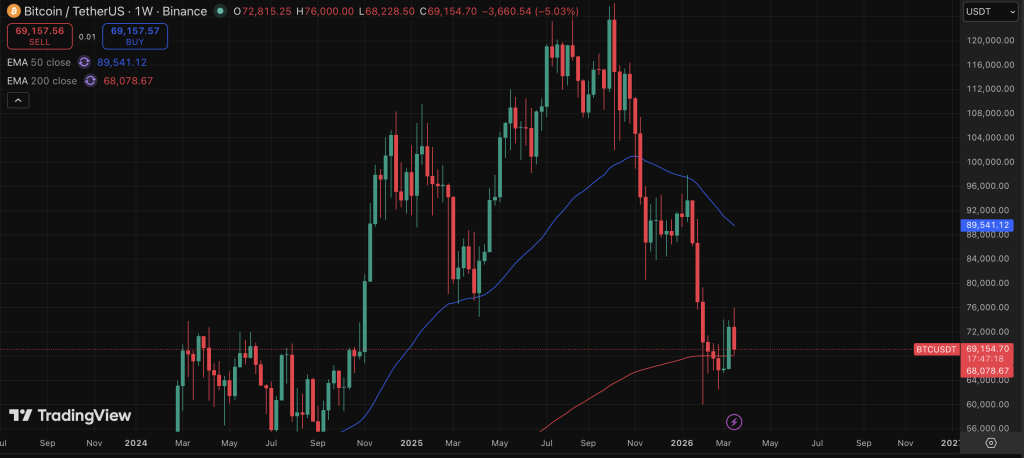
The Trade-Off: Stability vs Potential
Here’s where the real difference shows up. Gold is stable, predictable, and, frankly, a bit boring, but that’s exactly why people trust it. Bitcoin, though, can move fast in both directions. It can rally hard… and it can drop 30–40% just as quickly. That’s not something every investor is comfortable with.
So the choice kind of depends on what you’re trying to achieve. If you want something that’s likely to hold value and reduce overall portfolio risk, gold makes a strong case. But if you’re okay with volatility and are looking for higher upside potential, Bitcoin starts to look more appealing.
So, Where Should $500 Go?
If you already have exposure to traditional assets like gold, or none to crypto at all, putting $500 into Bitcoin might make sense as a way to diversify and tap into that potential growth. It’s riskier, sure, but also offers more room to run if adoption keeps expanding.
On the flip side, if you’re more concerned about preserving value and avoiding sharp drawdowns, gold still does that job better than almost anything else. It’s not flashy, it won’t double overnight, but it’s reliable, and sometimes that’s exactly what you need.
In the end, it’s less about which is “better” and more about what kind of investor you are. And maybe, just maybe, there’s room for both.
Disclaimer: BlockNews provides independent reporting on crypto, blockchain, and digital finance. All content is for informational purposes only and does not constitute financial advice. Readers should do their own research before making investment decisions. Some articles may use AI tools to assist in drafting, but every piece is reviewed and edited by our editorial team of experienced crypto writers and analysts before publication.





 English (US) ·