
 2 hours ago
22
2 hours ago
22
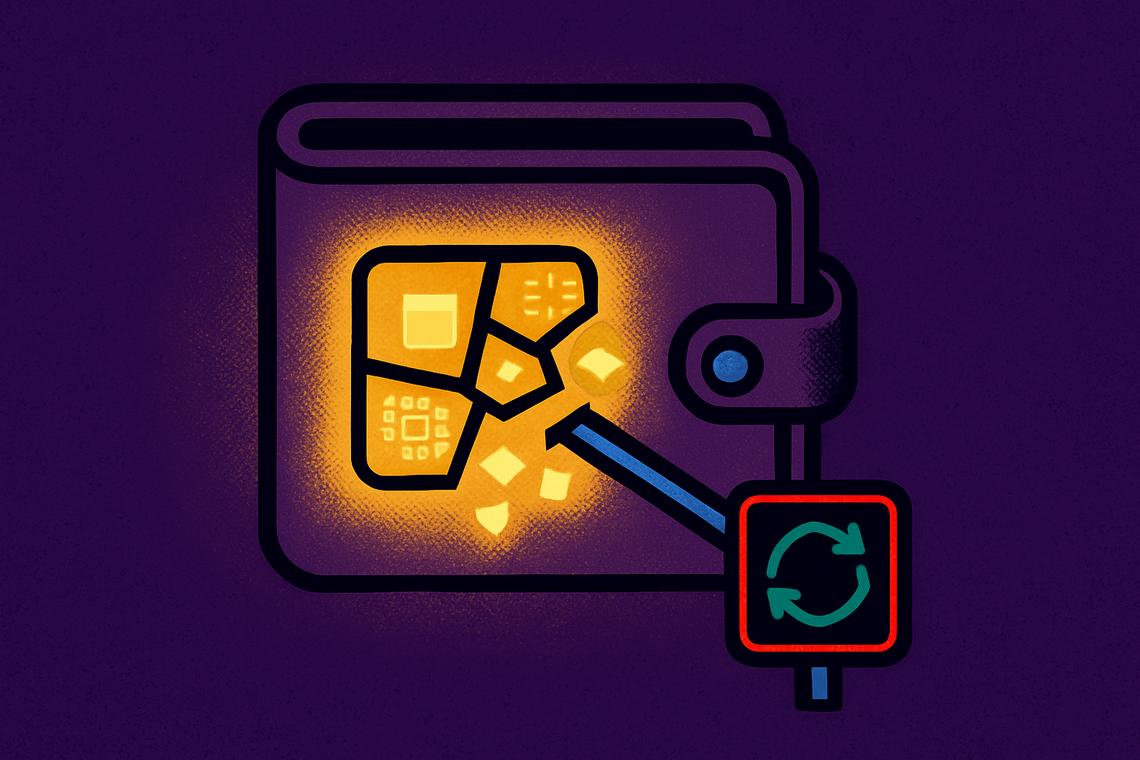
Bitwise Asset Management is rolling out a new way to blend crypto wallets with Wall Street-style portfolio management, betting that investors want to hold stocks the same way they hold Bitcoin. The firm’s new Bitwise tokenized portfolios, branded Automated Token Portfolios or ATPs, let qualified investors outside the United States hold baskets of tokenized US equities directly in their own self-custodial wallets, with rebalancing handled automatically behind the scenes.
Key takeaways
- Bitwise launched Automated Token Portfolios (ATPs), combining self-custodial wallets with professionally managed equity strategies built on Coinbase’s tokenized US stocks.
- Three strategies debut at launch: an AI industry leaders portfolio, a robotics-focused portfolio, and Mag7X, which equally weights Apple, Microsoft, Nvidia, Alphabet, Amazon, Meta, Tesla, and SpaceX.
- Glider, previously partnered with Ondo Finance on tokenized equity portfolios, handles the actual rebalancing and execution, while Bitwise charges a 0.15% methodology access fee separate from trading costs.
- Investors keep individual ownership of the tokens in non-custodial wallets rather than pooling assets into a fund, meaning holdings can also be used in DeFi lending and borrowing.
- ATPs are limited to qualified investors residing outside the US, a restriction that shapes who can actually access the product.
Bitwise Launches Automated Token Portfolios Integrating Tokenized US Equities
Bitwise’s ATPs mark an attempt to remove one of the oldest frictions in professional investing: handing your money to someone else to manage it. For more than a century, tapping into a managed investment strategy meant transferring assets into a fund structure. Bitwise’s Chief Investment Officer, Matt Hougan, framed the shift bluntly: “ATPs enable you to retain ownership in your personal wallet while the investment model is delivered directly to you.”
That framing matters because it changes who technically holds the assets. Rather than issuing shares in a fund, Bitwise applies its investment methodology directly to tokens sitting in an investor’s own wallet, and the portfolio adjusts itself as market conditions or strategy rules dictate.
The debut lineup includes three strategies. One concentrates on AI industry leaders. A second targets robotics companies. The third, called Mag7X, spreads equal weight across Apple, Microsoft, Nvidia, Alphabet, Amazon, Meta, and Tesla, and adds SpaceX to the mix — a lineup that goes beyond the traditional “Magnificent Seven” grouping used in traditional markets.
Underlying Assets and Portfolio Management Mechanism
The entire structure runs on tokenized stocks that Coinbase only just introduced. One day before Bitwise unveiled its automated crypto portfolios, Coinbase launched tokenized representations of Apple, Nvidia, Meta, and Alphabet on its Base blockchain. Bitwise built its strategies on top of that inventory almost immediately, signaling close coordination between the two companies even though Coinbase hasn’t said publicly which equities it plans to tokenize next.
Execution and day-to-day management fall to Glider, a firm specializing in automated portfolio operations. Bitwise designs the investment framework — which stocks, what weightings, when to rebalance — and Glider carries out the actual trades and adjustments. It’s not Glider’s first rodeo with Coinbase tokenized stocks-style products: earlier this year, the company worked with Ondo Finance to build custom portfolios using Ondo’s own tokenized equity offerings, giving it a track record in this specific niche before teaming up with Bitwise.
For its part, Bitwise charges a 0.15% methodology access fee. That’s separate from whatever trading costs or platform fees apply on top, meaning the all-in cost to an investor depends on how the underlying execution is priced.
Investor Custody and Fee Structure
What sets ATPs apart from a traditional ETF or mutual fund is where the assets actually sit. Instead of pooling investor money into a shared fund, each participant holds their own slice of tokenized equities inside their personal self-custodial equity wallets. There’s no shared basket — every investor’s holdings are individually titled to them on-chain.
That distinction has a practical consequence: because investors directly own the underlying tokens, those same holdings can be plugged into decentralized finance protocols for lending or borrowing. In other words, a stock portfolio doesn’t have to sit idle — it can, at least in theory, generate additional yield through DeFi markets while still tracking Bitwise’s investment model.
Why this matters: for years, tokenized real-world assets have promised to merge crypto rails with traditional finance, but most products still required investors to give up direct custody. ATPs test whether professional portfolio management and self-custody can coexist without one undermining the other.
Market Access and Regulatory Restrictions
ATPs are not available to everyone. Bitwise has limited the product to qualified investors living outside the United States, a restriction that immediately narrows the addressable market even as the broader tokenized equity sector keeps expanding. According to data from rwa.xyz, the tokenized listed equity market currently stands at $2.49 billion, up 5.18% over the prior month, with 2.25 million token holders and $27.28 billion in monthly transaction volume.
Bitwise itself oversees roughly $9 billion in total assets, a business built primarily on crypto exchange-traded funds. ATPs represent a deliberate step outside that lane, following the firm’s recent move into curating decentralized finance vaults — another signal that Bitwise sees its future extending well past ETFs.
The fact that Bitwise’s strategies already include Microsoft, Amazon, Tesla, SpaceX, and Sandisk — none of which Coinbase has tokenized yet — hints at where the exchange’s tokenization pipeline may be headed next, even without an official confirmation.
Why this matters for adoption: restricting access to non-US qualified investors keeps ATPs out of reach for most American retail traders for now, but it also gives Bitwise a live testing ground for combining tokenized equities, automated rebalancing, and DeFi-compatible custody before any potential US rollout. How that model performs outside American jurisdiction could shape whether similar Bitwise tokenized portfolios eventually find a path into more heavily regulated markets.
FAQ
What are Automated Token Portfolios (ATPs) introduced by Bitwise?
ATPs are investment products that combine self-custodial crypto wallets with professionally managed equity portfolios using tokenized US stocks.
Which tokenized stocks are included in Bitwise’s ATPs?
The ATPs use Coinbase’s tokenized US equities, including Apple, Nvidia, Meta, Alphabet, Microsoft, Amazon, Tesla, and SpaceX.
How do investors maintain ownership of assets in ATPs?
Investors retain individual ownership of the tokenized equities in their own non-custodial wallets, rather than pooling assets into a collective fund.
Who is eligible to invest in Bitwise’s Automated Token Portfolios?
The ATPs are available exclusively to qualified investors living outside the United States.
Article produced with the assistance of artificial intelligence and reviewed by the editorial team.




 English (US) ·