
 2 hours ago
13
2 hours ago
13

Hyperliquid has flipped on a new mechanism that turns everyday stablecoin reserves into fuel for its own token economy. The Hyperliquid AQAv2 activation for USDC went live on August 26, redirecting a slice of reserve yield away from stablecoin issuers and into the protocol’s Assistance Fund, which uses that income to buy HYPE on the open market.
Key takeaways
- Hyperliquid activated AQAv2 for USDC on August 26, sending reserve yield revenue toward its Assistance Fund.
- Coinbase acts as treasury deployer and Circle as technical deployer, and both staked 500,000 HYPE to switch the framework on.
- Stablecoin deployers share roughly 90% of cost-adjusted reserve yield with the Hyperliquid protocol.
- Market estimates put potential annual revenue between $135 million and $160 million, though Hyperliquid has not confirmed that figure.
- The first payment to the Assistance Fund is scheduled for October 3, after a 30-day accrual window and an eight-day transfer delay.
Hyperliquid Activates AQAv2 Framework for USDC
The short version: Hyperliquid now requires certain stablecoin partners to hand over most of the yield their reserves generate, and that money flows straight into a fund that buys HYPE. It’s a structural change to how the exchange captures value from the stablecoins sitting on its books, not just from trading fees.
Activation Date and Mechanism
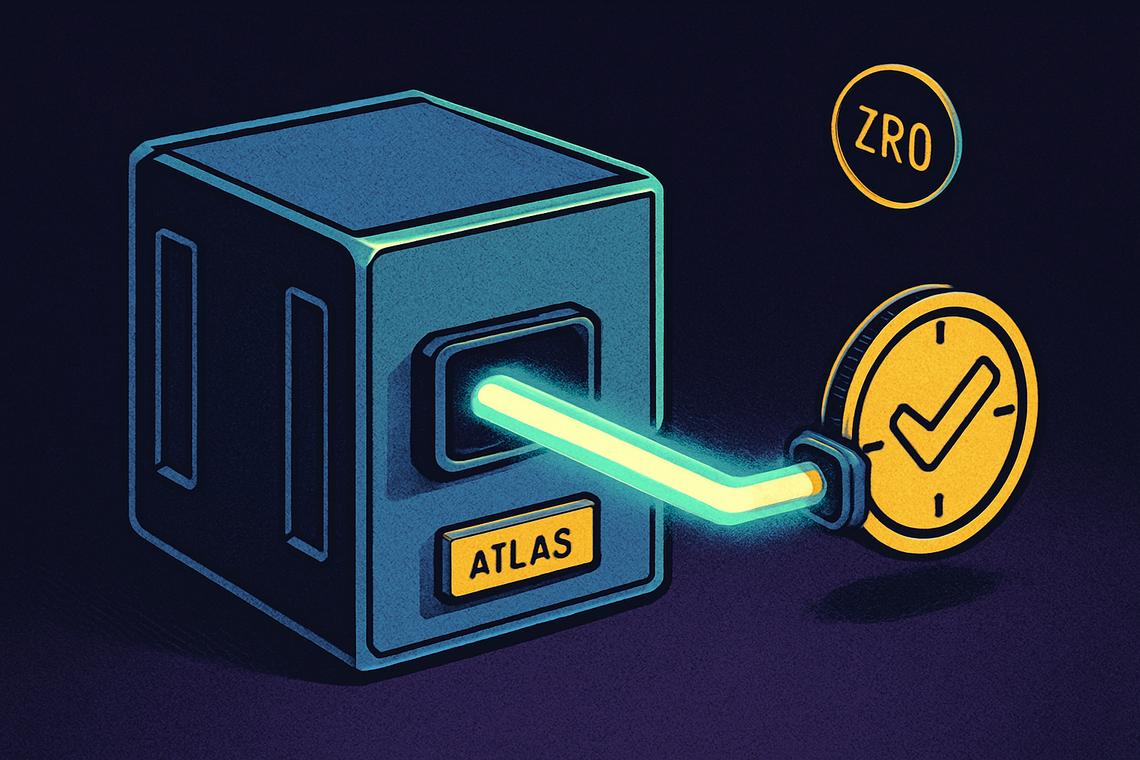
AQAv2 — short for aligned quote asset, version two — went live for USDC on August 26. Unlike the earlier iteration of the framework, this version extends to stablecoins that aren’t exclusive to Hyperliquid, meaning USDC can plug in even though it circulates freely across other blockchains and platforms. The core idea is straightforward: yield earned on USDC reserves sitting in Hyperliquid’s ecosystem no longer stays entirely with the stablecoin issuer. Instead, most of it gets funneled to the Assistance Fund, which then goes shopping for HYPE.
Roles of Coinbase and Circle
Two companies split the operational load. Coinbase serves as the treasury deployer, managing the reserve structure and holding the designated treasury address where most USDC funds sit. Circle, the issuer of USDC, operates as the technical deployer, running the cross-chain infrastructure that keeps USDC moving between HyperEVM and HyperCore. To activate the framework, the two companies together staked 500,000 HYPE — a bond of sorts that carries real consequences. If Coinbase’s treasury address ever lacks enough funds to cover the protocol’s automatic revenue deductions, its stake can be slashed. Circle, meanwhile, is on the hook for keeping its linked HyperEVM contract reliable, since that’s the plumbing connecting USDC activity across the two systems.
Revenue Sharing and Fund Allocation Structure
At its core, AQAv2 is a revenue-sharing deal: Hyperliquid takes the lion’s share of yield generated by USDC reserves, while keeping the underlying funds split in a way that preserves liquidity for users. That balance between yield capture and operational stability is what makes the framework interesting to watch.
Reserve Yield Sharing Percentage
Under the new terms, stablecoin deployers share approximately 90% of cost-adjusted reserve yield revenue directly with the Hyperliquid protocol. That’s a substantial cut, and it signals how much leverage Hyperliquid now holds over stablecoin partners who want distribution and liquidity on its exchange. This yield-sharing percentage is separate from — and shouldn’t be confused with — the fund-allocation split described below.
USDC Fund Split Between Treasury and Smart Contract
Physically, the USDC funds involved in AQAv2 move between two locations: Coinbase’s treasury address and a linked HyperEVM smart contract. The split follows a 1:9 ratio, with roughly 90% of funds resting at the treasury address and the remaining 10% held in the HyperEVM contract. System transactions rebalance the two addresses during every HyperEVM block, a design meant to keep enough liquidity available for users while letting the bulk of reserves generate yield elsewhere. Again, this 90/10 balance split is a different mechanism from the 90% revenue-sharing rate — one governs where the money sits, the other governs who earns from it.
Revenue Accrual and Transfer Timing
Revenue doesn’t move instantly. It accrues over 30-day intervals, and once a period closes, the funds take an additional eight days to reach the Assistance Fund automatically. That built-in lag gives the system time to settle calculations before HYPE buybacks can draw on the new income stream.
Financial Implications and Usage of AQAv2 Revenue
Why does this matter beyond the mechanics? Because it changes where Hyperliquid’s buyback firepower comes from. Instead of relying solely on trading fees, the protocol now taps a second, steadier income source tied to how much USDC sits in its ecosystem — a subtle but meaningful diversification of protocol revenue.
Estimated Annual Revenue and Market Outlook
Market estimates cited by Digital Asset suggest the AQAv2 framework could generate somewhere between $135 million and $160 million annually; however, “this amount is not an official forecast provided by Hyperliquid.” That’s a meaningful number for a protocol already funding buybacks through trading fees. But it’s worth stressing this is a market projection, not a company forecast — Hyperliquid has not confirmed a fixed annual payment or guaranteed yield, and actual figures will move with USDC supply, prevailing interest rates, and operating costs.
Assistance Fund Operations Regarding HYPE Tokens
Once AQAv2 revenue lands in the Assistance Fund, it gets used to conduct open-market purchases of HYPE. The fund already receives the bulk of Hyperliquid’s trading fee revenue, so this stablecoin-linked income becomes an additional, separate stream layered on top. It’s important to note what this doesn’t mean: the activation announcement confirms that reserve revenue enters the fund, but it does not say every HYPE token bought this way gets burned right away. Hyperliquid’s broader token policy allows fund holdings to be permanently destroyed through separate, approved protocol actions — but a buyback and a burn are two distinct steps. A purchase pulls HYPE out of active circulation while the fund holds it; a burn erases it from total supply for good. Conflating the two could give a misleading picture of how quickly HYPE’s circulating supply actually shrinks.
Scheduled Initial Revenue Transfer
The first AQAv2 revenue cycle began the same day the framework activated, on August 26. Because of an implementation grace period, Hyperliquid expects the first transfer to the Assistance Fund on October 3. From there, later payments will follow the same rhythm — 30-day accrual periods followed by an eight-day transfer window each time.
Scale and Supporting Infrastructure of USDC on Hyperliquid
The size of the reserve base is what gives this whole mechanism its teeth. USDC supply on Hyperliquid has reached approximately $5 billion, providing a large pool from which reserve yield can accrue. That scale is precisely why analysts see meaningful revenue potential in AQAv2: even modest yield rates on a $5 billion base translate into sizable dollar figures once the 90% sharing rate is applied. HYPE itself traded near $82 following the activation, though the framework’s real test will come once the October payment cycle proves out the mechanics in practice.
Why the Hyperliquid AQAv2 Activation Matters
Stepping back, the Hyperliquid AQAv2 activation represents a broader shift in how decentralized exchanges monetize the stablecoins that flow through them. Rather than treating USDC purely as a settlement asset, Hyperliquid is now treating it as a yield-bearing resource that partly belongs to the protocol itself. For Coinbase and Circle, participation means new operational responsibilities — and new slashing risk — in exchange for deeper integration with one of crypto’s fastest-growing derivatives venues. For HYPE holders, the arrangement adds a second funding channel for buybacks, supplementing trading-fee revenue with reserve-yield income tied directly to stablecoin adoption on the platform.
Whether this becomes a template other exchanges copy will likely depend on how the October 3 payment plays out and whether actual revenue lands anywhere close to the $135 million to $160 million range analysts have floated.
FAQ
What is the main purpose of Hyperliquid activating AQAv2 for USDC?
Hyperliquid activated AQAv2 to channel USDC stablecoin reserve yield revenue toward its Assistance Fund to support HYPE token buybacks.
Who are the key companies involved in managing AQAv2 for USDC on Hyperliquid?
Coinbase acts as the treasury deployer managing the reserve structure, while Circle operates the technical and cross-chain infrastructure as the technical deployer.
How is the USDC reserve yield revenue shared with Hyperliquid protocol?
Stablecoin deployers share approximately 90% of the cost-adjusted reserve yield revenue from USDC circulating on Hyperliquid with the protocol.
When will the first revenue payment from AQAv2 reach the Assistance Fund?
The first payment is scheduled for October 3, following a 30-day revenue accrual period starting August 26 and an eight-day transfer delay.
Article produced with the assistance of artificial intelligence and reviewed by the editorial team.




 English (US) ·