
 3 hours ago
12
3 hours ago
12
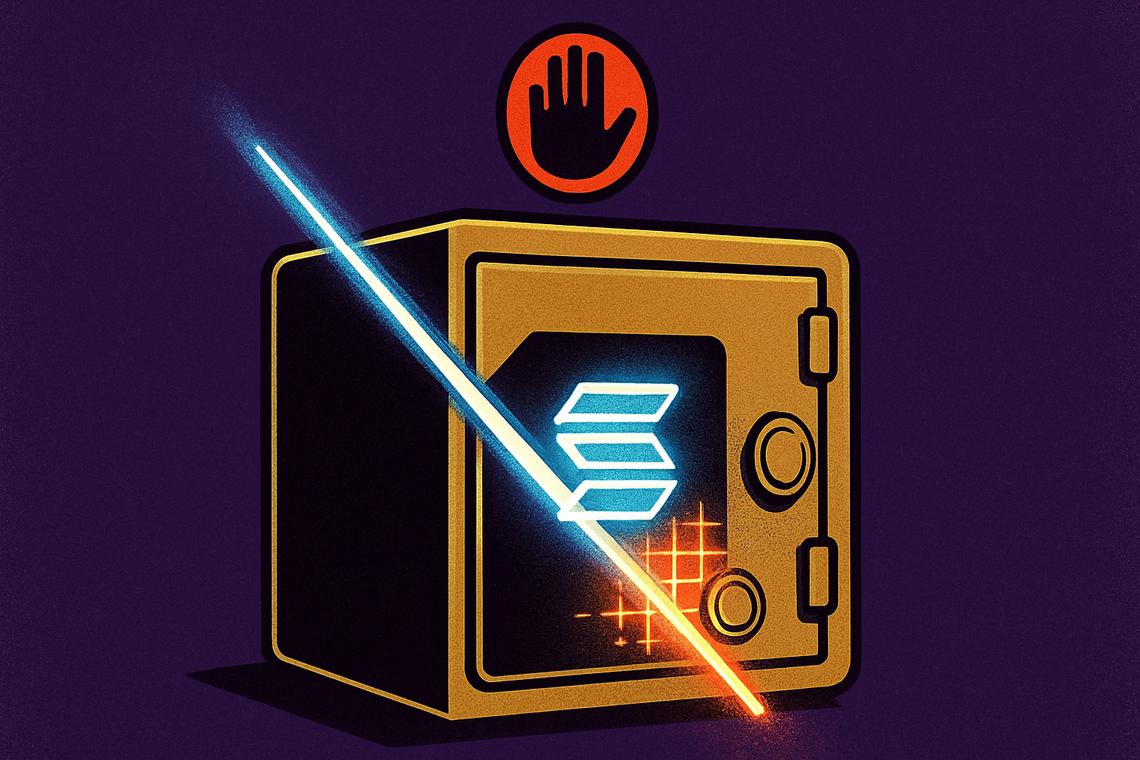
Something quietly historic happened in British finance on July 30, 2026. Baillie Gifford — one of the UK’s most respected investment management firms — became the first to launch a fully native tokenized fund on the Solana blockchain, a move that plants a regulated flag at the intersection of traditional asset management and digital infrastructure. This isn’t a pilot program buried inside a fintech lab. It’s a live, UK-regulated product, backed by one of the world’s largest custodians.
Key takeaways
- Baillie Gifford launched the UK’s first fully native tokenized fund, built on the Solana blockchain, on July 30, 2026.
- The fund is backed by BNY, the world’s largest custodian with more than $59 trillion in assets under custody and administration.
- BNY is simultaneously shifting its core transfer agency record-keeping onto blockchain to serve an $8.6 trillion market across 7.6 million accounts.
- BlackRock and BNY’s own Dreyfus unit are expected to follow with their own tokenized products on the same infrastructure, according to reporting by the Financial Times.
- The launch sets a regulatory precedent for UK-regulated tokenized funds and could accelerate institutional adoption of blockchain platforms.
Baillie Gifford and BNY: What They Actually Built
The fund isn’t tokenized in a superficial sense — it’s natively built on-chain, meaning ownership records live directly on Solana’s blockchain rather than being mirrored from a legacy system. That distinction matters enormously. Most financial products that claim a blockchain connection still rely on traditional record-keeping underneath. This one doesn’t.
The infrastructure behind it comes from BNY, which is moving its transfer agency business — the function that tracks who owns what in a fund — onto blockchain rails. BNY’s transfer agency currently services approximately $8.6 trillion in assets across 7.6 million accounts. The goal, as Carolyn Weinberg, BNY’s chief product and innovation officer, put it, is “modernizing a function that sits behind every single fund transaction by bringing the books and records onchain.”
That’s not a marginal efficiency upgrade. It’s a structural shift in how ownership of fund shares gets recorded, reconciled, and transferred.
Emily Portney, BNY’s global head of asset servicing, was direct about what the technology replaces: the costly, slow reconciliation work that currently requires multiple intermediaries each time a fund share changes hands. A single on-chain ownership ledger cuts through that friction — in theory, at least.
Why This UK Tokenized Fund Launch Carries Industry Weight
Baillie Gifford manages more than $261 billion in assets, according to CoinDesk, citing the Financial Times. When a firm of that scale commits to a fully native, regulated tokenized fund, it signals something different from the experimental blockchain projects that have cycled through finance for years. This is an institution with serious fiduciary obligations putting its name — and its clients’ assets — on a public blockchain network.
The choice of Solana is also worth noting. Solana’s speed and relatively low transaction costs have made it a preferred network for institutional tokenization projects, and this launch adds another high-profile credential to that case.
Beyond Baillie Gifford, the implications extend further. BlackRock and BNY’s own Dreyfus unit are expected to use the same BNY blockchain infrastructure for planned tokenized funds, according to the Financial Times. That creates the outline of a new institutional-grade tokenization stack, not a one-off experiment.
Where This Sits in a Broader Institutional Shift
The timing isn’t coincidental. America’s largest banks — JPMorgan, Citi, and Bank of America — are reportedly building a shared tokenized deposit network targeting a first-half 2027 launch. BlackRock and Franklin Templeton have already launched tokenized money-market funds in recent years. Edwin Mata, CEO of tokenization platform Brickken, has estimated that Wall Street will run entirely on blockchain technology by 2030, as reported by CoinDesk.
What Baillie Gifford and BNY have done is bring that timeline into the UK regulatory perimeter — and do it first.
The Regulatory Precedent and What Comes Next
Perhaps the most consequential aspect of this launch isn’t the technology itself — it’s the regulatory status. This is described as the first fully UK-regulated tokenized fund of its kind. That creates a template. Other UK-based asset managers now have a working example of what compliance looks like for a native on-chain fund, which lowers the barrier for the next firm to follow.
BNY is being candid about the transition period. The bank has made clear it expects its traditional transfer agent system to continue operating for years alongside the new blockchain infrastructure. Trillions of dollars in existing funds will remain on legacy rails, and the bank acknowledges real risks in the new model — including cybersecurity vulnerabilities, bugs in smart contracts, and risks at the bridges that connect different blockchain networks.
That honesty actually strengthens the credibility of the project. This isn’t a firm promising to replace everything overnight. It’s a measured, parallel build, with the old system held in reserve while the new one proves itself under live conditions.
For regulators, the existence of a functioning, UK-regulated tokenized fund now forces a more concrete conversation about framework design. Broad principles are easier to write than rules for live products. The Baillie Gifford fund just changed what that conversation has to cover.
FAQ
What is significant about Baillie Gifford’s new fund launch?
It is the UK’s first fully native tokenized fund built on the Solana blockchain, making it a regulatory milestone. The fund is not simply a blockchain-mirrored version of a traditional product — it is natively constructed on-chain, setting a precedent for future UK-regulated digital asset offerings.
Who backs Baillie Gifford’s tokenized fund and why does that matter?
The fund is backed by BNY, the world’s largest custodian with over $59 trillion in assets under custody and administration. BNY is providing the blockchain-based transfer agency infrastructure that underpins the fund, lending it substantial institutional credibility.
How might this launch affect institutional investors?
By demonstrating a secure, regulated approach to tokenization at scale, the launch provides a working model for other institutional investors considering blockchain-based products. With BlackRock and BNY’s Dreyfus unit expected to follow on the same infrastructure, the threshold for institutional entry into tokenized funds is likely to drop.
What are the intended benefits of this tokenized fund?
The fund aims to improve market accessibility and expand investment opportunities by replacing traditional multi-intermediary record-keeping with a single on-chain ownership ledger. The practical effect is faster, cheaper reconciliation — and potentially broader access for investors who have historically faced operational barriers in traditional fund structures.
Article produced with the assistance of artificial intelligence and reviewed by the editorial team.






 English (US) ·