
 3 months ago
69
3 months ago
69
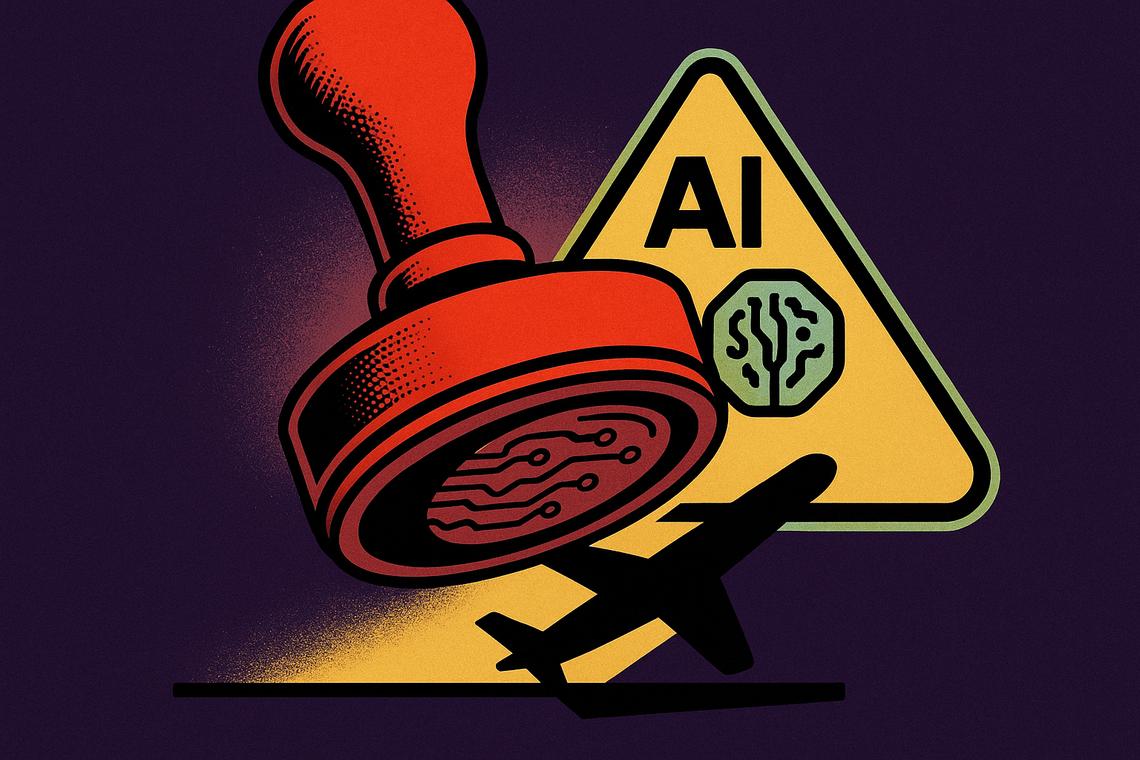
China AI travel restrictions are now reaching deeper into the private sector, with some professionals at Alibaba Group and DeepSeek reportedly needing government approval before they can go abroad. The move gives Beijing’s control over advanced artificial intelligence talent a sharper edge, and it adds a new question for investors watching China’s race to build competitive AI systems.
The policy does not appear to target all employees. Instead, it is aimed at startup founders, researchers, and executives working on advanced AI, according to the reported details. In other words, the restrictions are less about ordinary business travel and more about who controls the movement of people tied to sensitive technology.
That distinction matters. For companies already operating under intense strategic pressure, it suggests Beijing sees private-sector AI work not just as a commercial opportunity, but as a national priority tied to technology security and competition with the United States.
China AI travel restrictions tighten oversight of AI talent
The core change is straightforward: China now requires government approval before some AI professionals at Alibaba Group and DeepSeek can travel overseas.
The reported restrictions apply to people in some of the most influential roles in the AI ecosystem, including founders, researchers, and senior executives. Those are the people who often attend international AI conferences, meet partners, recruit talent, and keep pace with fast-moving global research.
That is why the policy is drawing attention beyond the companies named in the report. Travel rules aimed at advanced AI personnel can shape who gets access to international networks and how freely research communities interact across borders.
Bloomberg had also reported similar travel restrictions for some DeepSeek executives in December 2025. Before that, two co-founders of Manus were reportedly barred from overseas travel, suggesting this is not an isolated episode but part of a broader pattern.
Why the policy matters beyond state labs
China has long placed tighter controls on people tied to state-linked institutions. What stands out here is the extension of those controls into private-sector AI operations.
That shift is important because firms like Alibaba Group and DeepSeek sit at the center of commercial AI development. When oversight that once fit state entities starts applying to private companies, it signals a stronger alignment between national strategy and corporate research.
China’s stated goals are also clear in broad terms: prevent sensitive technology from leaking abroad and accelerate AI development relative to the United States. In practice, that frames AI talent overseas travel as a strategic issue, not just a human-resources one.
This is one reason the China AI travel restrictions story matters beyond a single headline. AI progress depends heavily on researchers, technical leaders, and constant exchanges of ideas. If those exchanges become harder, the effects may show up slowly rather than all at once.
What investors should watch at Alibaba and DeepSeek
Neither Alibaba nor DeepSeek has commented publicly on the restrictions, and there was no immediate market reaction after Bloomberg’s report.
Still, the lack of an instant stock move does not mean the issue is minor. For investors, the bigger question is whether these controls start to affect the less visible drivers of AI competitiveness: hiring, retention, research output, and international presence.
A policy like this can create pressure in subtle ways. Senior researchers may reconsider long-term roles if overseas travel becomes difficult. Companies may find it harder to send teams to major international AI conferences. Cross-border collaboration can become more constrained even without a formal ban.
Investors tracking Alibaba DeepSeek developments may want to focus less on day-one price action and more on operational signals, including:
- changes in researcher retention
- slower publication or product research cycles
- reduced participation in international AI events
These are the kinds of signs that can show whether Beijing government approval requirements are becoming a meaningful drag on innovation.
A strategic control with long-term consequences
The deeper issue is not simply travel. It is control over high-value AI talent at a time when advanced artificial intelligence has become a strategic contest.
If AI talent overseas travel becomes more restricted for top personnel, private firms may face a harder balancing act. They still need to compete globally, recruit ambitious researchers, and stay connected to the broader AI community. However, they may also have to operate within tighter national-security boundaries.
That tension could become one of the defining pressures on China’s AI sector. Not because every restriction immediately changes earnings, but because the companies best positioned to lead in AI often depend on exactly the kind of global mobility these rules can limit.




 English (US) ·