
 4 hours ago
13
4 hours ago
13
TLDR:
- Hyperliquid briefly pushed near $44 after reports tied CME and NYSE to regulatory pressure
- Critics questioned Hyperliquid’s HLP vault structure and trader loss-linked protocol revenue
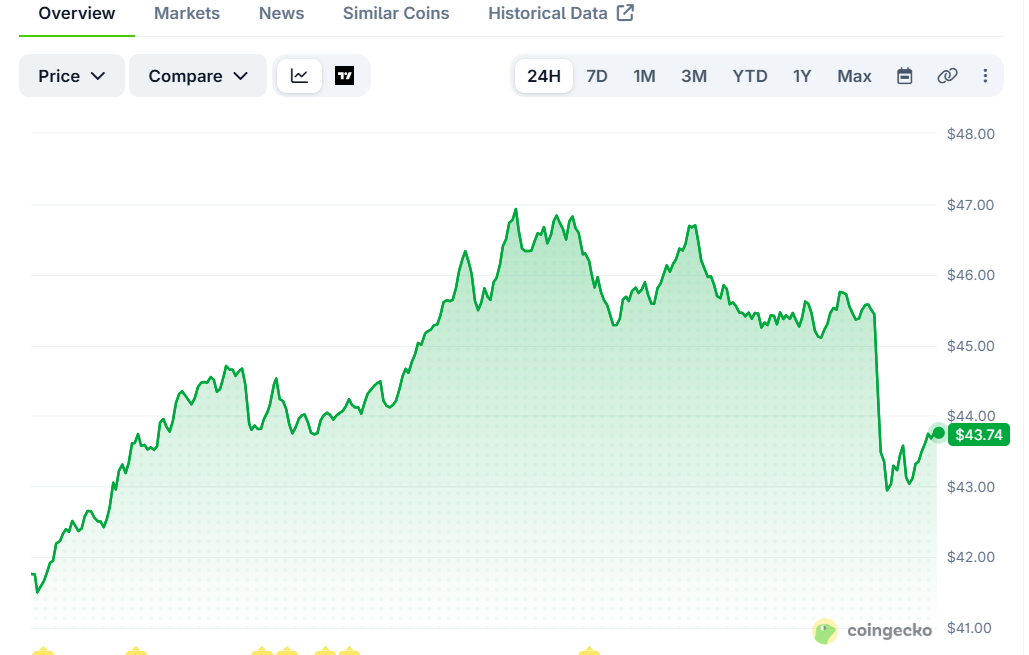
- CoinGecko data showed $HYPE trading near $43.61 with nearly $887 million daily volume
- ZachXBT raised questions after NYSE-linked criticism targeted Hyperliquid instead of Polymarket
Hyperliquid entered fresh regulatory discussions after reports linked CME Group and NYSE to concerns around the platform’s operations. Claims spread across crypto markets after social accounts highlighted alleged pressure on US regulators to review Hyperliquid.
The debate centered on market manipulation risks, sanctions evasion concerns, and Hyperliquid’s internal liquidity structure. Meanwhile, Hyperliquid’s native token $HYPE briefly approached $44 before stabilizing near $43.61.
Hyperliquid Faces Regulatory Debate Over Market Structure
Posts shared by Zoomer on X pointed to Bloomberg reporting that CME and NYSE want closer oversight of Hyperliquid. The focus remains on the platform’s decentralized perpetual futures trading model.
Hyperliquid has grown rapidly during the past year. The protocol now reportedly handles billions in daily trading volume across crypto and tokenized asset markets.
The exchange also reportedly holds more than $1.5 billion in locked value. Its round-the-clock trading model has attracted traders searching for lower fees and faster execution.
The discussion intensified because Hyperliquid continues attracting users from jurisdictions with trading restrictions. Some market participants claimed users still access the platform despite geoblocking efforts.
CoinGecko data showed Hyperliquid traded at $43.61 during publication. The token also recorded nearly $887 million in daily trading volume.
The market reaction remained relatively controlled despite the headlines. $HYPE rose nearly 5% during the past 24 hours and added 2.78% weekly gains.
 HYPE price on CoinGecko
Hyperliquid HLP Model Draws Criticism From Crypto Traders
A separate discussion emerged after X user Sweep criticized Hyperliquid’s revenue structure. The post argued that Hyperliquid operates differently from traditional exchanges like CME and NYSE.
According to the thread, Hyperliquid’s internal vault, called HLP, actively takes trading positions. The vault also performs liquidations, market making, and liquidity provision functions.
Sweep claimed the protocol profits when traders lose positions. The thread also described HLP revenue as directly tied to trader losses and liquidation activity.
The same post estimated Hyperliquid generates roughly $65 million in monthly fee revenue. Sweep further claimed most protocol revenue routes toward $HYPE token buybacks through the Assistance Fund.
Critics argued that structure differs from traditional exchange models. CME and NYSE primarily generate fees from transaction flow instead of directional exposure.
The debate expanded after blockchain investigator ZachXBT referenced NYSE-linked concerns around Hyperliquid. His X post questioned why similar criticism had not targeted prediction market platform Polymarket.
Neither CME nor NYSE publicly released detailed statements in the shared posts. However, the online debate fueled broader discussion around DeFi regulation, perpetual futures trading, and token-linked revenue systems.
The latest developments arrive as regulators globally increase attention on decentralized trading venues. Hyperliquid now sits at the center of a growing conversation around crypto market structure and compliance standards.
The post CME and NYSE Push US Scrutiny on Hyperliquid as HYPE Holds Gains appeared first on Blockonomi.






 English (US) ·