
 2 months ago
35
2 months ago
35
President Donald Trump appointed the first members of his new Presidential Council of Advisors on Science and Technology (PCAST), including notable crypto representatives.
Crypto Gets A Seat At The Table Where It Happens
The White House is finally giving crypto its due place in debates over AI and what comes next in tech. Analyst TylerD brought to attention that The White House announced on Wednesday the 13 initial members of the PCAST, with room to grow up to 24.
The Morning Minute (3.26)
Powered by @yeet
 Top News:
-Crypto majors fall as oil spikes 7%; BTC -3% at $69,400
-Fannie Mae to allow crypto collateral for mortgages
-Whop partners with Aave and Plasma for new Whop Treasury product
-Circle stock rebounds as analysts call… pic.twitter.com/OuCvsgDP3P
Top News:
-Crypto majors fall as oil spikes 7%; BTC -3% at $69,400
-Fannie Mae to allow crypto collateral for mortgages
-Whop partners with Aave and Plasma for new Whop Treasury product
-Circle stock rebounds as analysts call… pic.twitter.com/OuCvsgDP3P
— TylerD  (@Tyler_Did_It) March 26, 2026
The lineup, a convergence point for AI, big tech and crypto, includes marquee tech leaders such as Jensen Huang (Nvidia), Mark Zuckerberg (Meta), Sergey Brin (Google), Larry Ellison (Oracle) and Lisa Su (AMD). The council will be co-chaired by AI and crypto czar David Sacks and David Sacks, former U.S. Chief Technology Officer (US CTO).
Who Are These Representatives?The crypto names forming the council are not minor ones. We are talking about Fred Ehrsam, the co-founder of Coinbase, one of the largest US centralized exchanges; and Marc Andreessen, who co-founded the VC firm a16z.
Ehrsam left a role as a foreign‑exchange trader at Goldman Sachs in 2012 to launch Coinbase with Brian Armstrong, after the two connected through the Bitcoin subreddit. He served as Coinbase’s first president from 2012 to 2017, helping grow it into the major position it has today, and then stayed on as a board member while becoming a prominent early‑stage investor in the space.
Andreessen has been a prominent bull since his 2014 essay “Why Bitcoin Matters”, and today positions Ethereum and Web3 as core to the next phase of the internet. Through a16z, he has pushed large bets on blockchain, Web3, and AI, and has publicly tied his support for Trump partly to what he sees as a hostile regulatory and banking environment for tech and digital assets under previous policymakers.
Ehrsam and Andreessen, architects of US crypto venture capital and market infrastructure, are now embedded in a body that advises on competitiveness, innovation, and financial plumbing. This is major specially if we compared to previous cycles, where crypto was mostly on the receiving end of enforcement and guidance rather than sitting inside the advisory structure. This signals digital assets moving deeper into mainstream policy discussions, not farther away.
Market implicationsThe PCAST could eventually translate into more predictable rule‑making, clearer treatment of exchanges and stablecoins, and potentially a friendlier stance toward US‑domiciled crypto infrastructure. In the near term, this is not a “number go up tomorrow” catalyst, but it does strengthens the case for viewing regulatory risk as shifting from pure headwind to a possible moat for compliant players over the next cycle.
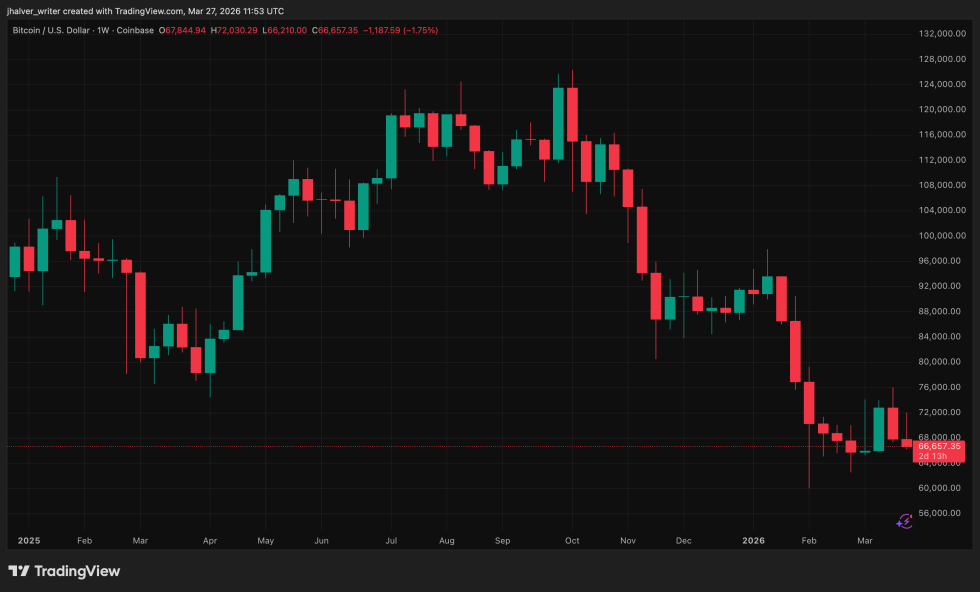
Cover image from Perplexity, BTCUSD chart from Tradingview





 English (US) ·