
 4 hours ago
35
4 hours ago
35
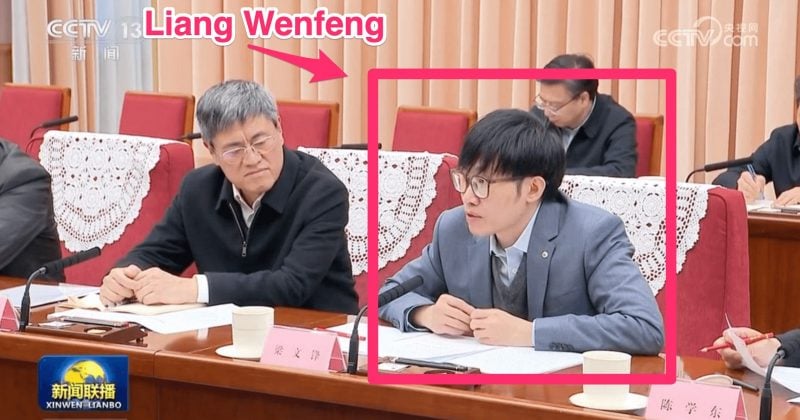
Liang Wenfeng just went from “quietly rich hedge fund guy” to the wealthiest AI model creator on the planet. After DeepSeek closed its first-ever external funding round, raising more than $7.4 billion, Bloomberg’s Billionaires Index pegged Liang’s net worth at roughly $16.7 billion, more than doubling his previous fortune.
That makes him richer than the founders behind some of the most hyped AI companies in the world. And he did it while keeping an iron grip on the company that practically no outside investor can challenge.
The deal structure is wild
Here’s the thing about this fundraise. Liang didn’t just sit back and let new money pour in. He personally contributed approximately $3 billion to the round, accounting for about 40% of the total capital raised. That money came from profits generated by High-Flyer, the quantitative hedge fund he co-founded back in 2016.
The terms for outside investors are, to put it politely, not investor-friendly. Everyone entering the limited partnership faces a five-year lock-up period. They also receive zero voting rights. None. Liang retains full strategic and operational control over DeepSeek’s direction, particularly its stated pursuit of artificial general intelligence.
Investors apparently didn’t mind. The round pushed DeepSeek’s valuation past $50 billion, with some estimates placing the post-money figure as high as $59 billion. That makes it China’s most valuable AI startup by a comfortable margin.
From hedge fund spinoff to global AI contender
DeepSeek was founded in July 2023, spun out of High-Flyer’s internal AI research efforts. Liang had co-founded the hedge fund in 2016, and the firm’s quantitative trading operations gave him both the capital and the technical infrastructure to build competitive AI models without needing Silicon Valley’s blessing or its money.
For most of its existence, DeepSeek self-funded through High-Flyer’s revenues. The company focused on open-source AI models and prioritized research over commercialization. DeepSeek gained global recognition for producing large language models that rival technologies like GPT-4 but at significantly lower computational costs.
The decision to finally take external capital represents a meaningful strategic shift. After years of self-sufficiency, DeepSeek is now scaling operations with outside money, but the deal structure ensures that “outside” remains a strictly financial designation rather than a governance one.
Why crypto and tech investors should pay attention
DeepSeek’s open-source approach has already intersected with decentralized AI projects. Multiple blockchain-based AI token projects have built applications and integrations around DeepSeek’s models, precisely because the open-source licensing makes permissionless development possible.
The five-year lock-up with no voting rights is the kind of structure that would make most institutional investors walk away from a deal. The fact that it didn’t, and that the round was oversubscribed according to multiple reports, suggests that capital allocators are willing to accept remarkably founder-friendly terms when the technology is compelling enough.
The risk, of course, is concentration. Liang now controls both the capital source (High-Flyer) and the capital destination (DeepSeek), with no external governance checks. If his bet on artificial general intelligence pays off, investors will look like geniuses for accepting those terms. If it doesn’t, they’ll have no mechanism to course-correct, and no liquidity for five years.
Disclosure: This article was edited by Editorial Team. For more information on how we create and review content, see our Editorial Policy.






 English (US) ·