
 1 hour ago
23
1 hour ago
23
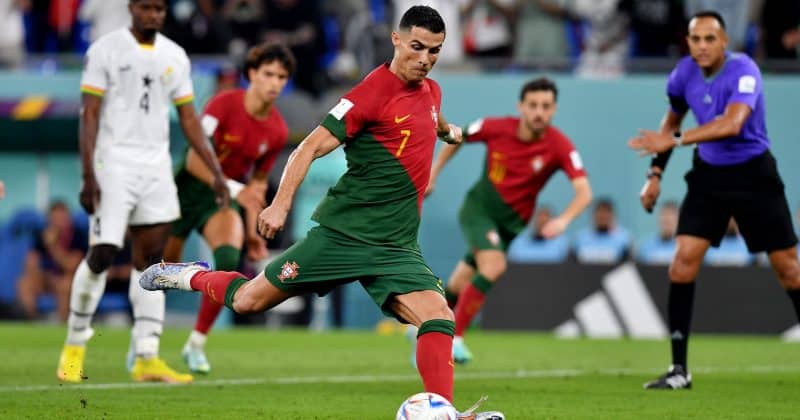
Paraguay and France are set to square off on July 4, 2026, at Lincoln Financial Field in Philadelphia. It’s their third World Cup meeting, and France has won the first two. But the real story for crypto investors isn’t happening on the pitch.
It’s happening in the infrastructure around it. The 2026 FIFA World Cup is quietly becoming the biggest commercial showcase for cryptocurrency that the sport has ever seen, from Kraken’s official sponsorship to blockchain-powered ticketing to surging prediction market volumes.
The match that set the stage
Paraguay pulled off one of the tournament’s most dramatic results by eliminating Germany in a penalty shootout to reach the Round of 16. France, meanwhile, cruised through group play and into the knockout rounds with characteristic efficiency.
Their World Cup history is decidedly one-sided. France hammered Paraguay 7-3 back in 1958, then ground out a 1-0 win in 1998 on home soil. The match kicks off at 5:00 PM ET on July 4.
Kraken steps onto the world stage
On June 9, 2026, Kraken announced it had become FIFA’s first-ever official crypto exchange partner for the World Cup. That’s a sentence worth reading twice.
The fact that a crypto exchange now sits alongside the traditional sponsors — the soft drink giants and credit card companies like Coca-Cola and Visa — signals a meaningful shift in how the global establishment views digital assets.
Blockchain ticketing goes mainstream
Perhaps more interesting than the sponsorship is FIFA’s “Right-to-Ticket” program, which links blockchain-based digital collectibles directly to match access during the June-July 2026 tournament window.
In English: your ticket to the game is a digital collectible that lives on a blockchain. It actually gets you through the turnstile.
Traditional ticketing is plagued by fraud, scalper bots, and opaque secondary markets. Blockchain-based tickets create transparent provenance chains. You can verify authenticity instantly. You can program royalties so that original issuers — in this case FIFA — capture a percentage of every resale.
What this means for crypto investors
Three threads are converging here. First, prediction market activity around World Cup matches has been robust on platforms like Polymarket. Sporting events with clear binary outcomes are perfectly suited to prediction market mechanics. Every upset, like Paraguay’s penalty shootout victory over Germany, drives fresh interest and volume to these platforms.
Second, Kraken’s sponsorship deal creates a sustained marketing funnel that runs for the duration of the tournament. Unlike a one-day Super Bowl ad, a World Cup partnership delivers repeated brand exposure across dozens of matches over several weeks.
Third, the blockchain ticketing experiment could catalyze an entirely new sector. The total addressable market for live event ticketing runs into the tens of billions of dollars globally. Even capturing a small slice of that through blockchain solutions would represent meaningful value creation.
The risk, as always, is execution. A high-profile technical failure during a World Cup match — fans locked out because a smart contract glitched, for instance — would set the entire blockchain ticketing narrative back years. FIFA’s reputation is on the line alongside the technology’s credibility.
Disclosure: This article was edited by Editorial Team. For more information on how we create and review content, see our Editorial Policy.





 English (US) ·