
 3 months ago
65
3 months ago
65
- Gold has fallen more than 6%, while silver has plunged over 11% in just a few days.
- A stronger U.S. dollar and the Federal Reserve’s hawkish outlook triggered heavy selling pressure.
- Some traders believe profit-taking by sellers could spark a short-term recovery in precious metals.
Gold and silver prices continued their sharp decline as investors reacted to the Federal Reserve’s latest policy meeting and a strengthening U.S. dollar. What began as a modest pullback quickly accelerated into a broader selloff, pushing both precious metals significantly lower over the past several trading sessions.
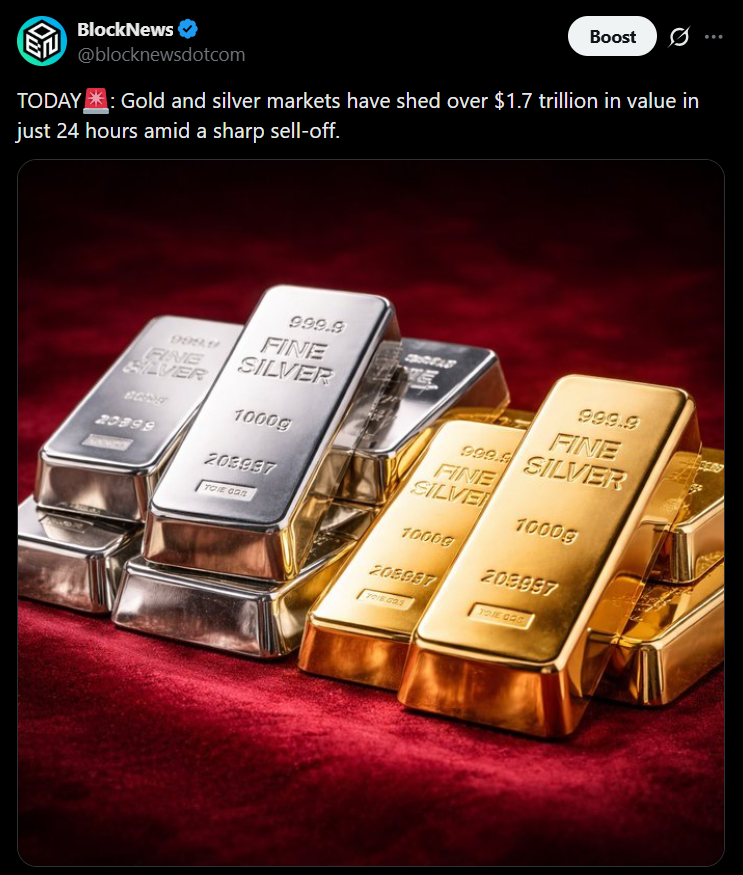
Gold prices have dropped roughly $263 per ounce from recent highs, while silver has lost approximately $8.30 per ounce. The declines represent losses of more than 6% for gold and over 11% for silver, making it one of the steepest pullbacks seen in months.
Federal Reserve Triggers Precious Metals Selloff
The primary catalyst behind the decline has been the Federal Reserve‘s latest stance on monetary policy. Although policymakers left interest rates unchanged, markets interpreted the central bank’s comments as hawkish.
Fed officials signaled that inflation remains a concern and suggested borrowing costs could remain elevated for longer than many investors had anticipated. That outlook strengthened the U.S. dollar, which often creates headwinds for gold and silver.
When the dollar rises, precious metals typically become more expensive for international buyers, reducing demand and putting downward pressure on prices.
Peace Deal Optimism Quickly Faded
Just days earlier, precious metals had benefited from optimism surrounding a temporary peace agreement between the United States and Iran. Lower geopolitical tensions initially helped stabilize financial markets and created a favorable backdrop for commodities.
However, the Federal Reserve quickly became the dominant market driver. Investors shifted their focus from geopolitical developments to monetary policy, causing sentiment toward gold and silver to deteriorate rapidly.
As a result, both metals erased recent gains and extended their losses as traders adjusted expectations for future interest rate policy.
Could Gold and Silver Rebound?
Despite the sharp decline, some market participants believe precious metals may be approaching a short-term recovery zone. After three consecutive days of heavy selling, traders who profited from the downturn could begin closing positions and locking in gains.
This process, often referred to as short covering, can create buying pressure and fuel temporary rebounds even during broader downtrends. If enough sellers begin taking profits, gold and silver could experience a meaningful bounce over the near term.
Many analysts are now watching closely to see whether current price levels attract fresh buyers looking to take advantage of the recent correction.
Traders Remain Focused on the Dollar
While a recovery remains possible, market participants continue to monitor the U.S. dollar and broader economic conditions. The strength of the dollar remains one of the most important factors influencing precious metal prices.
If the dollar continues rising and the Federal Reserve maintains a hawkish tone, gold and silver could remain under pressure. On the other hand, any signs of cooling inflation or softer monetary policy expectations could provide support for precious metals.
For now, investors remain cautious as markets attempt to determine whether the recent selloff represents a temporary correction or the beginning of a larger downward trend.
Disclaimer: BlockNews provides independent reporting on crypto, blockchain, and digital finance. All content is for informational purposes only and does not constitute financial advice. Readers should do their own research before making investment decisions. Some articles may use AI tools to assist in drafting, but every piece is reviewed and edited by our editorial team of experienced crypto writers and analysts before publication.








 English (US) ·