
 52 minutes ago
10
52 minutes ago
10
The world’s most important oil chokepoint is back at the negotiating table. Iranian and Omani officials have been holding what both sides describe as constructive talks aimed at restoring normal commercial shipping through the Strait of Hormuz, the narrow waterway connecting the Persian Gulf to the wider world.
For context: roughly one fifth of global oil supply passes through this corridor.
How we got here
The current crisis traces back to late February 2026. Following US and Israeli military strikes against Iran on February 28, Tehran moved to restrict commercial shipping through the strait.
Iran and Oman held their first formal undersecretary-level talks on the matter on April 4 and 5, 2026.
The more significant development came in June 2026, when high-level Iranian officials visited Muscat and the two countries agreed to form a joint working group. The group’s mandate covers navigation management and the practical costs associated with maritime services in the strait. Other littoral nations, the countries that border the waterway, will be consulted as part of that process.
Oman occupies a unique diplomatic position here. It has historically served as a quiet back channel between Iran and the West, maintaining functional relationships with Tehran when most regional neighbors have not.
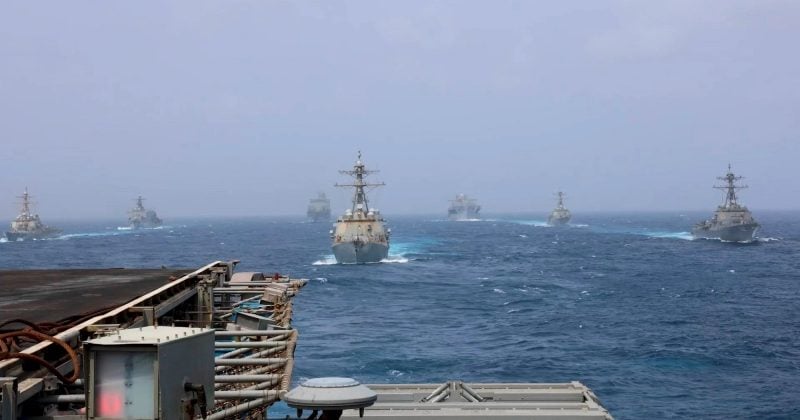
As of mid-July 2026, the United States and United Kingdom were organizing a conference in London focused specifically on securing maritime shipping through the strait.
What the markets are watching
When oil prices spike due to supply disruption, the inflationary pressure that follows tends to push central banks toward tighter monetary policy. Tighter monetary policy means higher rates. Higher rates mean risk assets, including Bitcoin and the broader crypto market, face stronger headwinds.
A sustained restriction on commercial passage through the strait forces tankers onto longer routes around the Cape of Good Hope, adding weeks to transit times and significant fuel costs. Those costs get passed along eventually, showing up in energy prices and then in consumer prices more broadly.
What to watch next
The joint working group established in June is the most concrete institutional mechanism on the table right now. So far, neither side has announced specific benchmarks or a target date for restoring full commercial shipping. The talks are characterized as progressing positively.
The London conference being organized by the US and UK adds a Western dimension. Iran has historically been sensitive to what it perceives as external pressure on sovereign maritime matters, so the framing of that conference will matter.
For investors with exposure to energy commodities, shipping equities, or risk assets broadly, the practical watchlist is short. Track whether the joint working group produces a formal timeline. Watch whether the London conference results in coordinated naval or diplomatic action. And monitor Iranian state media for signals about how Tehran is characterizing the talks domestically.
Disclosure: This article was edited by Editorial Team. For more information on how we create and review content, see our Editorial Policy.





 English (US) ·