
 1 hour ago
21
1 hour ago
21
US Marines boarded the Iranian-flagged tanker M/T Celestial Sea in the Gulf of Oman on May 20, and Iran is not being subtle about how it feels. Tehran has labeled the operation an act of piracy, a direct violation of the fragile ceasefire currently holding together what remains of US-Iran diplomacy, and a reason to walk away from negotiations unless Washington releases $12 billion in frozen Iranian assets held in Qatar.
The timing could not be more loaded. The ceasefire, brokered by the US after a 12-day conflict, is approaching its potential expiration. What was supposed to be a cooling-off period has instead become a countdown clock with both sides adding new demands to an already overstuffed agenda.
The tanker, the money, and the Strait
US forces intercepted and boarded the M/T Celestial Sea in the Gulf of Oman, a move that Iran’s government has framed as far more than a routine maritime operation. Iranian Parliament Speaker Mohammad Bagher Ghalibaf was among the officials who publicly condemned the action, calling it a breach of the ceasefire terms both countries had been working under.
Iran’s response wasn’t just rhetorical. Tehran laid out a concrete financial precondition for returning to any form of negotiation: the immediate release of $12 billion in frozen assets currently sitting in Qatari accounts. The full demand reportedly includes an additional $12 billion to be released 30 days after both sides sign a memorandum of understanding.
That MoU, if it ever materializes, would cover a sprawling list of issues. Access to the Strait of Hormuz, sanctions on Iranian oil exports, nuclear limits, and the broader terms of any lasting ceasefire would all fall under its umbrella.
The Strait of Hormuz angle adds another layer of complexity. Roughly 20% of the world’s oil passes through that narrow waterway. Iran has proposed a tolling mechanism for vessels transiting the Strait, essentially charging ships for passage through waters Tehran considers partly under its jurisdiction. The US has rejected that idea outright.
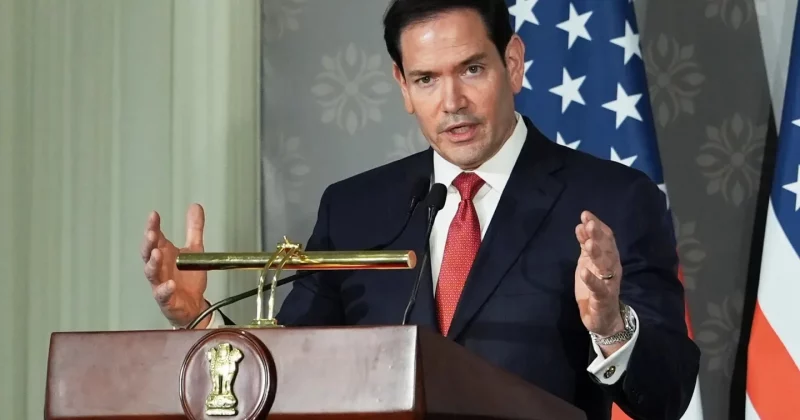
US Secretary of State Marco Rubio has publicly acknowledged “slight progress” in the broader negotiation framework.
A ceasefire under pressure
Iran’s frozen assets have been a recurring theme in US-Iran relations for years. The $12 billion held in Qatar represents funds that Tehran has been unable to access due to sanctions and diplomatic restrictions.
The structure of Iran’s demand, $12 billion upfront and another $12 billion after 30 days, suggests Tehran is trying to create a financial incentive for the US to actually follow through on any agreement.
Ghalibaf and other Iranian officials have made clear that the tanker boarding shifted the calculus. Whatever diplomatic goodwill existed before May 20 has been substantially diminished, at least from Tehran’s perspective.
What this means for crypto investors
Bitcoin price sensitivity has already been observed in response to ceasefire-related headlines. Any escalation that threatens oil transit through the Strait of Hormuz would send energy prices higher, increase inflationary pressure, and potentially shift central bank policy expectations.
The potential release of $12 billion (or $24 billion total) in frozen assets also matters. Oil markets would be the first to react, and crypto markets tend to follow broader risk sentiment shifts with a short lag.
Traders should watch for two specific signals. First, any official communication regarding the frozen asset release would indicate that back-channel negotiations are more advanced than public statements suggest. Second, naval movements near the Strait of Hormuz will be the clearest indicator of whether this situation is heading toward resolution or escalation.
Disclosure: This article was edited by Editorial Team. For more information on how we create and review content, see our Editorial Policy.




 English (US) ·