
 2 hours ago
10
2 hours ago
10
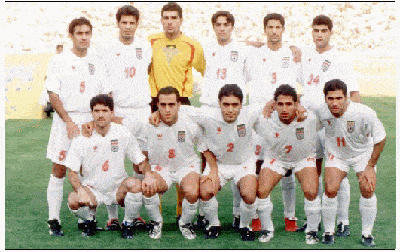
Iran’s World Cup is over, and the manner of the exit might sting worse than the result itself. Team Melli finished third in Group G with 3 points, all earned from draws, and watched from the sidelines as a last-minute goal in a completely different match sealed their fate.
The 2026 FIFA World Cup, the first to feature 48 teams and a round of 32 knockout stage, was supposed to offer more room for underdog stories.
A goal disallowed, a dream denied
Iran’s final group match against Egypt on June 27 ended 1-1. Iran had a late goal that would have given them the win, but it was disallowed for offside.
But even with only a draw, Iran still had a mathematical path forward. The expanded 48-team format meant the best third-placed teams from across the groups could advance to the knockout rounds.
Austria scored a last-minute equalizer against Algeria, a result that reshuffled the rankings of third-placed teams across the tournament. That single goal was the final nail. Iran’s 3 points from three draws weren’t enough to earn one of the coveted spots reserved for top third-place finishers.
Seven World Cups, zero knockout appearances
The 2026 tournament marks Iran’s seventh appearance on the sport’s biggest stage, and they have never advanced past the group phase.
Group G also featured Belgium and Egypt. The 2026 format introduced groups of three rather than four, with the introduction of a round of 32 adding an entire extra knockout round, meaning more third-place teams could qualify.
The geopolitical backdrop
Iran’s participation in a US-hosted World Cup added layers that extended well beyond the pitch. The geopolitical relationship between Iran and the United States is complicated, and hosting Iranian athletes, fans, and officials on American soil created a politically charged atmosphere around every match.
What this means for Iranian football
Seven tournaments without a knockout-round appearance isn’t just bad luck. Iran continues to produce talented players who compete in top European leagues, and their domestic football infrastructure is among the most developed in Asia. But the gap between qualifying for World Cups and actually competing in them remains stubbornly wide.
Disclosure: This article was edited by Editorial Team. For more information on how we create and review content, see our Editorial Policy.




 English (US) ·