
 1 hour ago
24
1 hour ago
24
The United States and Iran have been discussing the potential release of more than $16 billion in restricted funds. Iran’s total frozen assets are estimated at $100 billion to $120 billion, spread across accounts in China, Iraq, South Korea, and Qatar. The $16 billion figure maps almost exactly to the combined value of funds released through two separate channels in 2023: $6 billion unfrozen as part of a prisoner swap involving five Americans, and roughly $10 billion released via waivers tied to Iraqi electricity and gas payments.
What’s on the table now
Iran has reportedly requested immediate access to between $6 billion and $12 billion of its overseas assets as part of ongoing discussions surrounding an interim nuclear deal. US proposals have floated a larger figure of $20 billion, but with significant strings attached, including limits on Iran’s uranium stockpiles.
No large-scale agreement on unfreezing assets has been confirmed as of mid-June 2026. The funds remain under strict US controls.
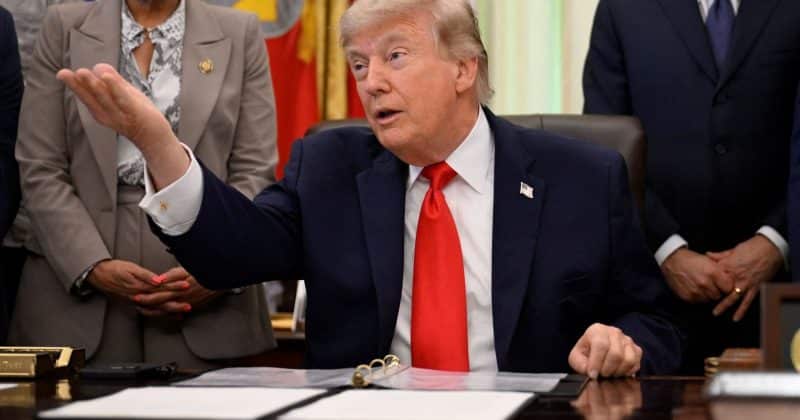
President Trump has publicly stated that Iranian funds will not be unfrozen unless a formal peace agreement is achieved. Talks have been taking place in cities including Islamabad, where both sides are reportedly grappling with contentious issues around the amounts involved, timing, and how any agreement would be verified.
The crypto wrinkle
The US Treasury took concrete action in June 2026, sanctioning several Iranian digital asset platforms. Among the targets were Nobitex and Bitpin, two of Iran’s largest crypto exchanges. Nobitex alone accounted for over 50% of crypto inflows in Iran during 2025. The Treasury also seized substantial stablecoin holdings linked to the Iranian regime.
Historical context matters
Iran’s specific frozen holdings paint a picture of just how distributed these assets are. Roughly $20 billion sits in Chinese accounts alone, reflecting years of oil trade that China continued even as Western sanctions tightened. The rest is scattered across Iraqi, South Korean, and Qatari institutions.
What this means for investors
Any successful release of funds could increase liquidity in Iran’s economy and potentially stimulate demand for digital assets within the region. Iran has already demonstrated a willingness to use crypto for cross-border transactions.
The Treasury’s recent enforcement actions signal that US regulators are paying closer attention to the intersection of sanctions evasion and digital assets. Stablecoin issuers and exchanges that process transactions linked to sanctioned entities face growing compliance risk. The seizure of regime-linked stablecoins is a concrete reminder that on-chain assets are not beyond the reach of US enforcement.
Disclosure: This article was edited by Editorial Team. For more information on how we create and review content, see our Editorial Policy.






 English (US) ·