
 1 hour ago
17
1 hour ago
17
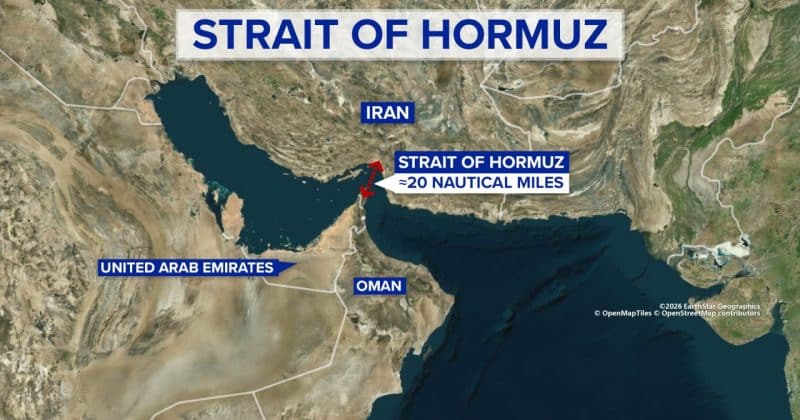
Roughly 20% of the world’s oil passes through a narrow chokepoint between Iran and Oman every single day. Iran just decided to put a toll booth on it, though it’s very careful not to call it that.
Tehran has announced that all ships transiting the Strait of Hormuz will be required to obtain insurance coverage approved by its newly created Persian Gulf Strait Authority, or PGSA. The mandate kicks in after a 60-day grace period beginning around June 18, 2026. And in a twist that makes this story relevant well beyond shipping desks, Iran has floated a Bitcoin-settled insurance platform called Hormuz Safe that could funnel over $10 billion in revenue through cryptocurrency rails.
The fee that isn’t a toll
Here’s the thing about international maritime law: you can’t just charge tolls on natural straits. The United Nations Convention on the Law of the Sea guarantees the right of “transit passage” through straits used for international navigation. Iran knows this, which is why it’s framing its charges as “insurance fees” and “fees for services” rather than formal tolls.
During the escalation of the US-Israel conflict with Iran that began on February 28, 2026, transit fees reportedly reached as high as $2 million per voyage. War-risk insurance premiums for vessels transiting the strait surged from a baseline of 0.15% to 0.25% of hull value up to 5% to 10% following the February 28 conflict escalation. For a supertanker valued at $100 million or more, that math gets ugly fast.
Hormuz Safe and the Bitcoin angle
The more unexpected dimension emerged in May 2026, when Iranian state-linked reports introduced the concept of Hormuz Safe. The proposed platform would issue maritime insurance policies and liability certificates covering not just the Strait of Hormuz but surrounding waters as well, settling in Bitcoin, with projected revenue of over $10 billion.
Why Bitcoin? Iran has been under comprehensive US financial sanctions for years, which effectively cut it off from dollar-denominated banking systems and traditional insurance markets like Lloyd’s of London. Bitcoin offers a settlement layer that doesn’t route through SWIFT or any US-controlled financial infrastructure.
What this means for markets
For shipping and energy markets, the immediate impact is straightforward: higher costs. Mandatory insurance requirements on top of already elevated war-risk premiums will push freight rates higher. Those costs ultimately flow downstream to consumers in the form of higher energy and goods prices, particularly for crude oil and LNG shipments that dominate Hormuz traffic.
Major shipping companies and their insurers operate within heavily regulated Western financial systems. Participating in an Iranian Bitcoin insurance scheme could expose them to secondary sanctions from the US Treasury. That tension between compliance risk and operational necessity creates a genuinely novel dilemma for the maritime industry.
Disclosure: This article was edited by Editorial Team. For more information on how we create and review content, see our Editorial Policy.







 English (US) ·